
Myelopathy: When the Spinal Cord Isn’t Working Properly
Clumsy hands, unsteady walking or numbness that seems to come from nowhere can all be signs that the spinal cord is under strain. Finding the cause early is the key to protecting your function.
What Is Myelopathy?
Myelopathy means the spinal cord isn’t working properly. Most often, it happens because something is squeezing the cord, such as arthritis, bone spurs or a disc. This is called compressive myelopathy, and it is the type spine surgeons treat. It is most common in the neck (cervical myelopathy) but can also occur in the mid-back.
Less commonly, myelopathy comes from conditions inside the cord itself, such as multiple sclerosis, inflammation (transverse myelitis) or vitamin deficiencies, which are treated medically.
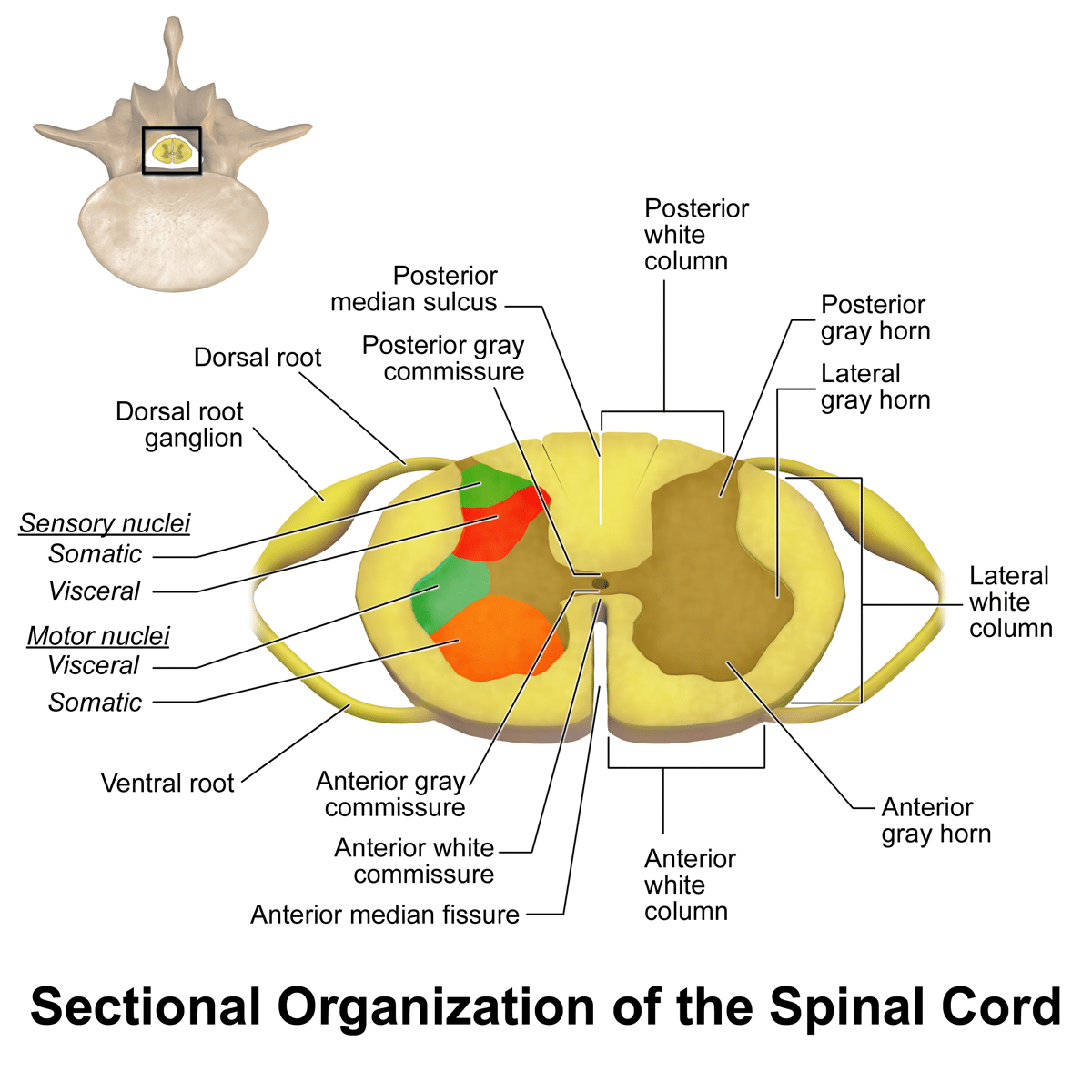
Compressive myelopathy usually progresses over time, and damage may not fully reverse. Surgery to relieve the pressure can often correct the problem and stop it from getting worse.
What Causes Myelopathy
- Degenerative changes: spondylosis, disc bulges and bone spurs
- Spinal stenosis and thickened ligaments
- OPLL
- Thoracic disc herniation
- Tumors, infection or injury (spinal cord compression)
- Non-compressive causes: multiple sclerosis, inflammation, low vitamin B12 or copper, and radiation
Symptoms
Common symptoms
- Numbness or tingling in the hands or feet
- Clumsy hands: trouble with buttons, writing or picking up small objects
- Balance problems or unsteady walking
- Stiff, heavy or weak legs
Symptoms patients often ignore
- Handwriting getting worse
- Holding the wall or railing more than before
- Electric shocks down the spine when bending the neck
- Bladder urgency
When it’s an emergency: Sudden weakness, trouble walking, or loss of bladder or bowel control need emergency care. Call 911 or go to the nearest emergency room.
How We Diagnose Myelopathy
- Neurological exam: reflexes (including the Hoffmann sign), hand coordination, sensation, strength and walking
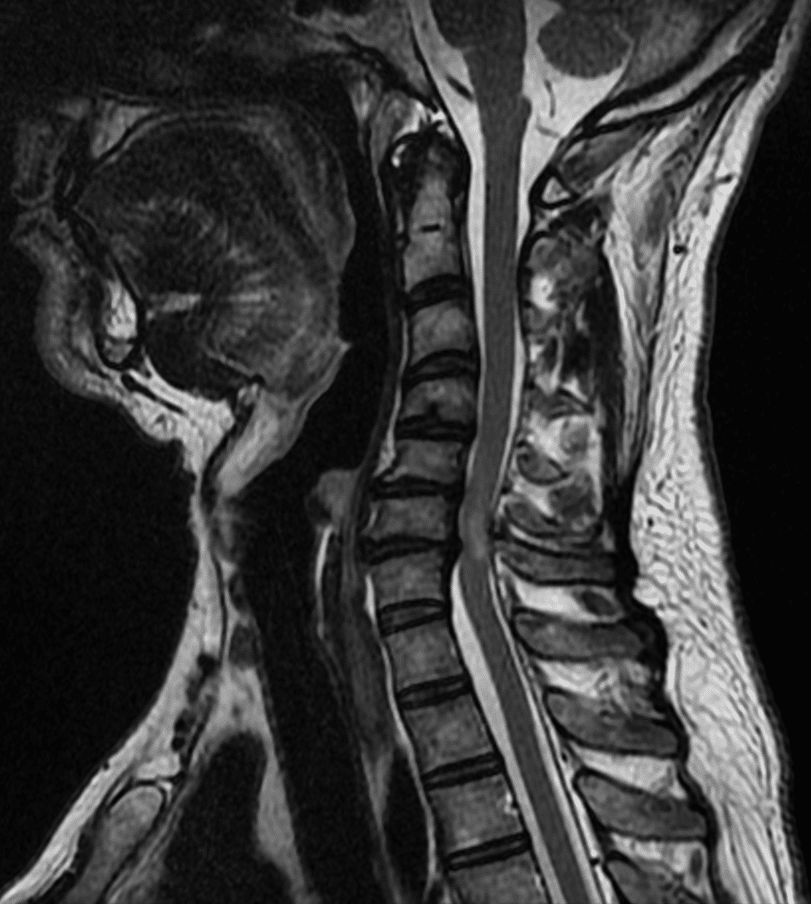
- MRI of the neck and/or mid-back: shows compression and any changes in the cord
- CT scan: shows bone spurs and OPLL
- Blood tests and nerve studies when non-compressive causes are possible
- Coordination with neurology when needed
Treatment Options
Non-surgical care
Mild, stable compressive myelopathy may be monitored with regular exams and imaging, physical therapy for balance and strength, and avoiding neck manipulation. Non-compressive myelopathy is treated with medications or supplements depending on the cause.
When surgery makes sense
Surgery is recommended for moderate or severe compressive myelopathy, or for any that is worsening. Relieving the pressure can often correct the problem and protect the cord. Options include:
- ACDF or cervical disc replacement
- Cervical laminectomy with posterior fusion
- Spinal cord decompression in the thoracic spine
Why Choose Dr. Betsy Grunch for Myelopathy
- Duke-trained: neurosurgical residency and spine research fellowship at Duke University School of Medicine, where she received the Spine Young Investigator Award
- Experience you can count on: in practice since 2013, performing 400 to 600 surgeries a year and more than 5,000 procedures over her career
- Careful diagnosis: separating compressive myelopathy that surgery can fix from medical causes that need a different treatment
- The right treatment for you: board-certified (FAANS, FACS, FCNS), she starts with the least invasive option that will work, and recommends surgery when it can correct the problem
- Clear answers: known online as Ladyspinedoc, she makes sure you understand your imaging and every option in front of you
What to Expect If You Need Surgery
Before surgery
You’ll meet with Dr. Grunch or one of her physician assistants to review your imaging and choose the right approach.
Procedure day
Front-of-neck surgery often involves one night in the hospital. Posterior or thoracic surgery usually involves a few days.
Recovery timeline
- First days: walking with help
- Weeks 1-6: light activity
- Months 2-3: therapy for balance, strength and hand function
- Months 3-12: continued improvement
Frequently Asked Questions
Is myelopathy the same as cervical myelopathy?
Cervical myelopathy is myelopathy in the neck, the most common location. Myelopathy can also happen in the mid-back or from non-compressive causes.
Will my symptoms improve after surgery?
Surgery reliably stops progression, and many people improve. Long-standing damage may not fully reverse.
Can myelopathy be confused with other conditions?
Yes. Hand symptoms can be mistaken for carpal tunnel, and balance problems for aging or neuropathy. A careful exam and MRI sort it out.
Should I avoid neck adjustments?
Yes. With spinal cord compression, forceful neck manipulation should be avoided.
How quickly should I be seen?
Promptly. Worsening symptoms should be evaluated within days to weeks. Sudden changes need emergency care.
Take the First Step Toward Relief
Whether you need a diagnosis, a treatment plan or a second opinion, Dr. Grunch and the Southern Neurosurgery team are here to help.
Call 470-293-9800 to schedule an appointment or contact us online.
Have a question first? Ask our virtual assistant anything, 24/7.
We see patients across metro Atlanta and North Georgia at our offices in Gainesville, Sandy Springs and South Atlanta (Riverdale). Find the office nearest you.
This page is for educational purposes only and is not a substitute for medical advice. If you have sudden weakness, numbness in the groin, or bladder or bowel changes, call 911 or go to the nearest emergency room.