
Thoracic Disc Herniation: A Rare Cause of Mid-Back and Chest Wall Pain
Pain that wraps around your ribs, or mid-back pain with numbness or weakness in your legs, can come from a disc in the middle of the spine. It’s uncommon, often missed, and treatable once it’s found.
What Is a Thoracic Disc Herniation?
The thoracic spine is the middle part of your back, the 12 vertebrae that attach to your ribs. Because the rib cage makes this area very stable, thoracic discs herniate far less often than discs in the neck or lower back.
When a thoracic disc does herniate, it can press on a nerve root, causing pain that wraps around the chest or abdomen, or it can press on the spinal cord, which runs through this part of the spine and has little room to spare. Thoracic herniations are also more likely than others to be hard and calcified.
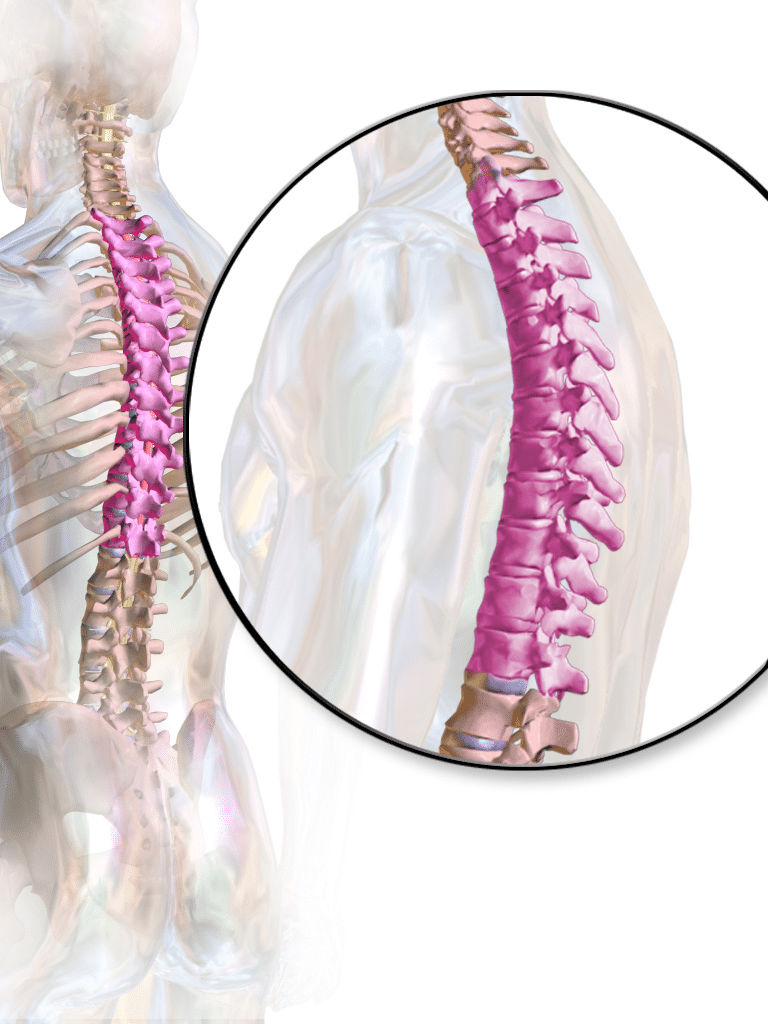
Many small thoracic herniations cause no symptoms and need no treatment. When one causes persistent pain or presses on the spinal cord, surgery can relieve the pressure and often correct the problem.
What’s Happening in Your Spine
- Nerve root irritation: causes a band of pain that follows a rib around the chest or upper abdomen
- Spinal cord compression (thoracic myelopathy): affects the legs, balance and bladder, since the cord carries signals to everything below
- Calcified discs: are harder and may be stuck to the covering of the spinal cord, which affects surgical planning
Symptoms
Common symptoms
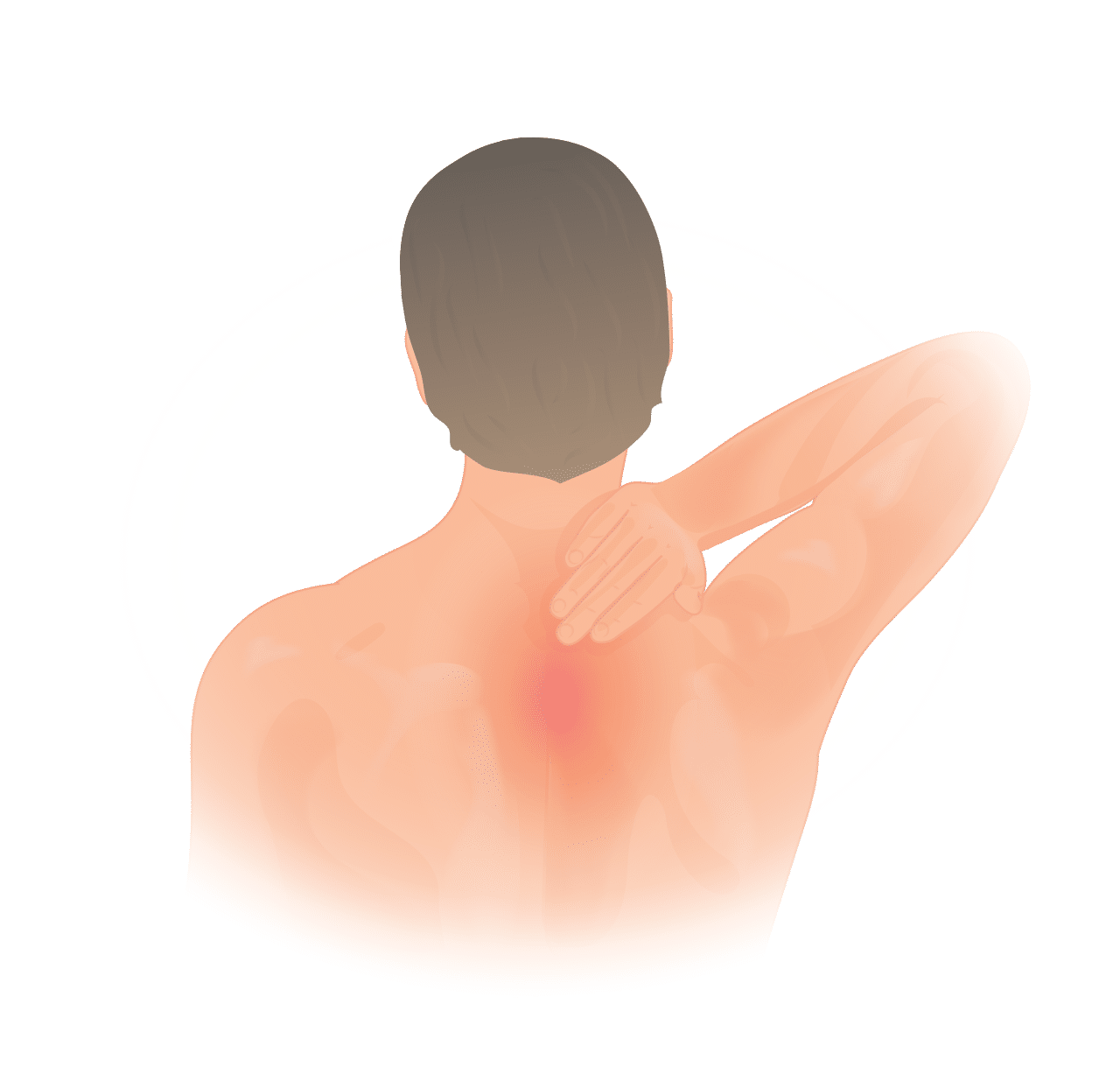
- Mid-back or upper back pain
- Burning or band-like pain around the chest wall or abdomen, often on one side
- Numbness or tingling in a band around the trunk
Symptoms patients often ignore
- Chest or abdominal pain that has been checked for heart, lung, gallbladder or stomach problems with no answer
- Legs that feel stiff, heavy or weak
- Unsteadiness or tripping more than usual
- Numbness in the legs or below a certain level of the trunk
When it’s an emergency: New chest pain should always be evaluated for heart problems first. Call 911 for chest pain with shortness of breath, or for sudden leg weakness or loss of bladder or bowel control.
Causes and Risk Factors
- Age-related disc degeneration, most common between 40 and 60
- Trauma, such as a fall or twisting injury
- Conditions that change the shape of the spine, such as Scheuermann’s kyphosis
- Heavy lifting and twisting
How We Diagnose Thoracic Disc Herniation
- History and exam: the pattern of pain and numbness around the trunk, leg strength, reflexes and walking
- MRI of the thoracic spine: shows the herniation and whether the spinal cord is compressed
- CT scan: shows whether the disc is calcified, which is important for planning surgery
- Ruling out other causes: thoracic disc pain is often mistaken for heart, lung, gallbladder or kidney problems, or shingles
Treatment Options
Non-surgical treatment comes first
When the herniation causes pain without spinal cord compression, treatment usually begins with:
- Physical therapy: posture, core and upper back strengthening
- Medications: anti-inflammatories and nerve-pain medications
- Injections: thoracic epidural or nerve root injections
When surgery makes sense
Surgery is recommended when the spinal cord is compressed or when pain persists despite good conservative care. In these cases, surgery can often correct the problem. Because the spinal cord sits directly behind the disc, thoracic disc surgery is planned carefully to remove the disc without disturbing the cord. Depending on the size, location and calcification of the herniation, it may be approached:
- From the side or back: working around the spinal cord rather than through it, sometimes through minimally invasive approaches
- With stabilization when needed: a thoracic fusion if bone removal would weaken the spine
Why Choose Dr. Betsy Grunch for Thoracic Disc Herniation
- Duke-trained: neurosurgical residency and spine research fellowship at Duke University School of Medicine, where she received the Spine Young Investigator Award
- Experience you can count on: in practice since 2013, performing 400 to 600 surgeries a year and more than 5,000 procedures over her career
- Careful planning for a complex surgery: using MRI and CT to choose the safest approach for your specific disc
- The right treatment for you: board-certified (FAANS, FACS, FCNS), she starts with the least invasive option that will work, and recommends surgery when it can correct the problem
- Clear answers: known online as Ladyspinedoc, she makes sure you understand your imaging and every option in front of you
What to Expect If You Need Surgery
Before surgery
You’ll meet with Dr. Grunch or one of her physician assistants to review your MRI and CT and plan the approach. Our team coordinates pre-operative testing and reviews your medications.
Procedure day
Thoracic disc surgery usually takes several hours, and most patients stay in the hospital for a few days.
Recovery timeline
- Days 1-3: up and walking with help
- Weeks 1-6: gradual return to light activity; no heavy lifting or twisting
- Months 2-3: physical therapy for strength and balance
- Months 3-12: continued improvement in nerve symptoms
Frequently Asked Questions
Why did it take so long to find?
Thoracic disc herniations are rare, and the pain often mimics heart, lung, stomach or gallbladder problems. Many patients see several doctors before the spine is imaged.
Do all thoracic disc herniations need surgery?
No. Many are found by chance and cause no symptoms. Surgery is for spinal cord compression or pain that doesn’t improve with conservative care.
Is thoracic disc surgery riskier than neck or low back surgery?
It can be more complex because of the spinal cord and the rib cage. That’s why careful planning and surgeon experience matter. Dr. Grunch will walk you through the specific risks of your procedure.
Will I need a fusion?
Sometimes. If removing the disc requires taking enough bone to weaken the spine, a fusion is added to keep it stable.
Can a thoracic disc cause stomach pain?
Yes. A pinched thoracic nerve can cause pain that wraps around to the abdomen and can be mistaken for an internal problem.
Take the First Step Toward Relief
Whether you need a diagnosis, a treatment plan or a second opinion, Dr. Grunch and the Southern Neurosurgery team are here to help.
Call 470-293-9800 to schedule an appointment or contact us online.
Have a question first? Ask our virtual assistant anything, 24/7.
We see patients across metro Atlanta and North Georgia at our offices in Gainesville, Sandy Springs and South Atlanta (Riverdale). Find the office nearest you.
This page is for educational purposes only and is not a substitute for medical advice. If you have sudden weakness, numbness in the groin, or bladder or bowel changes, call 911 or go to the nearest emergency room.