
Cervical Spondylosis: Arthritis of the Neck, Explained
If an X-ray or MRI report says “cervical spondylosis,” you’re in good company. It’s one of the most common findings in adults, and most people with it live full, active lives.
What Is Cervical Spondylosis?
Cervical spondylosis is the medical term for age-related wear and tear in the neck. Over time, the discs between the vertebrae dry out and flatten, the small joints develop arthritis, and the body forms bone spurs as it tries to stabilize the spine.
Most people over 60 have some degree of spondylosis on imaging, and many have no symptoms at all. For others, it causes neck pain and stiffness. In some cases, bone spurs and disc changes narrow the space for nerves or the spinal cord, causing arm symptoms or problems with hand coordination and balance.
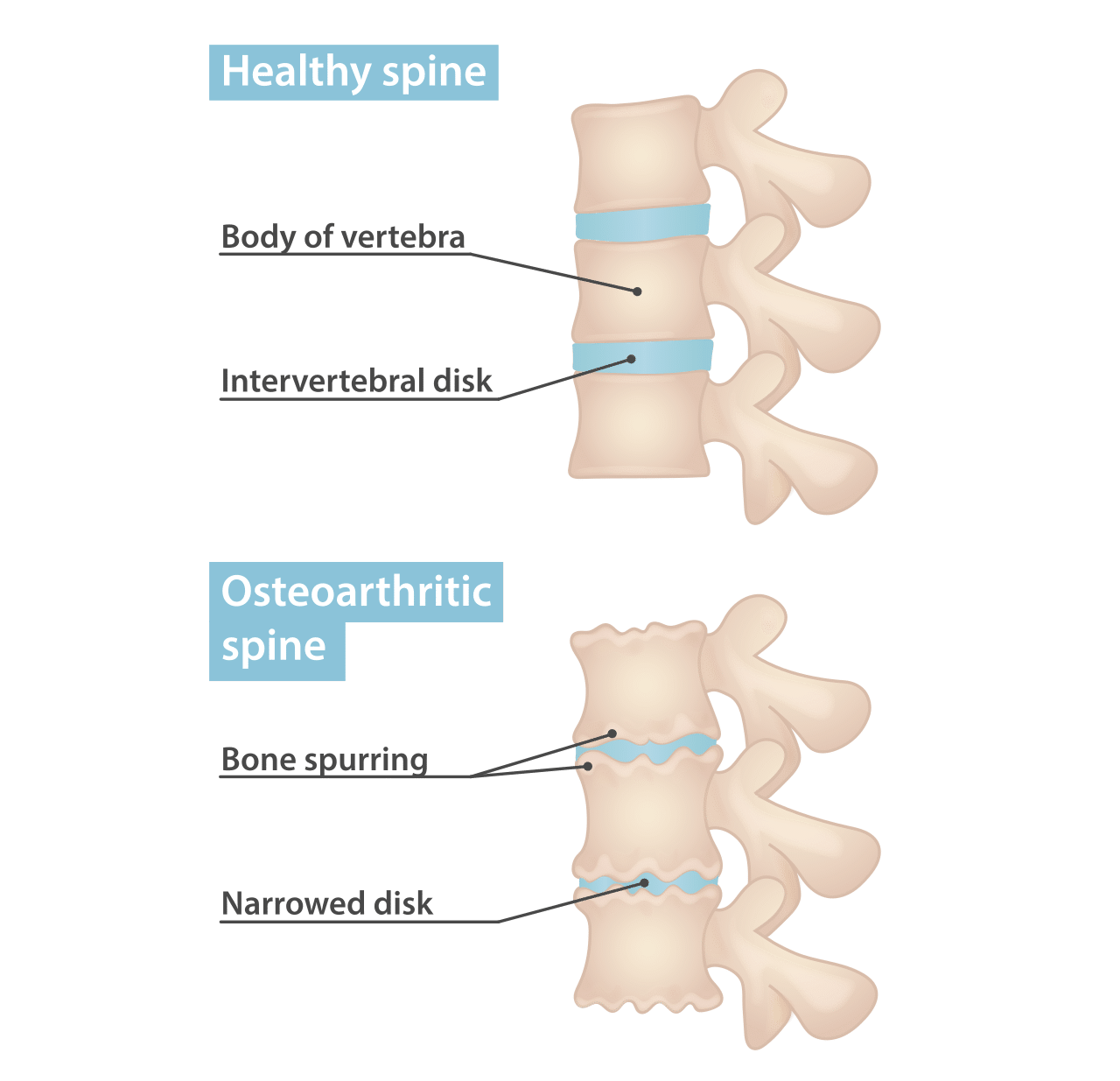
Treatment depends on which of these problems you have. Neck pain and stiffness usually respond to therapy and other non-surgical care. When nerves or the spinal cord are being squeezed, surgery can relieve the pressure and often correct the problem.
What’s Happening in Your Neck
- Disc degeneration: discs lose water and height and may bulge
- Bone spurs (osteophytes): extra bone forms along the edges of the vertebrae
- Facet joint arthritis: the small joints at the back of the neck wear and enlarge
- Thickened ligaments: stiffen and can buckle into the spinal canal
Together, these changes can lead to three different problems: neck pain, a pinched nerve (cervical radiculopathy), or spinal cord compression (cervical myelopathy).
Symptoms
Neck pain and stiffness
- Aching neck pain, often worse in the morning or after activity
- Stiffness and reduced ability to turn your head
- Grinding or clicking with movement
- Headaches at the back of the head
When a nerve is pinched
- Pain, numbness or tingling down the arm into the hand
- Weakness in the arm or grip
When the spinal cord is compressed
- Clumsy hands, dropping things, trouble with buttons
- Numbness in both hands
- Problems with balance or walking
When to seek care right away: Rapidly worsening weakness, new trouble walking, or bladder or bowel changes need urgent evaluation. Call 911 or go to the nearest emergency room.
Causes and Risk Factors
- Age: the biggest factor
- Genetics and family history
- Previous neck injury
- Occupations with repetitive neck movement, overhead work or heavy lifting
- Smoking
How We Diagnose Cervical Spondylosis
- History and exam: neck motion, arm strength, reflexes, sensation, hand coordination and walking
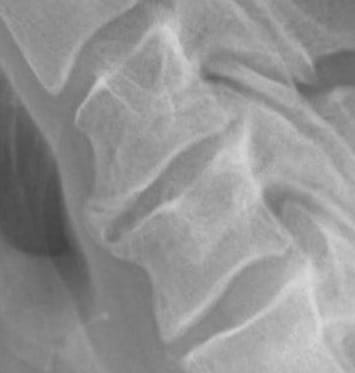
- X-rays: show disc narrowing, bone spurs and alignment
- MRI: shows whether nerves or the spinal cord are being compressed
- CT scan: shows bone spurs in detail and helps plan surgery
- Nerve studies when needed: to confirm which nerve is affected
Treatment Options
Non-surgical treatment comes first
- Physical therapy: posture, strengthening and range-of-motion exercises
- Medications: anti-inflammatories and, for nerve symptoms, nerve-pain medications
- Injections: facet joint injections, radiofrequency ablation or epidural injections
- Activity and workstation changes to reduce strain on the neck
When surgery makes sense
Surgery is recommended when spondylosis is pinching a nerve and arm symptoms don’t improve, when there is weakness, or when the spinal cord is compressed. In these cases, surgery can often correct the problem. Options include:
- Cervical artificial disc replacement: removes the disc and bone spurs and preserves motion, for appropriate patients
- ACDF: removes the disc and spurs and fuses the level, often preferred when arthritis is advanced
- Foraminotomy: opens a narrowed nerve exit
- Cervical laminectomy with posterior fusion: for spinal cord compression across several levels
Why Choose Dr. Betsy Grunch for Cervical Spondylosis
- Duke-trained: neurosurgical residency and spine research fellowship at Duke University School of Medicine, where she received the Spine Young Investigator Award
- Experience you can count on: in practice since 2013, performing 400 to 600 surgeries a year and more than 5,000 procedures over her career
- Front and back neck surgery, plus disc replacement: so your operation is matched to your anatomy
- The right treatment for you: board-certified (FAANS, FACS, FCNS), she starts with the least invasive option that will work, and recommends surgery when it can correct the problem
- Clear answers: known online as Ladyspinedoc, she makes sure you understand your imaging and every option in front of you
What to Expect If You Need Surgery
Before surgery
You’ll meet with Dr. Grunch or one of her physician assistants to review your imaging and choose the right approach. Our team coordinates pre-operative testing and reviews your medications.
Procedure day
Front-of-neck surgeries usually take one to three hours, and many patients go home the same day or after one night. Posterior surgeries usually involve a hospital stay of a few days.
Recovery timeline
- Days 1-7: walking right away; a sore throat is common after front-of-neck surgery
- Weeks 1-6: gradual return to light activity and desk work
- Weeks 6-12: physical therapy and return to exercise as cleared
- Months 3-12: continued improvement in nerve symptoms
Frequently Asked Questions
Is cervical spondylosis the same as arthritis?
Essentially, yes. It’s arthritis and disc wear in the neck. It’s extremely common with age.
Will it keep getting worse?
The changes progress slowly, but symptoms often don’t. Many people have flares that settle and long stretches with little pain.
Can it cause paralysis?
Rarely. Severe spondylosis can compress the spinal cord, which is why hand clumsiness, balance problems or trouble walking should be evaluated promptly. Treated in time, most people do well.
Does cracking my neck make it worse?
Gentle self-movement is generally fine. Forceful neck manipulation should be avoided if you have nerve or spinal cord compression.
Do I need surgery?
Most people with spondylosis don’t. Surgery is recommended when a nerve or the spinal cord is compressed, and in those cases it can often correct the problem.
Take the First Step Toward Relief
Whether you need a diagnosis, a treatment plan or a second opinion, Dr. Grunch and the Southern Neurosurgery team are here to help.
Call 470-293-9800 to schedule an appointment or contact us online.
Have a question first? Ask our virtual assistant anything, 24/7.
We see patients across metro Atlanta and North Georgia at our offices in Gainesville, Sandy Springs and South Atlanta (Riverdale). Find the office nearest you.
This page is for educational purposes only and is not a substitute for medical advice. If you have sudden weakness, numbness in the groin, or bladder or bowel changes, call 911 or go to the nearest emergency room.