
OPLL: When a Spinal Ligament Turns to Bone
Clumsy hands, trouble with buttons, or a change in your balance can come on so slowly that they’re easy to blame on age. Sometimes the cause is OPLL, a condition in which a ligament in the neck hardens and presses on the spinal cord. When it’s found, surgery can often protect the cord and stop it from getting worse.
What Is OPLL?
Ossification of the posterior longitudinal ligament (OPLL) is a condition in which the posterior longitudinal ligament, a band that runs along the back of the vertebral bodies just in front of the spinal cord, gradually thickens and turns into bone. As it grows, it narrows the spinal canal and can compress the spinal cord. OPLL most often affects the cervical spine (neck).
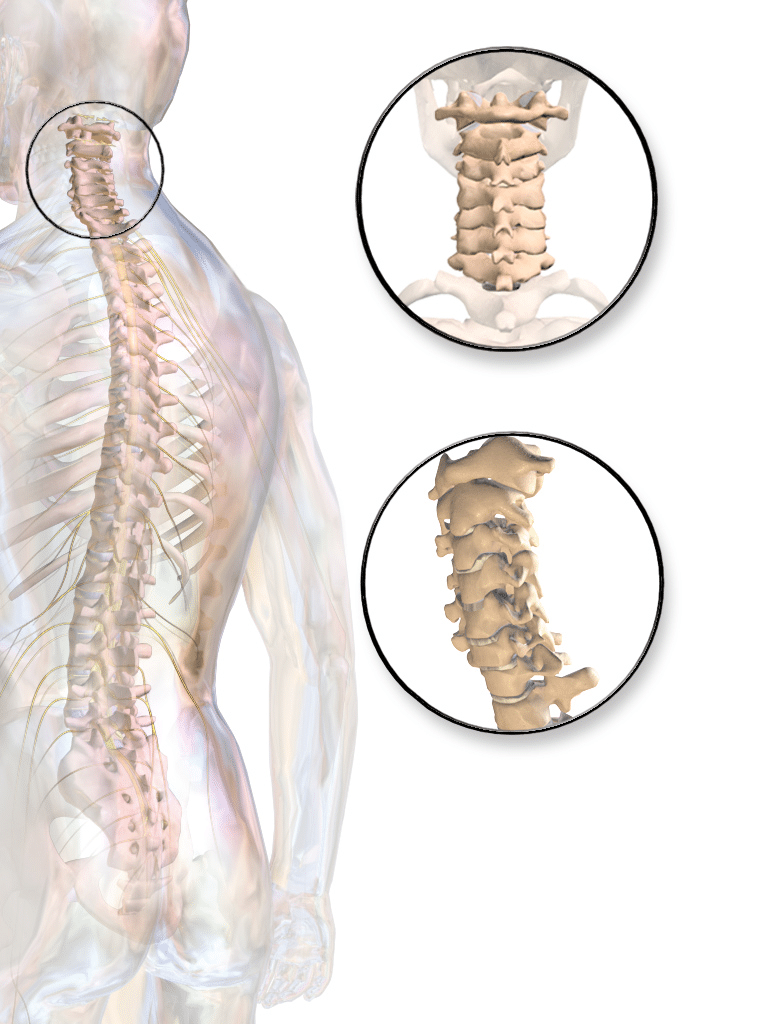
OPLL develops slowly over years. Many people have it without symptoms, but once it presses on the spinal cord, it can cause cervical myelopathy. Because the bony ligament is rigid, even a minor fall or neck injury can injure the spinal cord in someone with significant OPLL.
Symptoms
Common symptoms
- Neck pain and stiffness
- Numbness, tingling or clumsiness in the hands
- Trouble with fine tasks like buttoning, writing or picking up coins
- Balance problems or an unsteady walk
- Arm pain or weakness
Symptoms patients often ignore
- Dropping things more often
- Legs that feel stiff or heavy
- Bladder urgency
- Gradual changes that get blamed on aging or arthritis
When it’s an emergency: New weakness, numbness or trouble walking after a fall or neck injury needs emergency care. Call 911 or go to the nearest emergency room.
Causes and Risk Factors
- Genetics; OPLL is more common in people of East Asian descent
- Age, usually over 50
- Male sex
- Diabetes and obesity
- Diffuse idiopathic skeletal hyperostosis (DISH), a related condition of calcified ligaments
How We Diagnose OPLL
- Neurological exam: hand function, reflexes, sensation, balance and walking
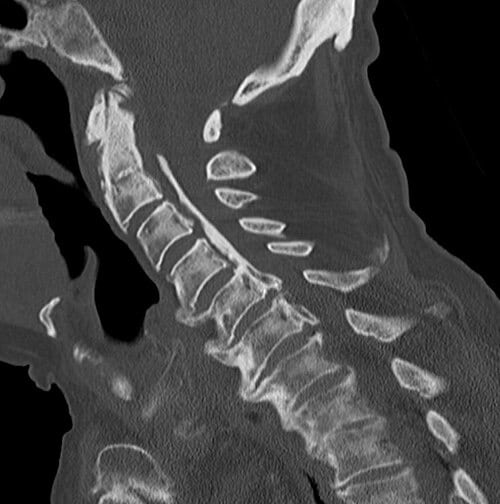
- CT scan: the best test for showing the bony ligament and how much it narrows the canal
- MRI: shows pressure on the spinal cord and any changes within the cord
- X-rays: including flexion and extension views to check alignment and motion
Treatment Options
Observation
People with OPLL who have no symptoms or very mild symptoms may be monitored with regular exams and imaging, along with precautions to avoid neck injuries.
When surgery makes sense
Surgery is recommended when OPLL causes myelopathy symptoms or significant cord compression. The goal is to relieve pressure on the spinal cord and prevent further damage, and surgery can often correct the problem. The approach depends on how many levels are involved, the shape of the ossified ligament and the alignment of your neck:
- Laminoplasty: opens the back of the spinal canal like a door to give the cord more room while preserving motion
- Laminectomy and posterior fusion: removes the back of the vertebrae and stabilizes the spine
- Anterior surgery: such as corpectomy or ACDF, removing the ossified ligament from the front for selected patients
Why Choose Dr. Betsy Grunch for OPLL
- Duke-trained: neurosurgical residency and spine research fellowship at Duke University School of Medicine, where she received the Spine Young Investigator Award
- Experience you can count on: in practice since 2013, performing 400 to 600 surgeries a year and more than 5,000 procedures over her career
- Front and back approaches: so the operation is chosen for the shape and extent of your OPLL, not the other way around
- The right treatment for you: board-certified (FAANS, FACS, FCNS), she starts with the least invasive option that will work, and recommends surgery when it can correct the problem
- Clear answers: known online as Ladyspinedoc, she makes sure you understand your imaging and every option in front of you
What to Expect If You Need Surgery
Before surgery
You’ll meet with Dr. Grunch or one of her physician assistants to review your CT and MRI and choose the right approach. Our team coordinates pre-operative testing.
Procedure day
Surgery typically takes two to four hours, with nerve monitoring throughout. Most patients stay in the hospital for a few days.
Recovery timeline
- Days 1-4: walking with help; neck soreness is common
- Weeks 1-6: limit lifting and neck strain; a collar may be used
- Weeks 6-12: physical therapy for strength and balance
- Months 3-12: hand function and balance can continue to improve
Frequently Asked Questions
Will OPLL keep getting worse?
It can slowly progress. Regular monitoring helps decide when treatment is needed.
Can OPLL be treated without surgery?
Mild cases without symptoms can be monitored. Medications and therapy don’t remove the bony ligament, so surgery is the treatment once the spinal cord is compressed.
Why should I be careful about falls?
When the canal is narrowed by OPLL, even a minor injury can bruise the spinal cord.
Will my symptoms go away after surgery?
Surgery is mainly done to stop further damage. Many patients also improve, especially when treated before severe symptoms develop.
Is OPLL the same as arthritis?
No. Arthritis involves the joints and discs, while OPLL is hardening of a ligament. They can occur together.
Take the First Step Toward Relief
Whether you need a diagnosis, a treatment plan or a second opinion, Dr. Grunch and the Southern Neurosurgery team are here to help.
Call 470-293-9800 to schedule an appointment or contact us online.
Have a question first? Ask our virtual assistant anything, 24/7.
We see patients across metro Atlanta and North Georgia at our offices in Gainesville, Sandy Springs and South Atlanta (Riverdale). Find the office nearest you.
This page is for educational purposes only and is not a substitute for medical advice. If you have sudden weakness, numbness in the groin, or bladder or bowel changes, call 911 or go to the nearest emergency room.