
Removing and Rebuilding a Damaged Vertebra
If you have sudden or rapidly worsening weakness, numbness, trouble walking, or trouble controlling your bladder or bowels, especially after an injury or with a known spinal tumor or infection, call 911 or go to the nearest emergency room.
When a vertebra is crushed, eroded by a tumor or infection, or pressing on the spinal cord from behind the bone, removing a disc alone isn’t enough. A vertebral corpectomy can often correct the problem by removing the damaged bone, freeing the spinal cord and rebuilding the spine with strong support.
What Is a Vertebral Corpectomy?
A vertebral corpectomy is surgery to remove part or all of a vertebral body, the thick, round front portion of a vertebra, along with the discs above and below it. The space is then rebuilt with a cage or bone graft, usually with a plate or screws and rods, so the spine can carry weight and heal into one solid segment.
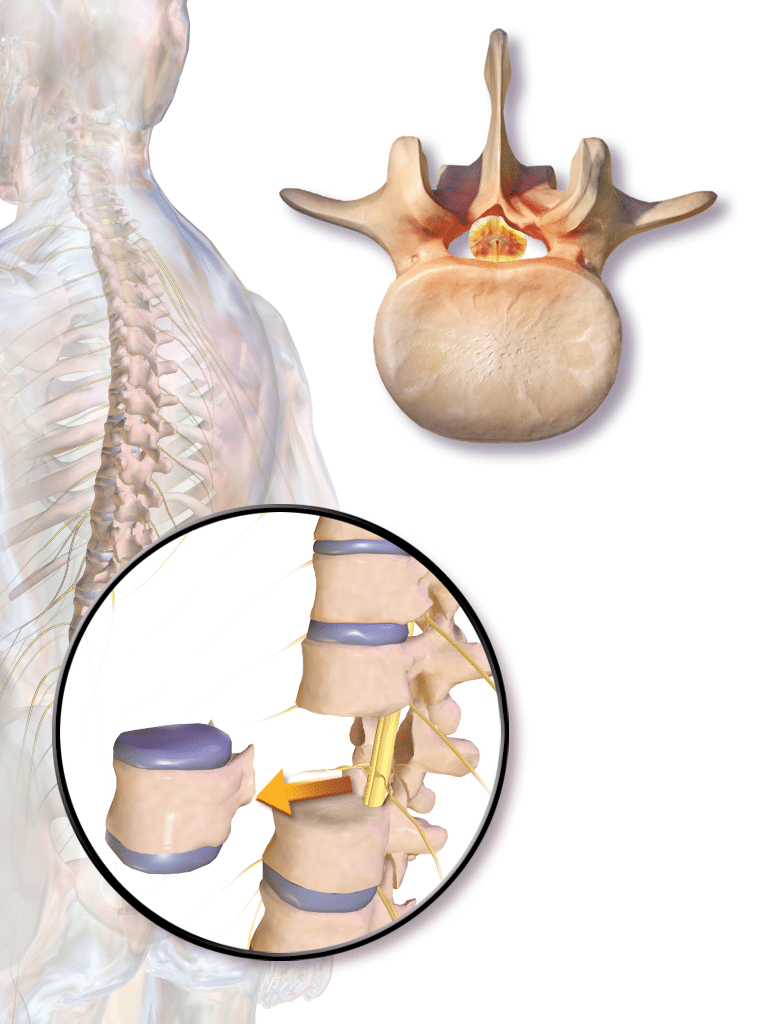
A corpectomy is done where the problem is:
- In the neck (cervical corpectomy): through the front of the neck, often to relieve spinal cord compression that sits behind the vertebral body, such as from OPLL or severe cervical spondylosis. It is often combined with an ACDF at nearby levels.
- In the mid and lower back (thoracic and lumbar corpectomy): through the side or the back, often for fractures, tumors or infection, and usually combined with screws and rods.
Who Needs a Corpectomy?
- Spinal cord compression behind one or more vertebral bodies, causing myelopathy
- A burst fracture or crushed vertebra pushing bone into the spinal canal
- A tumor that has destroyed a vertebra, such as metastatic spine disease or an extradural tumor
- Infection of the spine, such as vertebral osteomyelitis or discitis, that has damaged the bone
- Severe kyphosis or deformity from a collapsed vertebra
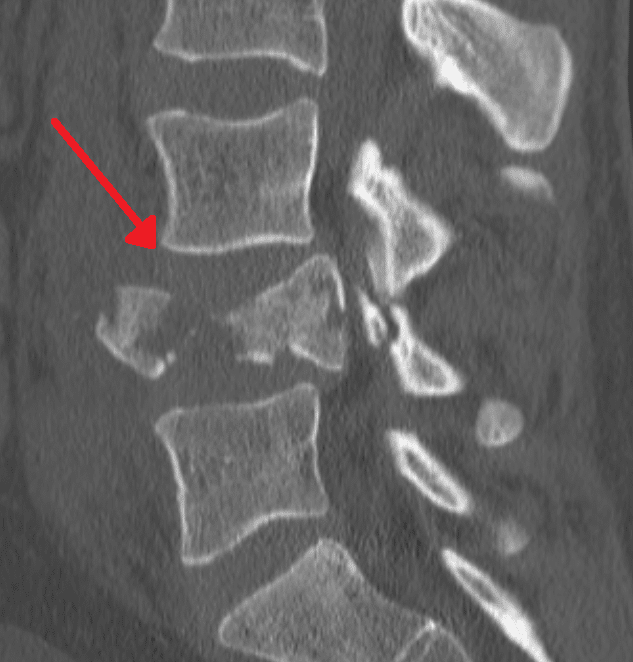
A corpectomy is a larger surgery than a discectomy. Surgeons recommend it when the pressure or damage involves the vertebral body itself and a smaller operation won’t safely solve the problem.
Treatment Without Surgery
- Bracing and pain control: for stable fractures
- Antibiotics: for spine infections, often for several weeks
- Radiation or other cancer treatment: for some spinal tumors, coordinated with your cancer team
- Physical therapy and close monitoring: for mild symptoms
When the spinal cord is compressed, the spine is unstable or the bone has collapsed, surgery can often correct the problem.
How a Corpectomy Is Done
- Planning: MRI, CT and X-rays show which vertebrae are involved and how to rebuild the spine.
- Anesthesia and monitoring: You’ll be fully asleep. Spinal cord and nerve monitoring is used throughout surgery.
- Reaching the spine: Through the front of the neck for a cervical corpectomy, or through the side or back for the thoracic and lumbar spine.
- Removing the damaged bone: The discs and the damaged vertebral body are carefully removed, along with any bone, tumor or infected tissue pressing on the spinal cord.
- Rebuilding the spine: A cage or bone graft is placed to restore height and support.
- Stabilizing: A plate, or screws and rods, holds everything in place while the bone heals. Some patients also need screws placed from the back.
- Closing: The incisions are closed in layers.
Watch an animation of a corpectomy:
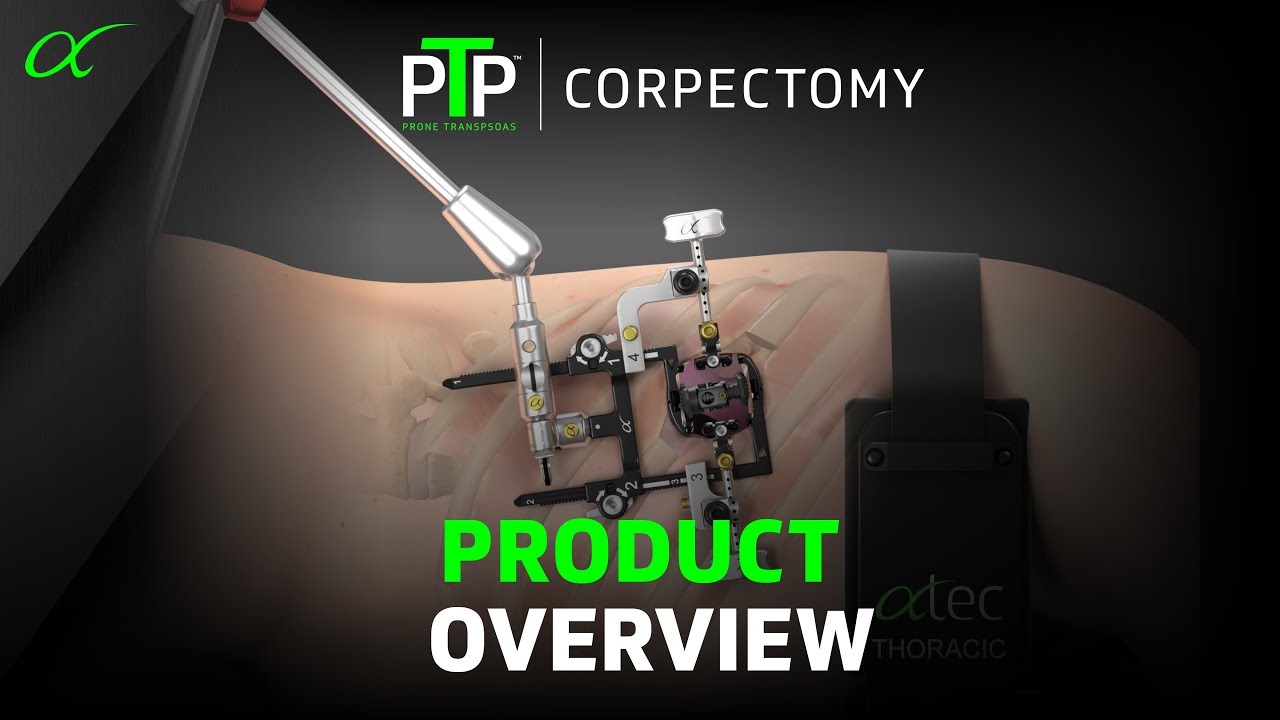
Video: Corpectomy Animation, courtesy of ATEC Spine (YouTube)
Benefits and Risks
Benefits
- Removes pressure on the spinal cord that a discectomy alone can’t reach
- Rebuilds a spine weakened by a fracture, tumor or infection
- Restores alignment and stability
- Often improves pain, hand function and walking
Risks
- Infection or bleeding
- Spinal cord or nerve injury, which is uncommon
- Trouble swallowing or a hoarse voice after surgery through the front of the neck
- A spinal fluid leak
- The cage settling or the bones not fusing, which can require more surgery
- Injury to nearby structures, such as blood vessels, the esophagus or the lungs, which is rare
- Risks related to anesthesia, including blood clots and pneumonia
What to Expect
In the hospital
A corpectomy is often done in the hospital soon after a fracture, or once a tumor or infection is found to be pressing on the spinal cord. Your care team will review your imaging, check your strength and sensation, and explain the plan to you and your family. If you take blood thinners, they will be paused or reversed when it’s safe. Smoking and nicotine slow bone healing and can cause a fusion to fail, so stopping during recovery is strongly recommended.
Procedure day
Surgery usually takes three to six hours, depending on the location and the number of levels. Most patients stay in the hospital for two to five days. You’ll be up and walking with physical therapy as soon as it’s safe, often the day after surgery.
Recovery timeline
- First two weeks: Walk several times a day. Soreness is normal, and after neck surgery, swallowing may feel tight for a few weeks.
- Four to six weeks: Your follow-up visit, with X-rays to check the cage and hardware.
- Six to twelve weeks: Restrictions are gradually lifted, and physical therapy helps rebuild strength.
- Six to twelve months: The bones fuse. Spinal cord function can keep improving for many months.
Every patient heals differently. Your recovery will depend on the reason for surgery, the number of levels and your overall health.
Caring for yourself at home
- Collar or brace: Wear it whenever your surgical team tells you to.
- Walking: Walk 30 to 60 minutes a day, broken into short sessions.
- Restrictions for about six weeks: No bending, twisting or lifting more than 10 pounds, and no overhead reaching after neck surgery.
- Your incision: If it is closed with skin glue, you may shower the day after surgery; if it has stitches or staples, wait three days. Don’t scrub, don’t use ointments or creams, and don’t soak in a bath, hot tub or pool for six weeks.
- Swallowing: After neck surgery, eat soft foods and take small bites until swallowing feels normal.
- Medications: Avoid anti-inflammatory medications such as ibuprofen and naproxen, which can interfere with fusion. Blood thinners are held until your surgical team tells you to restart them. Take pain medication with food, avoid alcohol while taking it, and use a daily stool softener.
- Driving: No driving while taking narcotic pain medication or wearing a collar.
If you go home in a cervical collar, watch how to wear it correctly:

Video: How to Correctly Wear the Aspen Vista Cervical Collar, from Dr. Grunch on her Ladyspinedoc channel (YouTube)
Call Dr. Grunch’s office at 470-293-9800, or the surgeon who treated you in the hospital, if you have a fever over 101°F, redness, warmth or drainage from the incision, calf pain or swelling, or constipation that medication doesn’t relieve. Call 911 for trouble breathing, swelling in the neck with trouble swallowing, chest pain, new weakness, or new trouble controlling your bladder or bowels.
Download your patient instructions
Print these sheets or save them to your phone so you have them before and after surgery:
- Post-operative guidelines: Anterior Cervical Fusion (for neck corpectomy) (PDF)
- Post-operative guidelines: Posterior or Lateral Lumbar Fusion (for back corpectomy) (PDF)
You’ll find instructions for other procedures on our Patient Resources page.
Frequently Asked Questions
What’s the difference between a corpectomy and a discectomy?
A discectomy removes only the disc between two vertebrae. A corpectomy removes the vertebral body itself, plus the discs above and below, which allows more room for the spinal cord and lets the spine be rebuilt.
What replaces the bone that is removed?
A cage made of metal or other strong material, filled with bone graft, or a piece of bone graft alone. It’s held in place with a plate or screws and rods until the bone heals around it.
Will I lose motion in my neck or back?
The fused segment won’t move, but the rest of the spine usually makes up for much of it. Most people adapt well.
Will I need radiation or other treatment if I have a tumor?
Often. Surgery is usually one part of the plan, and Your surgeon works with your oncology team on radiation and other treatment.
How long does the fusion take to heal?
The hardware holds the spine steady right away, but the bone takes about six to twelve months to fully fuse.
Follow-Up Care After Hospital Treatment
For a new spine injury or sudden weakness, numbness, or trouble controlling your bladder or bowels, call 911 or go to the nearest emergency room.
A corpectomy is usually done in the hospital, often as an urgent surgery. After you go home, follow-up with Dr. Grunch or the surgeon who treated you in the hospital is an important part of recovery, including X-rays to check healing and guidance on returning to work, driving and normal activities. If Dr. Grunch cared for you in the hospital, or you’ve been referred for follow-up, call 470-293-9800 to schedule your visit or contact us online.
We see patients across metro Atlanta and North Georgia at our offices in Gainesville, Sandy Springs and South Atlanta (Riverdale). Find the office nearest you.
Related pages: Burst fractures · Metastatic spine disease · Spinal osteomyelitis · Cervical myelopathy · Spinal cord decompression · Spinal fracture surgery
This page is for educational purposes only and is not medical advice. It does not replace individualized care from a licensed physician. Please talk with your own doctor about your symptoms. If you have bladder or bowel changes, groin numbness or rapidly worsening weakness, call 911 or go to the nearest emergency room.