
Extradural Spinal Tumors: Protecting Your Spine and Nerves
Learning that there’s a tumor in or around your spine raises a lot of questions. The most important thing to know is that there are effective treatments, and a clear plan starts with understanding exactly what and where the tumor is.
What Are Extradural Tumors?
Spinal tumors are grouped by where they grow. Extradural tumors grow outside the dura, the tough protective sac that holds the spinal cord, nerves and spinal fluid. Most start in the bones of the spine (the vertebrae) or the tissues right around them. They are the most common type of spinal tumor.
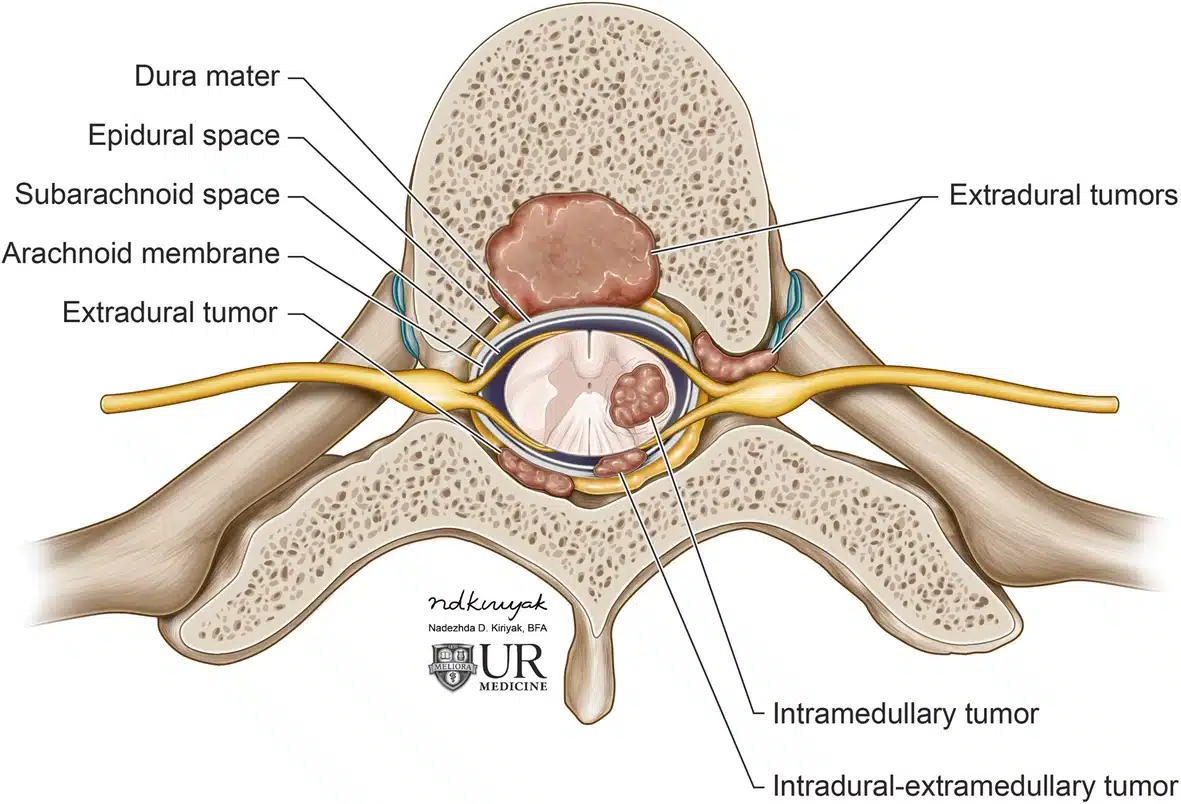
By far the most common extradural tumors are cancers that have spread to the spine from somewhere else in the body (metastatic spine disease). Less often, a tumor starts in the spine itself. Some of these are benign (not cancer), and some are malignant.
Types of Extradural Tumors
- Metastatic tumors: cancer that has spread to the spine, most often from the breast, lung, prostate, kidney or thyroid
- Multiple myeloma and lymphoma: blood cancers that can involve the vertebrae
- Benign bone tumors: such as hemangiomas (very common and usually harmless), osteoid osteomas, osteoblastomas, aneurysmal bone cysts and giant cell tumors
- Primary malignant bone tumors: rare cancers such as chordoma, chondrosarcoma and osteosarcoma
Symptoms
Common symptoms
- Back or neck pain that is constant, gets worse over time and is often worse at night or when lying down
- Pain that doesn’t improve with rest
- Pain that travels into the arms, chest wall or legs
- Numbness, tingling or weakness
Symptoms patients often ignore
- Night pain that wakes you from sleep
- Back pain in someone with a history of cancer, even years later
- Unexplained weight loss or fatigue
- A sudden collapse of a vertebra with little or no injury (a pathologic fracture)
- Trouble with balance or walking
When it’s an emergency: New weakness in your legs, numbness in the groin, or bladder or bowel changes can mean the tumor is pressing on the spinal cord or nerves. Call 911 or go to the nearest emergency room.
Causes and Risk Factors
- A current or past diagnosis of cancer, especially breast, lung, prostate, kidney or thyroid cancer
- Multiple myeloma or lymphoma
- Older age
- Most primary bone tumors have no known cause
How We Diagnose Extradural Tumors
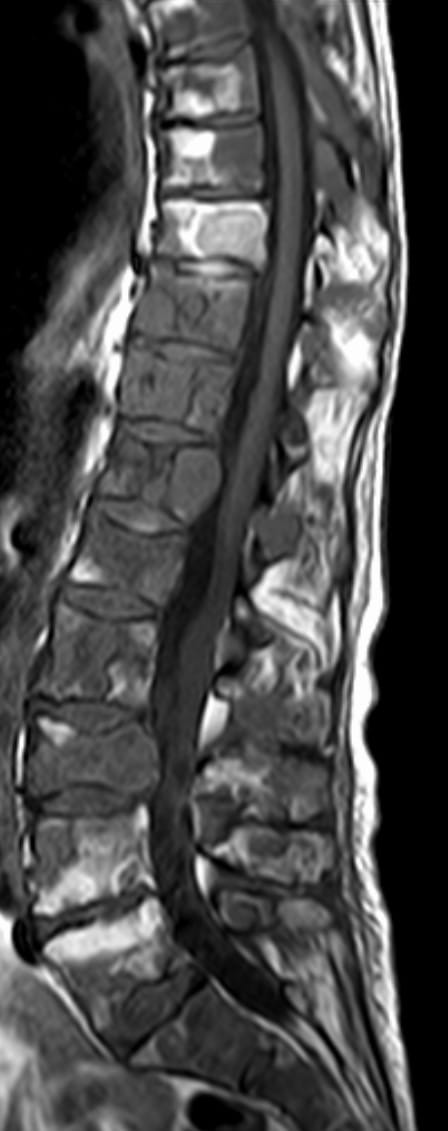
- MRI with and without contrast: shows the tumor, how much of the bone is involved and whether the spinal cord or nerves are compressed
- CT scan: shows bone destruction and spinal stability and helps plan surgery
- Bone scan or PET scan: looks for other areas of the skeleton or body that may be involved
- Biopsy: a sample, often taken with a CT-guided needle, confirms the exact type of tumor so the right treatment can be chosen
Treatment Options
Treatment depends on the type of tumor, whether it is pressing on the spinal cord or nerves, whether the spine is stable, and your overall health and cancer treatment plan. Many patients are cared for by a team that includes the spine surgeon, a medical oncologist and a radiation oncologist.
Non-surgical treatment
- Observation: many benign tumors, such as most hemangiomas, need only periodic imaging
- Radiation therapy: including focused stereotactic radiation, which delivers high doses precisely to the tumor
- Chemotherapy, hormone therapy, targeted therapy or immunotherapy for cancers that respond to them
- Bracing and pain control
When surgery makes sense
Surgery is recommended when a tumor is pressing on the spinal cord or nerves, when the spine is unstable or a vertebra has collapsed, when pain is severe despite other treatment, or when the goal is to remove a primary tumor completely. In these situations, surgery can often correct the problem. Options include:
- Spinal cord decompression: removing the tumor tissue pressing on the spinal cord or nerves
- Vertebral corpectomy and stabilization: removing a tumor-filled vertebra and rebuilding the spine with an implant and screws and rods
- Kyphoplasty: a minimally invasive procedure that injects bone cement into a fractured vertebra to relieve pain and restore support
- Minimally invasive stabilization: placing screws through small incisions so patients can recover quickly and move on to radiation or other treatment
Why Choose Dr. Betsy Grunch for Spinal Tumors
- Duke-trained: neurosurgical residency and spine research fellowship at Duke University School of Medicine, where she received the Spine Young Investigator Award
- Experience you can count on: in practice since 2013, performing 400 to 600 surgeries a year and more than 5,000 procedures over her career
- Team approach: she works closely with your oncologists so surgery fits into your overall cancer care
- The right treatment for you: board-certified (FAANS, FACS, FCNS), she starts with the least invasive option that will work, and recommends surgery when it can correct the problem
- Clear answers: known online as Ladyspinedoc, she makes sure you understand your imaging and every option in front of you
What to Expect If You Need Surgery
Before surgery
You’ll meet with Dr. Grunch or one of her physician assistants to review your imaging, biopsy results and goals. Our team coordinates with your oncology team and arranges any testing you need before surgery.
Procedure day
The length of surgery depends on the procedure, from under an hour for kyphoplasty to several hours for a corpectomy and fusion. Most patients stay in the hospital for a few days after larger operations.
Recovery timeline
- Days 1-3: up and walking with help; pain control
- Weeks 2-4: wound healing; many patients begin or resume radiation or other cancer treatment once the incision has healed
- Weeks 6-12: gradual return to activities and physical therapy as cleared
- Ongoing: follow-up imaging to monitor the spine and the tumor
Frequently Asked Questions
Does a spinal tumor mean I have cancer?
Not always. Some extradural tumors, such as hemangiomas, are benign and often found by chance. Others are cancers that started elsewhere. Imaging and sometimes a biopsy tell the difference.
Will I need surgery?
Many patients don’t. Surgery is recommended when the tumor is pressing on the spinal cord or nerves, the spine is unstable, or the tumor needs to be removed for diagnosis or cure.
Can radiation be used instead of surgery?
For many tumors, yes. Radiation is often the main treatment. When the spinal cord is compressed or the spine is unstable, surgery followed by radiation often gives the best results.
What does it mean if my back pain is worse at night?
Night pain that doesn’t improve with rest can be a sign of a tumor or infection and should be evaluated, especially if you have a history of cancer.
Will I be able to walk after surgery?
One of the main goals of surgery is to protect or restore walking. Patients who are still walking before surgery have the best chance of staying on their feet afterward, which is why prompt treatment matters.
Take the Next Step
Hearing that you have a spinal tumor is frightening. Whether you need a diagnosis, a treatment plan or a second opinion, Dr. Grunch and the Southern Neurosurgery team are here to help you understand your options.
Call 470-293-9800 to schedule an appointment or contact us online.
Have a question first? Ask our virtual assistant anything, 24/7.
We see patients across metro Atlanta and North Georgia at our offices in Gainesville, Sandy Springs and South Atlanta (Riverdale). Find the office nearest you.
This page is for educational purposes only and is not a substitute for medical advice. If you have sudden weakness, numbness in the groin, or bladder or bowel changes, call 911 or go to the nearest emergency room.