
Stabilizing the Lower Back to Relieve Pain
When a segment of the lower back is unstable, slipping or worn out and causing pain, a lumbar fusion can often correct the problem by making that segment solid and stable again.
What Is a Lumbar Fusion?
A lumbar fusion is a surgery that permanently joins two or more vertebrae in the lower back so they heal into one solid bone. Stopping motion at a painful or unstable level can relieve back pain, take pressure off pinched nerves and restore the spine’s alignment.
Most lumbar fusions today are interbody fusions. The damaged disc between two vertebrae is removed and replaced with a spacer (also called a cage) filled with bone graft. The spacer restores the normal height of the disc space, which opens up the nerve passages, and the bone graft grows through it to fuse the vertebrae together. Screws and rods are usually added to hold everything steady while the bone heals.
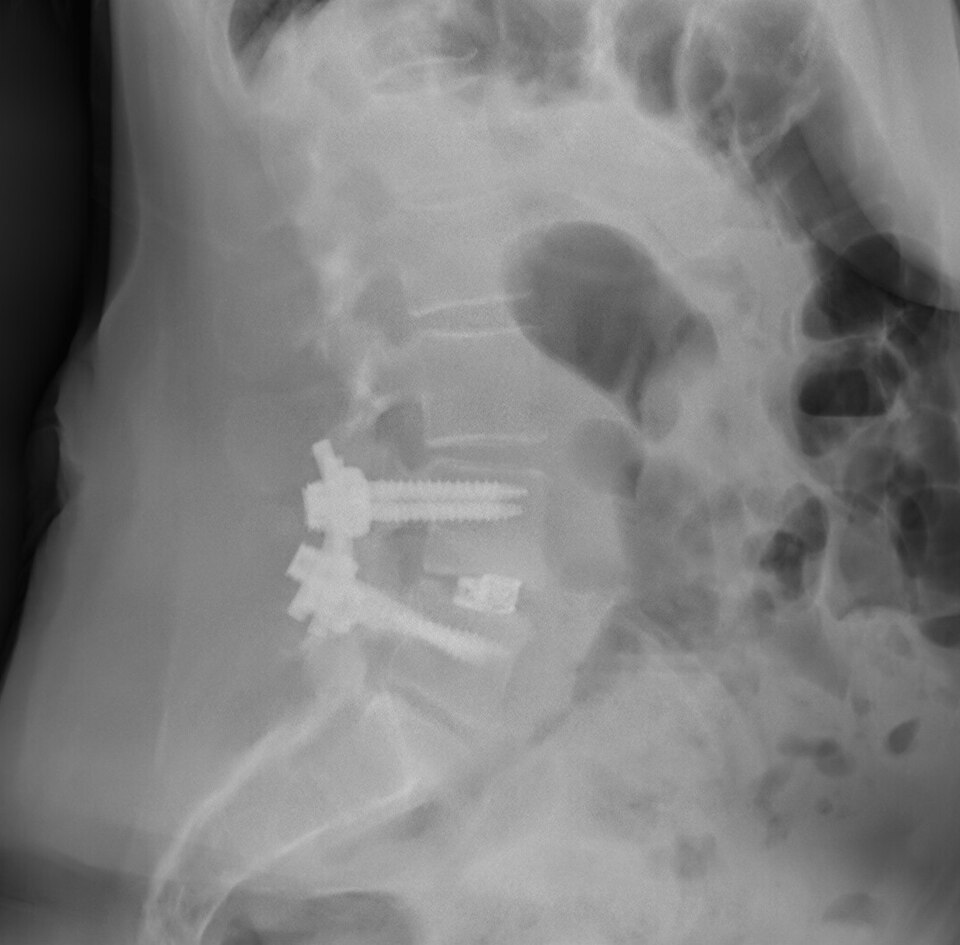
The different approaches: PLIF, TLIF, ALIF and LLIF
The letters describe the direction from which the surgeon reaches the disc. Dr. Grunch chooses the approach that best fits your anatomy, the level being treated and your goals:
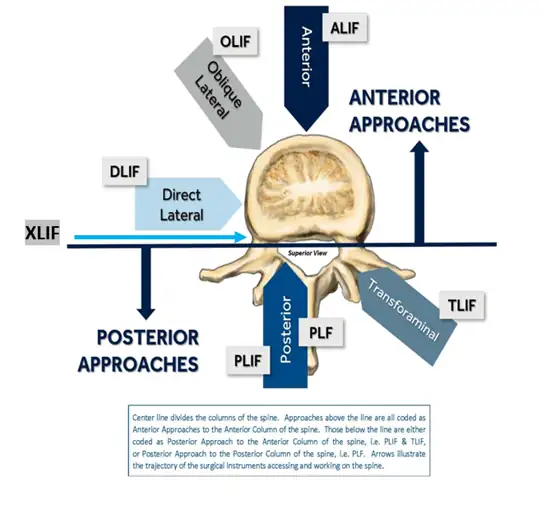
- TLIF (transforaminal lumbar interbody fusion): through the back, reaching the disc from one side through the opening where the nerve exits. It is often done with minimally invasive techniques. Learn more about minimally invasive fusion.
- PLIF (posterior lumbar interbody fusion): through the back, reaching the disc from both sides of the spinal canal. It is useful when both sides need decompression.
- ALIF (anterior lumbar interbody fusion): through a small incision in the lower abdomen. It allows a large spacer, excellent restoration of disc height and alignment, and leaves the back muscles untouched. It is often used at L4-L5 and L5-S1.
- LLIF (lateral lumbar interbody fusion): through a small incision on the side of the body, passing through the psoas muscle to reach the disc. It is well suited to the upper and middle lumbar levels and to correcting curves.
Some patients need a combination, such as an ALIF or LLIF from the front or side followed by screws placed through small incisions in the back.
Who Needs a Lumbar Fusion?
- Spondylolisthesis, where one vertebra slips forward over another
- Spinal instability or a level that moves abnormally on flexion and extension X-rays
- Spinal stenosis combined with slipping or instability
- Severe degenerative disc disease or a collapsed disc causing back and leg pain, when disc replacement isn’t an option
- A recurrent disc herniation at the same level, or adjacent segment disease above or below a previous fusion
- Deformity such as scoliosis, or fractures, tumors or infection that have weakened the spine
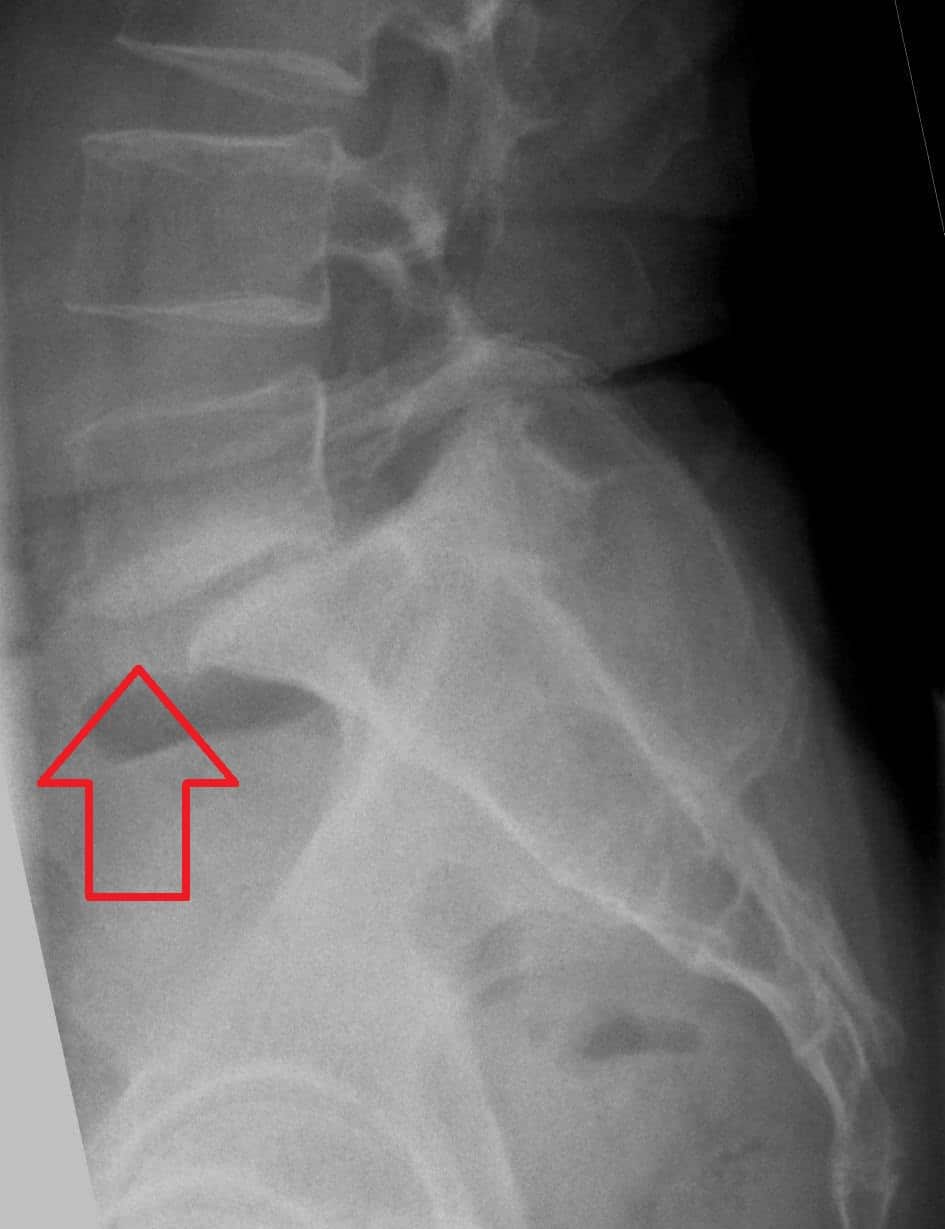
A worn disc on an MRI alone doesn’t mean you need a fusion. Dr. Grunch makes sure your imaging matches your symptoms, and she also offers lumbar disc replacement and decompression without fusion when those are better choices.
Treatments to Try First
- Physical therapy: core strengthening and a structured exercise program
- Medications: anti-inflammatory medications, muscle relaxers or nerve pain medications
- Injections: epidural steroid injections, facet injections or radiofrequency ablation
- Activity changes and weight management to reduce stress on the spine
When these no longer keep you active, or nerves are being compressed by slipping or instability, surgery can often correct the problem.
How a Lumbar Fusion Is Done
- Anesthesia and monitoring: You’ll be fully asleep. Nerve monitoring is used to protect the nerves during surgery.
- Reaching the spine: Depending on the approach, through the back, the side or the front of the abdomen.
- Decompression: Bone, ligament and disc material pressing on the nerves are removed.
- Preparing the disc space: The disc is removed and the bone surfaces are prepared so they can fuse.
- Placing the spacer: A spacer filled with bone graft is placed to restore disc height and alignment.
- Stabilizing: Screws and rods are placed, often through small incisions with image guidance, to hold the level steady.
- Closing: The incisions are closed with dissolvable stitches and skin glue.
Benefits and Risks
Benefits
- Relief of back and leg pain from instability, slipping or a collapsed disc
- Restored disc height and more room for the nerves
- A stable spine and improved alignment
- A well-studied surgery with reliable long-term results for the right patients
Risks
- Infection or bleeding
- The bones not fusing (nonunion), which is more common in people who smoke
- Screw or spacer loosening, which can require another surgery
- Extra wear at the levels above or below the fusion over time (adjacent segment disease)
- Nerve injury or a spinal fluid leak, which are uncommon
- Approach-specific risks, such as blood vessel injury with ALIF or temporary thigh numbness or weakness with LLIF
- Risks related to anesthesia, including blood clots
Why Choose Dr. Betsy Grunch for Your Lumbar Fusion
- Duke-trained: Dr. Grunch completed her neurosurgical residency and a spine research fellowship at Duke University School of Medicine, one of the top neurosurgery programs in the country, where she received the Spine Young Investigator Award.
- Minimally invasive by design: Minimally invasive spine surgery, including transforaminal approaches through Kambin’s triangle, is one of her signature areas, so you can get back on your feet sooner.
- Fusion only when you need it: She also performs lumbar and cervical disc replacement and decompression without fusion, so a fusion is recommended only when it’s truly the best option for you.
- Experience you can count on: She has been in practice since 2013 and performs 400 to 600 surgeries a year, more than 5,000 procedures over her career.
- Every approach: She performs TLIF, PLIF, ALIF and LLIF and chooses the approach that best fits your anatomy rather than using one technique for everyone.
- Second opinions and revisions: She regularly sees patients who had spine surgery elsewhere and want a second opinion or need a revision.
- A teacher at heart: As “Ladyspinedoc,” she is known for explaining spine conditions clearly. You’ll leave your visit understanding your imaging and every option in front of you.
What to Expect
Before surgery
You’ll meet with Dr. Grunch or one of her physician assistants to review your imaging, your exam and your goals, and to decide together whether a lumbar fusion is right for you. Our team will coordinate any pre-operative testing, review your medications (including blood thinners you may need to pause) and walk you through the day of surgery so nothing is a surprise. Smoking and nicotine slow bone healing and can cause a fusion to fail, so stopping before surgery is strongly recommended. Our office can help.
Procedure day
Surgery usually takes two to four hours, depending on the approach and the number of levels. Most patients stay in the hospital for one to three nights, often less with minimally invasive techniques. You’ll be up and walking by the day after surgery, and physical therapy will help you get moving safely before you go home.
Recovery timeline
- First two weeks: Leg pain often improves quickly. Back soreness is normal. Walk several times a day and wear your brace when you’re up.
- Four to six weeks: Your follow-up visit, with X-rays to check healing. Many people with desk jobs return to work in three to six weeks.
- Six to twelve weeks: Restrictions are gradually lifted, and physical therapy may begin to strengthen your core.
- Six to twelve months: The bones continue to fuse. Most patients are back to their normal activities.
Every patient heals differently. Your exact timeline will depend on your symptoms, the number of levels fused, your job and your overall health.
Caring for yourself at home
- Back brace: Wear your brace whenever you’re out of bed and moving around.
- Walking: Walk 30 to 60 minutes a day, broken into 10- to 15-minute sessions, and try not to sit for more than 30 minutes at a time.
- Restrictions for about six weeks: No bending at the waist, no twisting and no lifting more than 10 pounds. That includes vacuuming, laundry, golf, yard work and lifting young children or grandchildren. Let others help you at home.
- Your incision: If your incision is closed with skin glue, you may shower the day after surgery; if it has stitches or staples, wait three days. Don’t scrub, don’t use ointments or creams, and don’t soak in a bath, hot tub or pool for six weeks.
- Medications: Avoid anti-inflammatory medications such as ibuprofen, naproxen, meloxicam, celecoxib and diclofenac, which can interfere with fusion. Blood thinners are held for 5 to 7 days after surgery until Dr. Grunch’s team tells you to restart them. Take pain medication with food, avoid alcohol while taking it, and use a daily stool softener.
- Bone growth stimulator: If one is prescribed, the manufacturer will contact you after surgery.
- Driving: You may drive once you are no longer taking narcotic pain medication, and you may ride as a passenger before then.
- Follow-up: Your follow-up visit is about four to six weeks after surgery. Any outside stitches or staples are removed at 10 to 14 days.
Watch Dr. Grunch’s tips for recovering from spine surgery:
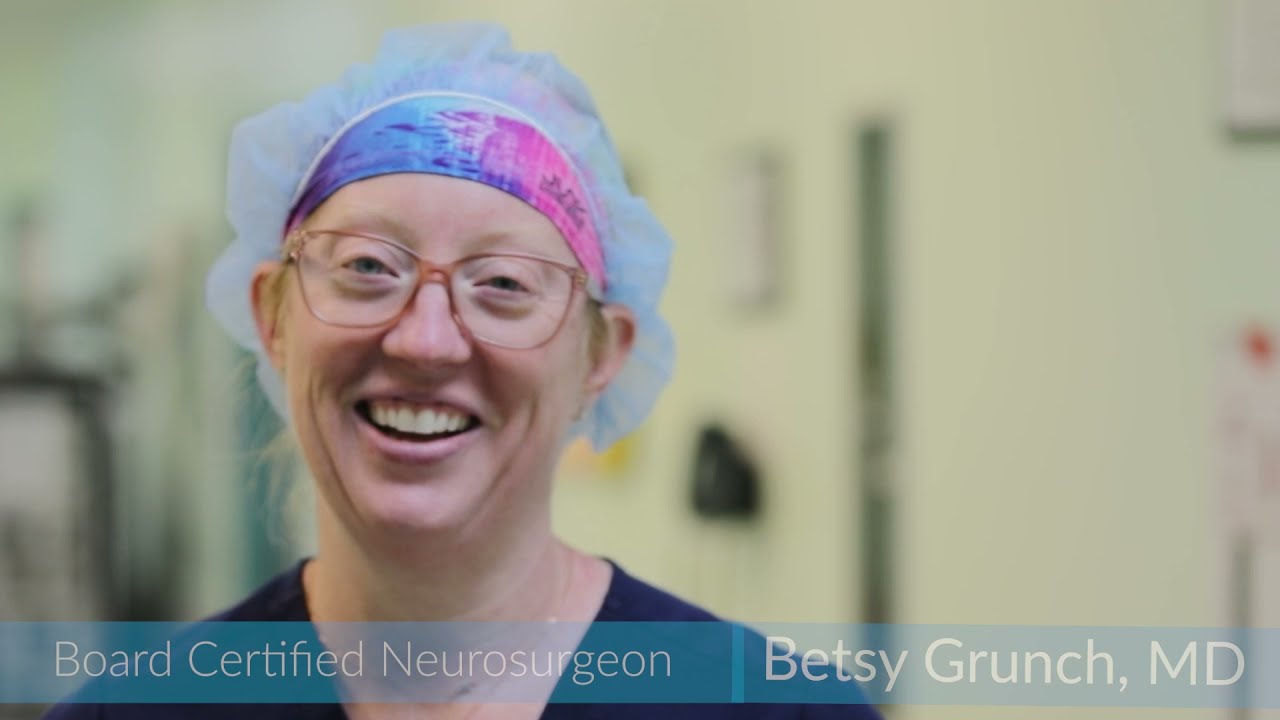
Video: 6 Tips for Your Recovery From Spine Surgery, from Dr. Grunch on her Ladyspinedoc channel (YouTube)
Learn how a bone growth stimulator can support your fusion:
Video: Spinal Fusion Patients: Are You Using a Bone Growth Stimulator?, from Dr. Grunch on her Ladyspinedoc channel (YouTube)
Call the office at 470-293-9800 if you have a fever over 101°F, redness, warmth or significant drainage from the incision, calf pain or swelling, constipation that medication doesn’t relieve, new trouble controlling your bladder or bowels, or worsening pain down your leg. Call 911 for chest pain or shortness of breath.
Download your patient instructions
Print these sheets or save them to your phone so you have them before and after surgery:
- About your surgery: Transforaminal Lumbar Interbody Fusion (TLIF) (PDF)
- About your surgery: Anterior Lumbar Interbody Fusion (ALIF) (PDF)
- About your surgery: Lateral Lumbar Interbody Fusion (PDF)
- About your surgery: Lumbar Interbody Fusion (PDF)
- Post-operative guidelines: Posterior or Lateral Lumbar Fusion (PDF)
- Post-operative guidelines: Anterior Lumbar Fusion (PDF)
You’ll find instructions for other procedures on our Patient Resources page.
Frequently Asked Questions
Will I lose flexibility in my back?
Fusing one or two levels has only a small effect on overall motion, because most bending comes from the hips and the other levels of the spine. Most people don’t notice a big difference in daily life.
Which approach is best?
No single approach is best for everyone. The right one depends on which level is affected, your alignment, your anatomy and any prior surgery. Dr. Grunch will explain why she recommends a particular approach for you.
Why can’t I take ibuprofen after a fusion?
Anti-inflammatory medications can slow bone healing and interfere with fusion. Dr. Grunch’s team will tell you when it’s safe to restart them.
How long does it take for the fusion to heal?
The screws and spacer hold the spine steady right away, but the bone takes about six to twelve months to fully fuse. Not smoking, good nutrition and staying active all help.
Could I have a disc replacement instead?
Possibly. For some patients with disc-related back pain and healthy facet joints, a lumbar disc replacement preserves motion. Dr. Grunch will tell you whether you’re a candidate.
Take the First Step Toward Relief
If back or leg pain from an unstable or worn-out spine is keeping you from living your life, you have options. Whether you need a treatment plan, a second opinion or a clear explanation of your imaging, Dr. Grunch and the Southern Neurosurgery team are here to help.
Call 470-293-9800 to schedule an appointment or contact us online.
Have a question first? Ask our virtual assistant anything, 24/7.
We see patients across metro Atlanta and North Georgia at our offices in Gainesville, Sandy Springs and South Atlanta (Riverdale). Find the office nearest you.
Related pages: ALIF · LLIF · TLIF · Spondylolisthesis · Spinal instability · Degenerative disc disease · Minimally invasive fusion · OptiLIF · Revision fusion
This page is for educational purposes only and is not medical advice. It does not replace individualized care from a licensed physician. Please talk with your own doctor about your symptoms. If you have bladder or bowel changes, groin numbness or rapidly worsening weakness, call 911 or go to the nearest emergency room.