
Spinal Instability: When the Spine Moves More Than It Should
A spine that shifts or “catches” with movement can cause pain that’s hard to escape. Instability is something we can measure, and when it’s the cause, it can often be corrected.
What Is Spinal Instability?
A healthy spine moves within a safe range. Discs, joints, ligaments and muscles all work together to keep each vertebra lined up as you bend and twist. Spinal instability means one level of the spine moves too much or in an abnormal direction under normal loads.
That extra movement can cause mechanical back or neck pain, and it can pinch nerves or, in the neck and upper back, the spinal cord. Instability can develop slowly from wear and tear or suddenly after an injury.
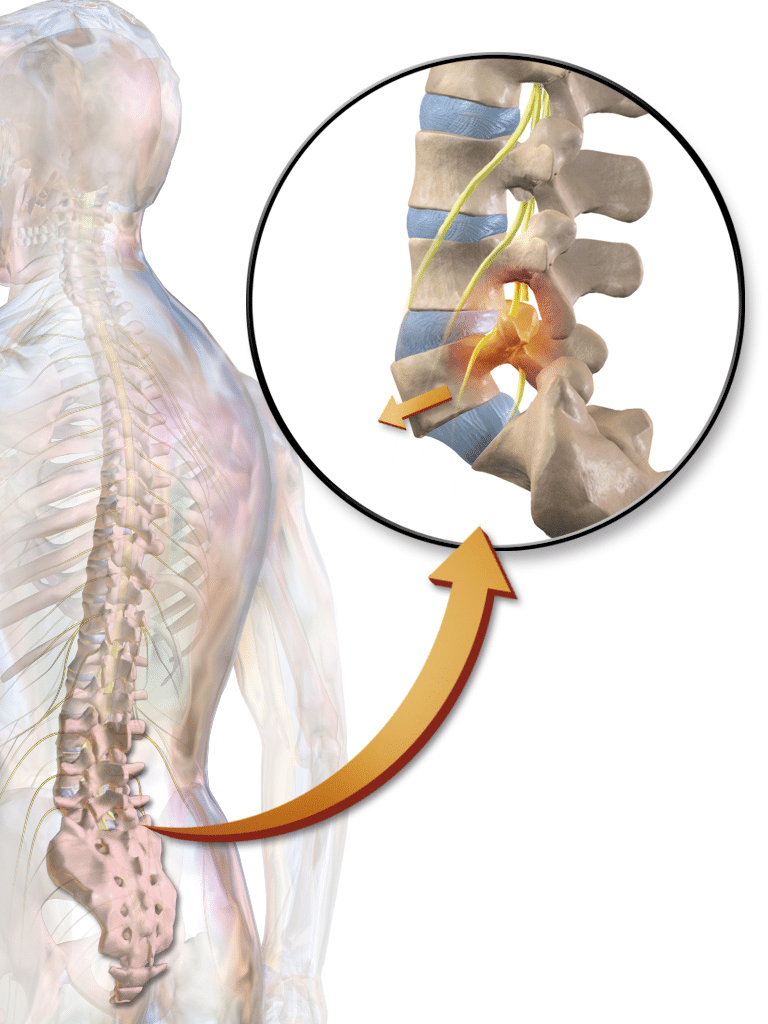
Mild instability may respond to strengthening and bracing. When instability is causing ongoing pain or nerve problems, surgery to stabilize the spine can often correct it.
What Causes Spinal Instability
- Spondylolisthesis: a vertebra slipping forward
- Disc degeneration and facet arthritis: worn structures that no longer hold the level steady
- Fractures: from trauma or osteoporosis (vertebral fractures, burst fractures)
- Previous spine surgery: especially when a large amount of bone was removed
- Tumors or infection that weaken the vertebrae
- Ligament injuries, including some neck injuries
- Inflammatory arthritis such as rheumatoid arthritis, which can affect the upper neck
Symptoms
Common symptoms
- Back or neck pain that worsens with movement, standing or changing positions, and eases with rest or lying down
- A sense of the spine “catching,” “giving way” or shifting
- Pain getting up from sitting or bending
- Muscle spasms as the body tries to brace the spine
Symptoms patients often ignore
- Needing to push up with your hands on your thighs to stand straight
- Pain that’s worse at the end of the day
- Arm or leg pain, numbness or weakness when a nerve gets pinched
When it’s an emergency: After any significant injury, or if you develop new weakness, numbness in the groin, or bladder or bowel changes, call 911 or go to the nearest emergency room.
How We Diagnose Spinal Instability
- History and exam: how your pain behaves with movement and a neurological check
- Standing and bending (flexion-extension) X-rays: the key test, showing whether vertebrae shift when you bend forward and back
- CT scan: shows fractures, bone quality and joint changes
- MRI: shows ligaments, discs and pinched nerves
Treatment Options
Non-surgical treatment
- Physical therapy: core and spine-stabilizing muscle strengthening
- Bracing: for certain fractures or short-term support
- Medications and activity modification
- Treating the cause: such as osteoporosis or inflammatory arthritis
When surgery makes sense
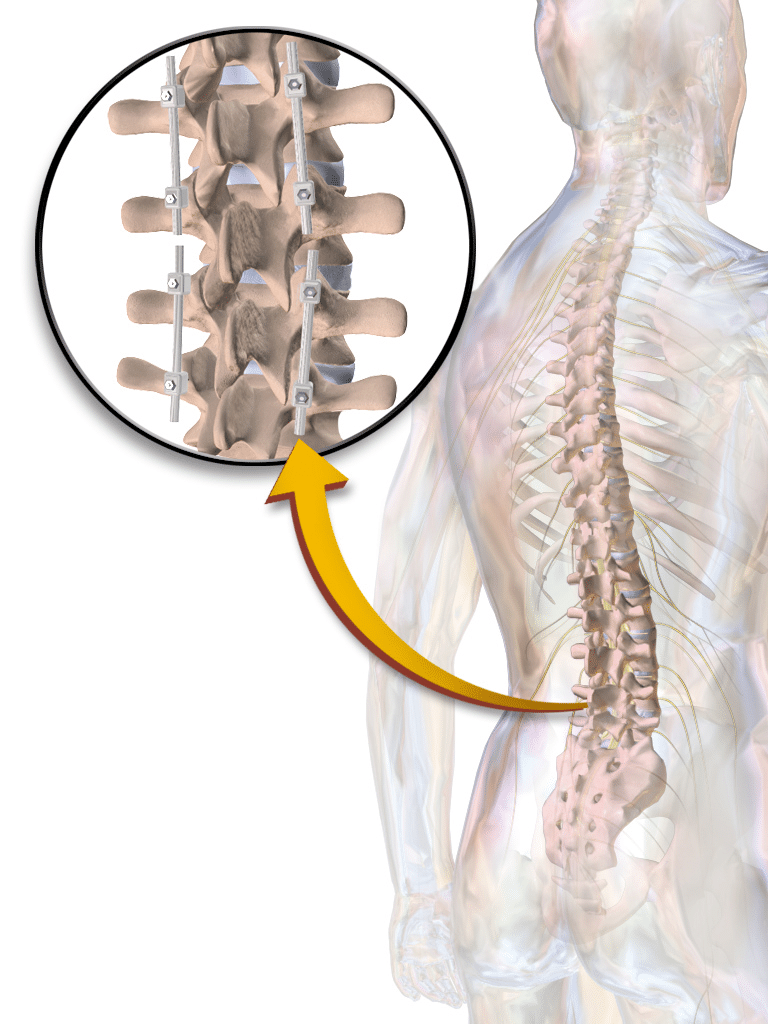
Surgery is recommended when instability causes persistent pain, nerve or spinal cord compression, or puts the spine at risk of further injury. Stabilizing the spine can often correct the problem. Options include:
- Minimally invasive fusion: screws and a spacer hold the level steady while the bones fuse, through small incisions
- Lumbar fusion approaches from the back, side or front, chosen for your anatomy
- Neck stabilization: ACDF or posterior cervical fusion
- Revision surgery when instability follows a previous operation
Why Choose Dr. Betsy Grunch for Spinal Instability
- Duke-trained: neurosurgical residency and spine research fellowship at Duke University School of Medicine, where she received the Spine Young Investigator Award
- Experience you can count on: in practice since 2013, performing 400 to 600 surgeries a year and more than 5,000 procedures over her career
- Minimally invasive stabilization: smaller incisions and less muscle disruption, which can mean a quicker return to walking
- The right treatment for you: board-certified (FAANS, FACS, FCNS), she starts with the least invasive option that will work, and recommends surgery when it can correct the problem
- Clear answers: known online as Ladyspinedoc, she makes sure you understand your imaging and every option in front of you
What to Expect If You Need Surgery
Before surgery
You’ll meet with Dr. Grunch or one of her physician assistants to review your bending X-rays, CT and MRI and plan your procedure. Quitting smoking and checking bone health before fusion help the bones heal.
Procedure day
Most fusion procedures take two to four hours, with a hospital stay of one to three nights.
Recovery timeline
- Day 1: up and walking
- Weeks 1-2: walking several times a day
- Weeks 2-6: many desk workers return to work; no bending, lifting or twisting
- Months 2-3: physical therapy
- Months 6-12: the fusion becomes solid
Frequently Asked Questions
How do you know my spine is unstable?
Bending X-rays show it directly. If a vertebra shifts more than normal between bending forward and backward, that level is unstable.
Can physical therapy fix instability?
Strengthening can help mild instability by improving muscle support. It cannot reverse a significant slip or a fracture, which may need surgical stabilization.
Will fusion limit my movement?
Fusing one or two levels in the lower back usually has little noticeable effect on everyday motion, because the rest of the spine continues to move.
Can instability happen after a laminectomy?
Yes, sometimes. When a lot of bone and joint are removed, a level can become unstable over time. A revision fusion can correct it.
Is instability dangerous?
Most degenerative instability causes pain rather than danger. Instability from fractures, tumors or infection can threaten the nerves or spinal cord and needs prompt treatment.
Take the First Step Toward Relief
Whether you need a diagnosis, a treatment plan or a second opinion, Dr. Grunch and the Southern Neurosurgery team are here to help.
Call 470-293-9800 to schedule an appointment or contact us online.
Have a question first? Ask our virtual assistant anything, 24/7.
We see patients across metro Atlanta and North Georgia at our offices in Gainesville, Sandy Springs and South Atlanta (Riverdale). Find the office nearest you.
This page is for educational purposes only and is not a substitute for medical advice. If you have sudden weakness, numbness in the groin, or bladder or bowel changes, call 911 or go to the nearest emergency room.