
Adjacent Segment Disease: New Pain After a Previous Spine Fusion
You had a fusion, it helped, and now years later the pain is back, sometimes in a new place. That can feel discouraging, but it’s a known, treatable problem.
What Is Adjacent Segment Disease?
When two vertebrae are fused together, that level no longer moves. The discs and joints directly above and below the fusion, called the adjacent segments, take on more of the bending and twisting. Over time, those neighboring levels can wear out faster, developing disc degeneration, arthritis, stenosis or instability. When these changes cause symptoms, it’s called adjacent segment disease.
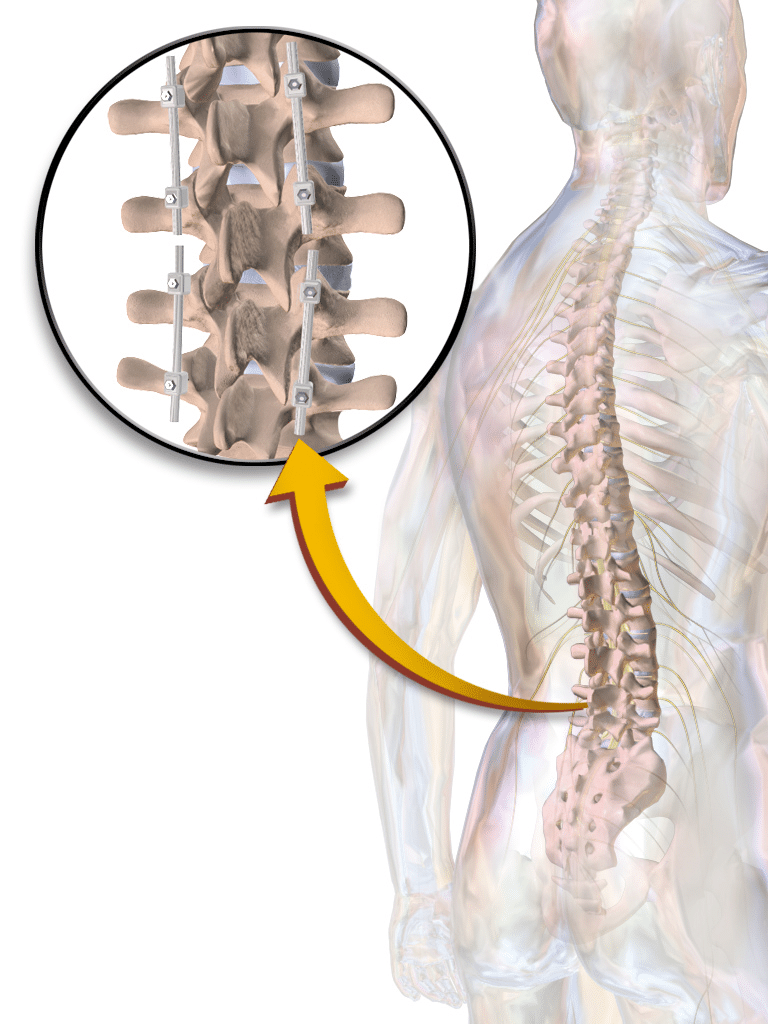
Adjacent segment disease can appear anywhere from a few years to many years after a fusion, in the neck or the lower back. Some of these changes would have happened with normal aging anyway. Many patients improve with non-surgical care, and when nerves are pinched or the spine is unstable, surgery can often correct the problem.
What’s Happening in Your Spine
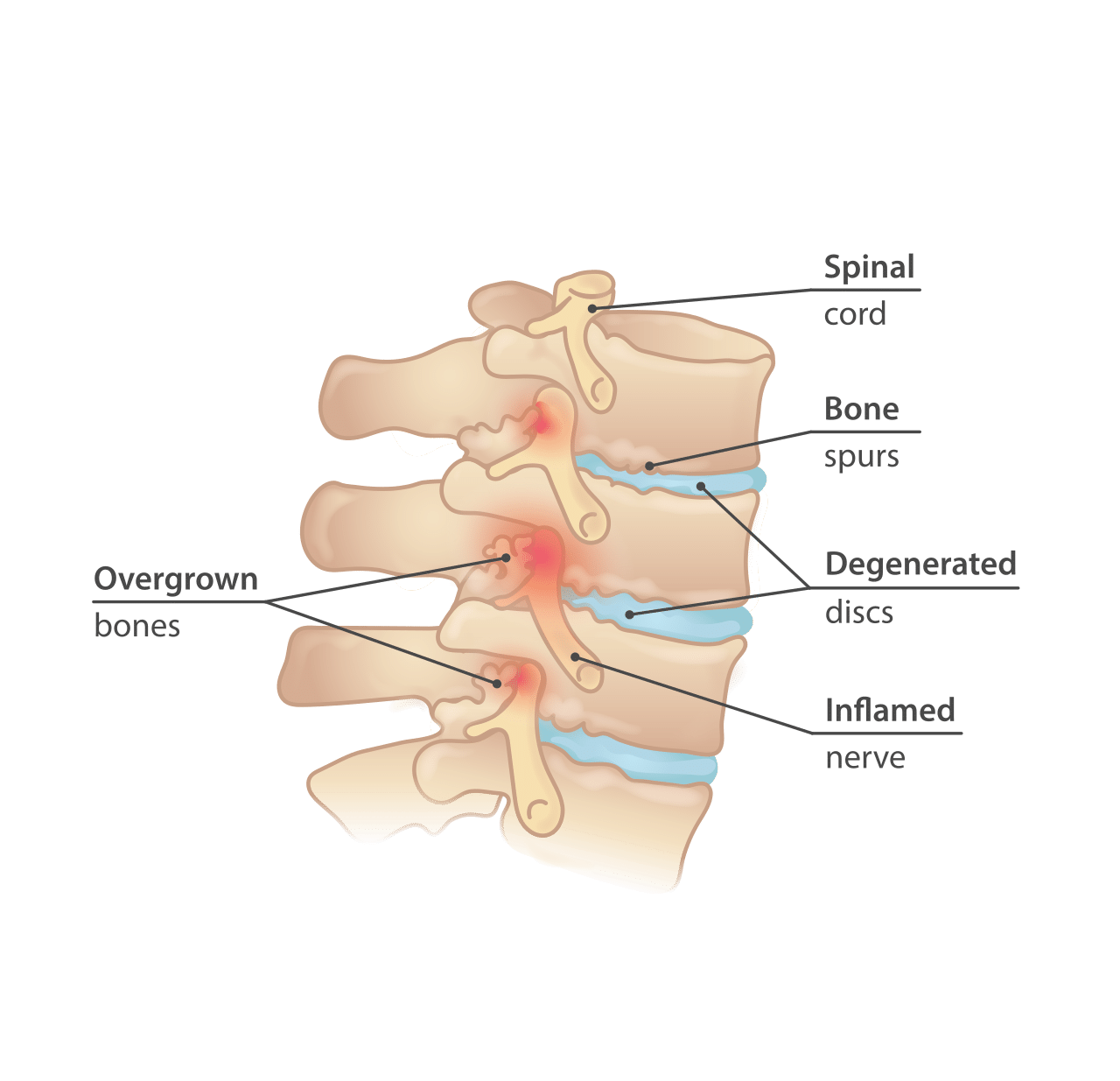
- Disc degeneration at the level above or below the fusion
- Facet joint arthritis and bone spurs
- Spinal stenosis that squeezes the nerves or spinal cord
- Instability or a slipped vertebra (spondylolisthesis)
- A new disc herniation at the neighboring level
Symptoms
Common symptoms
- Return of back or neck pain after a period of relief following fusion
- New pain, numbness or tingling down the legs or arms
- Leg heaviness or cramping with walking that eases with sitting
- Stiffness and reduced flexibility
Symptoms patients often ignore
- Pain in a slightly different spot than before your surgery
- Gradually decreasing walking distance
- Hand clumsiness or balance changes after a neck fusion
When it’s an emergency: Call 911 or go to the nearest emergency room if you develop bladder or bowel changes, numbness in the groin, or rapidly worsening weakness.
Risk Factors
- Longer fusions involving several levels
- Pre-existing wear at neighboring levels at the time of the first surgery
- Age and genetics
- Smoking and excess body weight
- Alignment of the spine after the original fusion
How We Diagnose Adjacent Segment Disease
- History and exam: how your symptoms compare with before your first surgery, and a neurological check
- Standing X-rays with bending views: show the fusion, alignment and any slipping or instability above or below it
- MRI or CT myelogram: show nerve compression; CT is especially helpful around existing hardware
- Review of your prior surgery records and imaging
Treatment Options
Non-surgical treatment comes first
- Physical therapy: core strengthening and flexibility to support the spine
- Medications: anti-inflammatories and nerve-pain medications
- Injections: epidural, facet or radiofrequency treatments
- Weight management and quitting smoking
When surgery makes sense
When symptoms persist or nerves are compressed, surgery can often correct the problem. Depending on your situation, options include:
- Decompression: removing bone spurs and thickened tissue pinching the nerves, sometimes through minimally invasive approaches
- Extending the fusion (revision fusion): stabilizing the worn adjacent level
- In the neck, disc replacement next to a fusion: for selected patients, an artificial disc at the adjacent level can treat the problem while preserving motion
Why Choose Dr. Betsy Grunch for Adjacent Segment Disease
- Duke-trained: neurosurgical residency and spine research fellowship at Duke University School of Medicine, where she received the Spine Young Investigator Award
- Experience you can count on: in practice since 2013, performing 400 to 600 surgeries a year and more than 5,000 procedures over her career
- Revision experience: she regularly evaluates patients who had surgery elsewhere and need a clear plan for what comes next
- The right treatment for you: board-certified (FAANS, FACS, FCNS), she starts with the least invasive option that will work, and recommends surgery when it can correct the problem
- Clear answers: known online as Ladyspinedoc, she makes sure you understand your imaging and every option in front of you
What to Expect If You Need Surgery
Before surgery
You’ll meet with Dr. Grunch or one of her physician assistants to review your new imaging along with records from your previous surgery. Our team coordinates pre-operative testing and reviews your medications.
Procedure day
Decompression alone is often same-day or overnight. Extending a fusion usually involves a hospital stay of one to three nights.
Recovery timeline
- Day 1: up and walking
- Weeks 1-2: walking several times a day
- Weeks 2-6: limited lifting and bending; many desk workers return to work
- Months 2-3: physical therapy
- Months 6-12: fusion continues to solidify
Frequently Asked Questions
Did my first surgery fail?
Not necessarily. Your fusion may be doing exactly what it was meant to do. Adjacent segment disease is a new problem at a neighboring level, often combined with normal aging.
How common is it?
It’s one of the more common reasons for additional surgery after fusion, and it can develop years after the original operation.
Can it be prevented?
Staying active, keeping a healthy weight and not smoking help. In the neck, disc replacement instead of fusion may reduce stress on neighboring levels for appropriate patients.
I had surgery with another surgeon. Can I see Dr. Grunch?
Yes. Bring your previous operative report and imaging if you have them, and Dr. Grunch will review them with your new studies.
Will I need my hardware removed?
Sometimes old screws or rods are removed or replaced when a fusion is extended. Dr. Grunch will explain what your surgery would involve.
Take the First Step Toward Relief
Whether you need a diagnosis, a treatment plan or a second opinion, Dr. Grunch and the Southern Neurosurgery team are here to help.
Call 470-293-9800 to schedule an appointment or contact us online.
Have a question first? Ask our virtual assistant anything, 24/7.
We see patients across metro Atlanta and North Georgia at our offices in Gainesville, Sandy Springs and South Atlanta (Riverdale). Find the office nearest you.
This page is for educational purposes only and is not a substitute for medical advice. If you have sudden weakness, numbness in the groin, or bladder or bowel changes, call 911 or go to the nearest emergency room.