
Restoring Stability to the Mid-Back
The mid-back is the most stable part of the spine, but fractures, deformity, tumors or a herniated disc can still make it unstable or press on the spinal cord. A thoracic fusion can often correct the problem by restoring stability and alignment.
What Is a Thoracic Fusion?
A thoracic fusion joins two or more vertebrae in the mid-back (the thoracic spine, T1 through T12) so they heal into one solid bone. Screws are placed into the vertebrae and connected with rods, and bone graft is added so the bones fuse together over the following months.
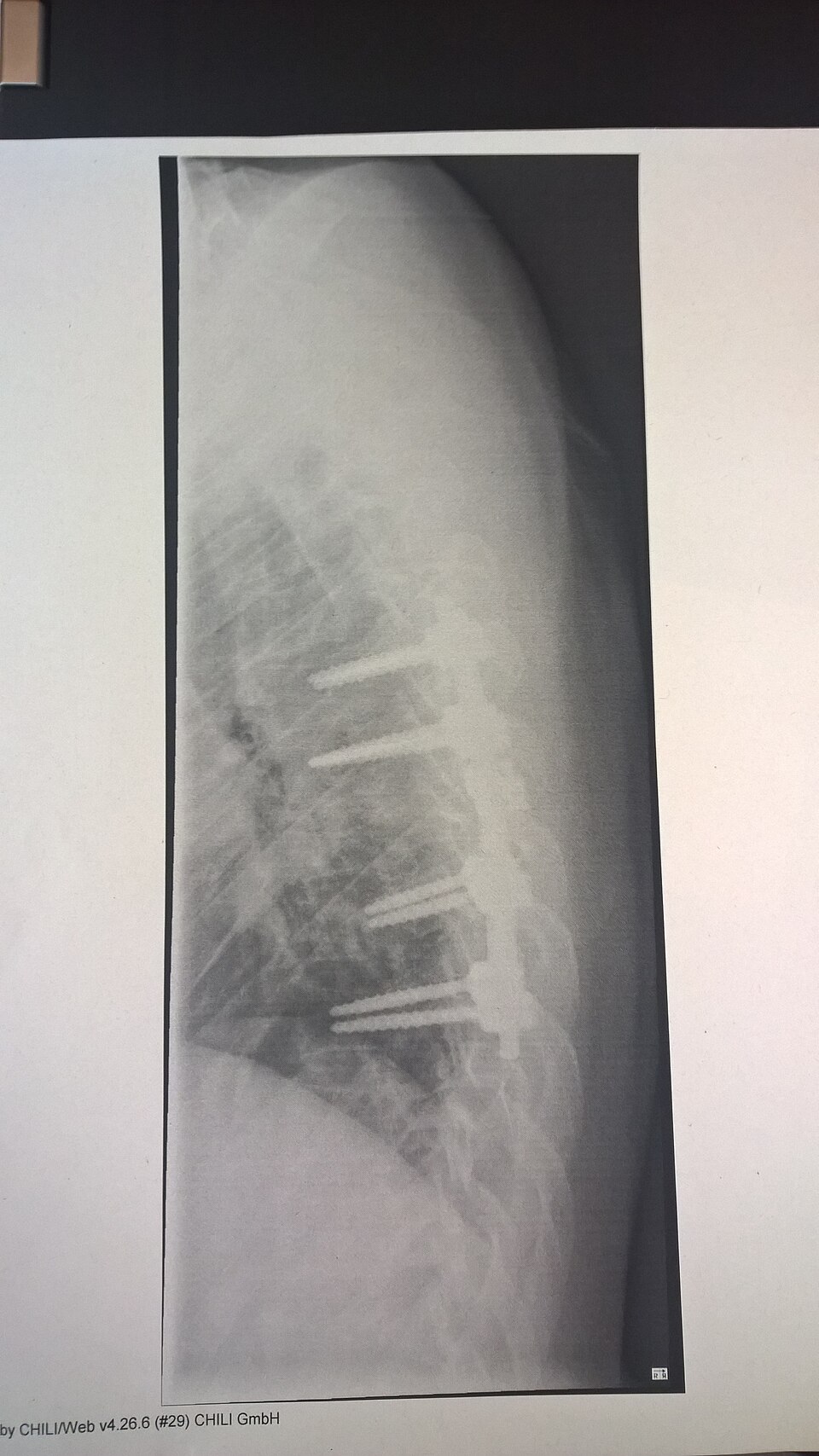
Because the thoracic spine is attached to the rib cage and surrounds the spinal cord, thoracic surgery requires careful planning. Depending on the problem, the fusion may be combined with removing bone or disc material pressing on the spinal cord, correcting a curve, or replacing a damaged vertebra (corpectomy).
Who Needs a Thoracic Fusion?
- Unstable vertebral fractures or burst fractures from trauma or osteoporosis
- Deformity such as scoliosis or kyphosis
- A thoracic disc herniation pressing on the spinal cord
- Tumors or infection that have weakened the spine
- Spinal cord compression that requires removing bone and stabilizing the spine
Call 911 or go to the nearest emergency room if you have sudden weakness in your legs, sudden trouble walking, or new trouble controlling your bladder or bowels.
Treatments to Try First
Stable fractures and mild deformity are often treated with a brace, pain control and physical therapy, and some painful compression fractures can be treated with kyphoplasty. When the spine is unstable, the spinal cord is compressed, or deformity keeps getting worse, surgery can often correct the problem.
How a Thoracic Fusion Is Done
- Anesthesia and monitoring: You’ll be fully asleep. Nerve monitoring protects the spinal cord throughout surgery.
- Positioning and incision: Most thoracic fusions are done face down through an incision in the middle of the back. When possible, screws are placed through small incisions.
- Decompression, if needed: Bone, disc or tumor pressing on the spinal cord is removed.
- Correction and stabilization: Screws are placed into the vertebrae using X-ray or navigation and connected with rods, correcting alignment where needed.
- Bone graft: Bone graft is added so the vertebrae fuse together.
- Closing: The muscles and skin are closed in layers.
Benefits and Risks
Benefits
- A stable spine that protects the spinal cord
- Correction of alignment and posture
- Relief of pain from fractures, instability or deformity
- Prevention of further collapse or deformity
Risks
- Infection or bleeding
- Spinal cord or nerve injury, which is rare
- Spinal fluid leak
- Lung complications, such as pneumonia
- The bones not fusing, or screw loosening
- Extra wear at neighboring levels over time
- Risks related to anesthesia, including blood clots
Why Choose Dr. Betsy Grunch for Your Thoracic Fusion
- Duke-trained: Dr. Grunch completed her neurosurgical residency and a spine research fellowship at Duke University School of Medicine, one of the top neurosurgery programs in the country, where she received the Spine Young Investigator Award.
- Fusion only when you need it: She also performs lumbar and cervical disc replacement and decompression without fusion, so a fusion is recommended only when it’s truly the best option for you.
- Experience you can count on: She has been in practice since 2013 and performs 400 to 600 surgeries a year, more than 5,000 procedures over her career.
- Complex spine care: She treats fractures, deformity, tumors and infections of the spine, and uses navigation and nerve monitoring to keep surgery as safe and precise as possible.
- Second opinions and revisions: She regularly sees patients who had spine surgery elsewhere and want a second opinion or need a revision.
- A teacher at heart: As “Ladyspinedoc,” she is known for explaining spine conditions clearly. You’ll leave your visit understanding your imaging and every option in front of you.
What to Expect
Before surgery
You’ll meet with Dr. Grunch or one of her physician assistants to review your imaging, your exam and your goals, and to decide together whether a thoracic fusion is right for you. Our team will coordinate any pre-operative testing, review your medications (including blood thinners you may need to pause) and walk you through the day of surgery so nothing is a surprise. Smoking and nicotine slow bone healing and can cause a fusion to fail, so stopping before surgery is strongly recommended. Our office can help.
Procedure day
Surgery usually takes two to five hours, depending on the number of levels and whether decompression or correction is needed. Most patients stay in the hospital for two to four nights, sometimes longer after complex surgery or trauma.
Recovery timeline
- First two weeks: Walk several times a day. Back soreness is normal. You may wear a brace when you’re up.
- Four to six weeks: Your follow-up visit, with X-rays to check healing.
- Six to twelve weeks: Restrictions are gradually lifted, and physical therapy may begin.
- Six to twelve months: The bones continue to fuse.
Every patient heals differently. Your exact timeline will depend on your symptoms, the number of levels fused, your job and your overall health.
Caring for yourself at home
- Back brace: Wear your brace whenever you’re out of bed and moving around.
- Walking: Walk 30 to 60 minutes a day, broken into 10- to 15-minute sessions, and try not to sit for more than 30 minutes at a time.
- Restrictions for about six weeks: No bending at the waist, no twisting and no lifting more than 10 pounds. That includes vacuuming, laundry, golf, yard work and lifting young children or grandchildren. Let others help you at home.
- Your incision: If your incision is closed with skin glue, you may shower the day after surgery; if it has stitches or staples, wait three days. Don’t scrub, don’t use ointments or creams, and don’t soak in a bath, hot tub or pool for six weeks.
- Medications: Avoid anti-inflammatory medications such as ibuprofen, naproxen, meloxicam, celecoxib and diclofenac, which can interfere with fusion. Blood thinners are held for 5 to 7 days after surgery until Dr. Grunch’s team tells you to restart them. Take pain medication with food, avoid alcohol while taking it, and use a daily stool softener.
- Bone growth stimulator: If one is prescribed, the manufacturer will contact you after surgery.
- Driving: You may drive once you are no longer taking narcotic pain medication, and you may ride as a passenger before then.
- Follow-up: Your follow-up visit is about four to six weeks after surgery. Any outside stitches or staples are removed at 10 to 14 days.
Learn how a bone growth stimulator can support your fusion:
Video: Spinal Fusion Patients: Are You Using a Bone Growth Stimulator?, from Dr. Grunch on her Ladyspinedoc channel (YouTube)
Call the office at 470-293-9800 if you have a fever over 101°F, redness, warmth or significant drainage from the incision, calf pain or swelling, constipation that medication doesn’t relieve, new trouble controlling your bladder or bowels, or worsening pain down your leg. Call 911 for chest pain or shortness of breath.
You’ll find instructions for other procedures on our Patient Resources page.
Frequently Asked Questions
Will a thoracic fusion limit my movement?
The thoracic spine moves very little because of the rib cage, so most people notice little change in flexibility.
Do I have to wear a brace?
Some patients wear a brace during the first several weeks, especially after a fracture. Dr. Grunch will let you know.
Why can’t I take ibuprofen after surgery?
Anti-inflammatory medications can interfere with bone healing. Dr. Grunch’s team will tell you when it’s safe to restart them.
How long until the fusion is solid?
The screws and rods hold the spine steady right away, but the bone takes about six to twelve months to fully fuse.
Will I need physical therapy?
Many patients benefit from physical therapy after the first several weeks to rebuild strength and endurance.
Take the First Step Toward Relief
Mid-back fractures, deformity and spinal cord compression need careful, expert care. Whether you need a treatment plan, a second opinion or a clear explanation of your imaging, Dr. Grunch and the Southern Neurosurgery team are here to help.
Call 470-293-9800 to schedule an appointment or contact us online.
Have a question first? Ask our virtual assistant anything, 24/7.
We see patients across metro Atlanta and North Georgia at our offices in Gainesville, Sandy Springs and South Atlanta (Riverdale). Find the office nearest you.
Related pages: Vertebral fractures · Thoracic disc herniation · Kyphosis · Scoliosis · Vertebral corpectomy
This page is for educational purposes only and is not medical advice. It does not replace individualized care from a licensed physician. Please talk with your own doctor about your symptoms. If you have bladder or bowel changes, groin numbness or rapidly worsening weakness, call 911 or go to the nearest emergency room.