
Facet Joint Disease: Relief for Arthritis in the Spine
Back or neck pain that’s worse when you lean back, twist or stand still for too long often comes from the small joints of the spine. The good news: these joints can be targeted directly.
What Is Facet Joint Disease?
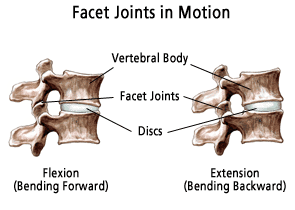
Every vertebra in your spine connects to the ones above and below it through a pair of small joints at the back called facet joints. They guide and limit how your spine bends and twists, much like hinges.
Like knees or knuckles, facet joints have cartilage and a joint lining, and they can develop arthritis. Facet joint disease (also called facet arthropathy or facet syndrome) happens when that cartilage wears down, the joints become inflamed, and bone spurs form. It is a common cause of chronic low back and neck pain.
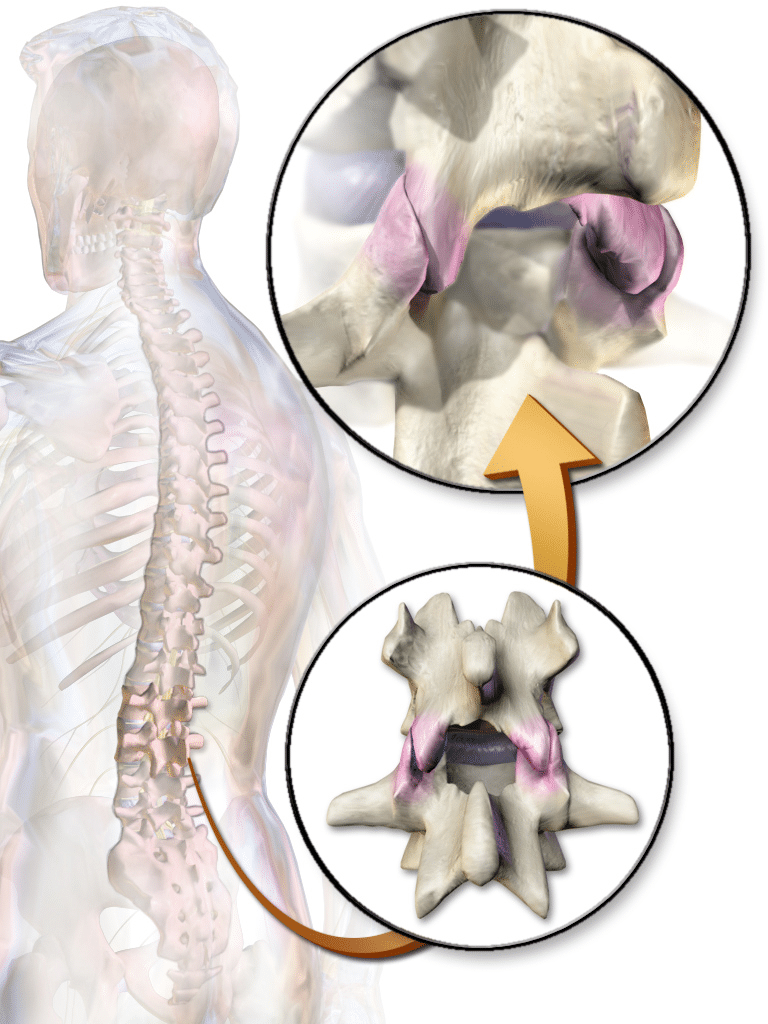
Facet pain often responds well to targeted treatments such as injections and radiofrequency ablation. When facet arthritis leads to instability, a slipped vertebra or pinched nerves, surgery can often correct the underlying problem.
What’s Happening in Your Spine
- Cartilage wears away, so bone rubs more directly on bone
- The joint becomes inflamed and painful with certain movements
- Bone spurs form and the joint enlarges, which can narrow the space for nerves (foraminal stenosis or spinal stenosis)
- A fluid-filled cyst (synovial cyst) can sometimes form from the joint and press on a nerve
- Loose, worn joints can allow a vertebra to slip forward (spondylolisthesis)
Symptoms
Low back
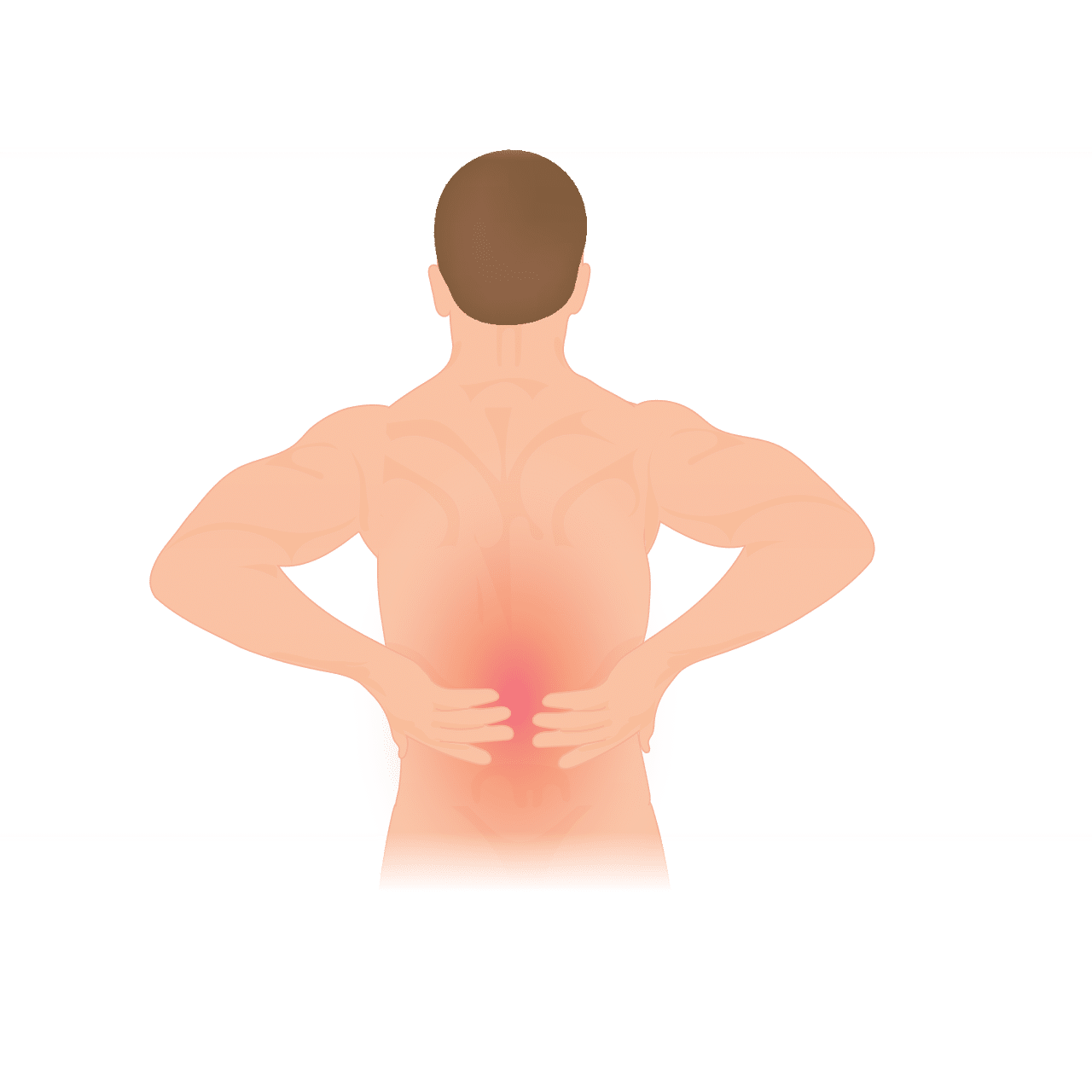
- Aching pain on one or both sides of the lower back
- Pain worse with leaning backward, twisting or standing for long periods
- Pain that spreads to the buttocks or back of the thighs, usually not below the knee
- Morning stiffness that loosens with movement
Neck
- Neck pain worse when looking up or turning the head
- Pain into the shoulders or upper back
- Headaches at the base of the skull
Symptoms patients often ignore
- Feeling better when leaning forward on a counter or cart
- Pain getting out of a chair or car after sitting
- Tenderness when pressing just beside the spine
Pain, numbness or weakness that travels below the knee or into the hand suggests a pinched nerve and needs its own evaluation.
Causes and Risk Factors
- Age-related wear, especially after 50
- Disc degeneration, which shifts more load onto the facets
- Previous injury, including whiplash
- Excess body weight
- Repetitive twisting, lifting or overhead work
How We Diagnose Facet Joint Disease
- History and exam: pain patterns, tenderness over the joints and pain with extension and rotation
- X-rays, CT and MRI: show joint arthritis, bone spurs, cysts, slipping and nerve compression
- Diagnostic medial branch blocks: numbing the small nerves to specific facet joints. If your pain improves significantly, those joints are confirmed as the source.
Treatment Options
Non-surgical treatment comes first
- Physical therapy: core strengthening, flexibility and posture work
- Medications: anti-inflammatories during flares
- Facet joint injections: anti-inflammatory medicine placed directly into or around the joint
- Radiofrequency ablation: after successful diagnostic blocks, heat is used to quiet the small nerves carrying pain from the joint. Relief often lasts many months to a year or more.
- Weight management and staying active
When surgery makes sense
Surgery is considered when facet disease has caused instability, a slipped vertebra, a cyst pressing on a nerve, or stenosis with leg or arm symptoms. In these situations, surgery can often correct the problem:
- Decompression: laminotomy or foraminotomy to remove bone spurs or a synovial cyst pinching a nerve
- Minimally invasive fusion: to stabilize a painful, unstable or slipped segment
Because artificial disc replacement relies on healthy facet joints, significant facet arthritis usually makes fusion the better surgical choice. Dr. Grunch will explain which option fits your spine.
Why Choose Dr. Betsy Grunch for Facet Joint Disease
- Duke-trained: neurosurgical residency and spine research fellowship at Duke University School of Medicine, where she received the Spine Young Investigator Award
- Experience you can count on: in practice since 2013, performing 400 to 600 surgeries a year and more than 5,000 procedures over her career
- Minimally invasive focus: smaller incisions and less muscle disruption when surgery is needed
- The right treatment for you: board-certified (FAANS, FACS, FCNS), she starts with the least invasive option that will work, and recommends surgery when it can correct the problem
- Clear answers: known online as Ladyspinedoc, she makes sure you understand your imaging and every option in front of you
What to Expect If You Need Surgery
Before surgery
You’ll meet with Dr. Grunch or one of her physician assistants to review your imaging and injection results and plan your procedure. Our team coordinates pre-operative testing and reviews your medications.
Procedure day
Minimally invasive decompression is often same-day. Minimally invasive fusion usually involves one to two nights in the hospital.
Recovery timeline
- Day 1: up and walking
- Weeks 1-2: walking several times a day
- Weeks 2-6: many desk workers return to work; no heavy lifting or twisting
- Months 2-3: physical therapy and gradual return to activity
- Months 6-12: fusions continue to solidify
Frequently Asked Questions
What is radiofrequency ablation, and is it safe?
It’s an outpatient procedure that uses a small needle and heat to quiet the nerves carrying pain from the facet joints. It does not affect strength or feeling in your legs or arms. The nerves can regrow over time, and the procedure can be repeated.
Why does leaning back hurt?
Leaning backward compresses the facet joints, so arthritic joints become more painful. Leaning forward takes pressure off them.
Is facet disease the same as a pinched nerve?
No, but they can be related. Enlarged facet joints and cysts can narrow the space for nerves and cause pain down an arm or leg.
Can I have disc replacement?
Usually not if facet arthritis is significant, because disc replacement depends on healthy facet joints. Fusion is often the better choice in that case.
Will I need surgery?
Many people do well with therapy, injections and radiofrequency ablation. When facet disease causes instability or nerve compression, surgery can often correct it.
Take the First Step Toward Relief
Whether you need a diagnosis, a treatment plan or a second opinion, Dr. Grunch and the Southern Neurosurgery team are here to help.
Call 470-293-9800 to schedule an appointment or contact us online.
Have a question first? Ask our virtual assistant anything, 24/7.
We see patients across metro Atlanta and North Georgia at our offices in Gainesville, Sandy Springs and South Atlanta (Riverdale). Find the office nearest you.
This page is for educational purposes only and is not a substitute for medical advice. If you have sudden weakness, numbness in the groin, or bladder or bowel changes, call 911 or go to the nearest emergency room.