
Lasting Relief From Sacroiliac Joint Pain
Pain from the sacroiliac joint is one of the most commonly missed causes of low back and buttock pain. When the joint is confirmed as the source and other treatments haven’t helped, a minimally invasive SI joint fusion can often correct the problem.
What Is SI Joint Fusion?
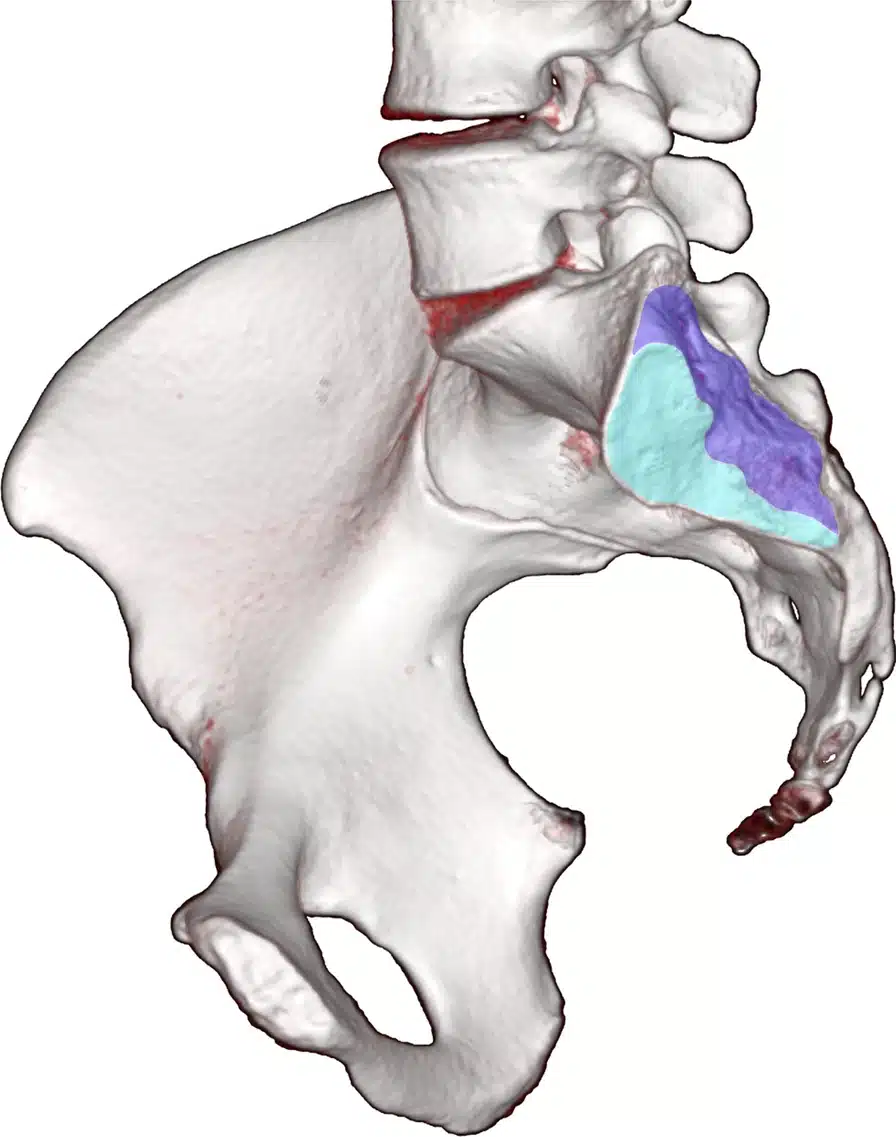
You have two sacroiliac (SI) joints, one on each side of your lower back, where the base of the spine (the sacrum) meets the pelvis. These joints are held together by some of the strongest ligaments in the body. They move only a few millimeters, but they carry the weight of your upper body down into your hips and legs with every step.
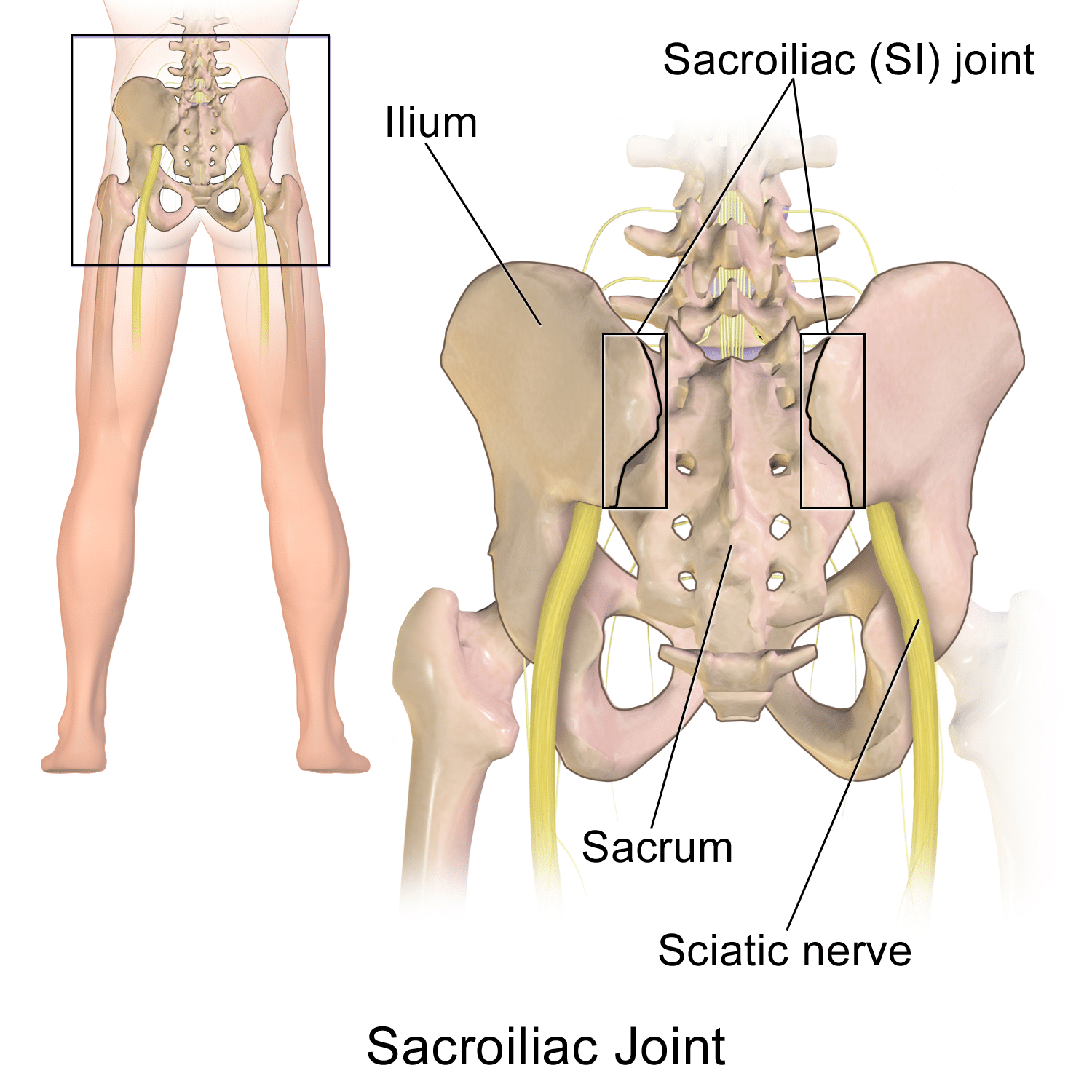
When an SI joint becomes worn, loose or inflamed, it can cause pain in the low back, buttock, groin or the back of the thigh. This is called sacroiliac joint dysfunction. Studies suggest the SI joint is the source of pain in roughly 15 to 30 percent of people with chronic low back pain, and it is especially common after a lumbar fusion, after pregnancy, after a fall, or with arthritis.
SI joint fusion is a surgery that stabilizes the painful joint so it stops moving. Dr. Grunch places small implants across the joint, usually through a small incision, so the sacrum and pelvis can grow together (fuse) into one solid, pain-free structure over time.
Who Needs SI Joint Fusion?
SI joint fusion may be recommended when:
- You have ongoing pain in the low back, buttock or upper leg, often worse with sitting, climbing stairs, standing on one leg or rolling over in bed
- Dr. Grunch’s exam points to the SI joint, with several specific tests that reproduce your pain
- A diagnostic SI joint injection, where numbing medicine is placed into the joint under X-ray, gives you significant temporary relief, confirming that the joint is the source
- Your pain has continued for six months or longer despite good non-surgical treatment
- Your pain started or returned after a lumbar fusion, which places more stress on the SI joints
Because SI joint pain can feel a lot like a pinched nerve, a disc problem or hip arthritis, getting the diagnosis right is the most important step. Dr. Grunch also looks for other sources of pain, such as sciatica or facet joint disease, before recommending SI joint surgery.
In these videos, Dr. Grunch explains how SI joint pain is diagnosed and treated, and walks through a real patient’s case:

Sacroiliac joint pain: diagnosis and treatment explained by Dr. Betsy Grunch
Case study 125: sacroiliac joint pain, explained by Dr. Grunch
Treatments to Try First
- Physical therapy: core and hip strengthening and stretching to support the joint
- Medications: anti-inflammatory medications for flare-ups
- An SI belt: a brace worn around the hips that can stabilize the joint
- SI joint steroid injections: anti-inflammatory medicine placed directly into the joint
- Radiofrequency ablation: a procedure that calms the small nerves carrying pain signals from the joint
When these bring only short-term relief, surgery can often correct the problem. In randomized clinical trials, patients who had minimally invasive SI joint fusion had significantly better pain relief and function than patients who continued non-surgical care.
How SI Joint Fusion Is Done
Dr. Grunch performs SI joint fusion as a minimally invasive, outpatient surgery. It takes about an hour, and you go home the same day:
- Anesthesia: You’ll be fully asleep under general anesthesia and positioned face down.
- A small incision: Dr. Grunch makes an incision of about an inch or two over the side of the buttock or the low back, depending on the approach that best fits your anatomy.
- X-ray guidance: Live X-ray images guide each step so the implants are placed precisely across the joint, away from nearby nerves and blood vessels.
- Preparing the joint: A small channel is made across the joint, and in some cases the joint surfaces are prepared and bone graft is added to encourage fusion.
- Placing the implants: Usually two or three small titanium implants are placed across the joint to hold it steady right away. Over the next several months, bone grows onto and around the implants and the joint fuses.
- Closing: The incision is closed with dissolvable stitches and skin glue.
Benefits and Risks
Benefits
- Lasting relief of SI joint pain for most patients, with better ability to sit, walk, sleep and work
- Outpatient surgery: you go home the same day
- A small incision and minimal muscle disruption
- Immediate stability from the implants while the joint fuses
- Less reliance on pain medications and repeated injections
Risks
Every surgery carries some risk. Dr. Grunch will review these with you in detail:
- Infection or bleeding
- Irritation of a nearby nerve, which is uncommon thanks to X-ray guidance
- The joint not fusing completely, or an implant loosening, which can require another procedure
- Pain from another source, such as the spine or hip, that continues after surgery
- Risks related to anesthesia
Why Choose Dr. Betsy Grunch for Your SI Joint Fusion
- Duke-trained: Dr. Grunch completed her neurosurgical residency and a spine research fellowship at Duke University School of Medicine, one of the top neurosurgery programs in the country, where she received the Spine Young Investigator Award.
- The right diagnosis first: SI joint pain is easy to mistake for a spine or hip problem. Dr. Grunch confirms the source of your pain with a careful exam and diagnostic injections before recommending surgery.
- Minimally invasive by design: Minimally invasive spine surgery is one of her signature areas, so you can get back on your feet sooner.
- Experience you can count on: She has been in practice since 2013 and performs 400 to 600 surgeries a year, more than 5,000 procedures over her career.
- Second opinions after fusion: She regularly sees patients whose pain returned after a lumbar fusion elsewhere, which is one of the most common times SI joint pain appears.
- A teacher at heart: As “Ladyspinedoc,” she is known for explaining spine conditions clearly, so you’ll understand exactly where your pain is coming from and every option in front of you.
What to Expect
Before surgery
You’ll meet with Dr. Grunch or one of her physician assistants to review your exam, imaging and injection results, and to decide together whether SI joint fusion is right for you. Our team will coordinate pre-operative testing, review your medications (including blood thinners you may need to pause) and walk you through the day of surgery. If you smoke or use nicotine, stopping before surgery gives the joint the best chance to fuse.
Procedure day
SI joint fusion is an outpatient procedure. The surgery takes about an hour, and you go home the same day once you’re comfortable and have practiced walking safely with a walker or crutches. You’ll need a responsible adult to drive you home and, ideally, to stay with you for the first few days.
Recovery timeline
- First three weeks: You’ll limit the weight you put on the leg on the operated side, using a walker or crutches. Short, frequent walks are encouraged.
- Three to six weeks: You’ll gradually return to full weight-bearing, and Dr. Grunch may start physical therapy to strengthen your core, hips and pelvis.
- Six to twelve weeks: Most patients return to normal daily activities and desk work. Avoid heavy lifting and high-impact activity until Dr. Grunch clears you.
- Three to six months and beyond: The joint continues to fuse, and pain relief and function often keep improving.
Every patient heals differently. Your exact timeline will depend on your symptoms, your job and your overall health.
Watch Dr. Grunch walk through her post-operative guidelines for SI joint fusion:
Dr. Grunch’s post-operative guidelines for sacroiliac joint fusion
Frequently Asked Questions
How do I know my pain is coming from the SI joint?
There’s no single test. Dr. Grunch combines your symptoms, a set of specific exam maneuvers, your imaging and, most importantly, a diagnostic injection. If numbing the SI joint takes away most of your usual pain for a few hours, the joint is very likely the source.
Will fusing the SI joint make me stiff?
No. The SI joint normally moves only a few millimeters, so most patients don’t notice any loss of motion after it is fused. Your hips and spine keep moving normally.
Can I have SI joint fusion after a lumbar fusion?
Yes. In fact, SI joint pain is common after a lumbar fusion because the joint takes on extra stress. SI joint fusion is a separate, smaller surgery that does not involve your previous fusion.
Can both sides be fused?
Yes, if both SI joints are confirmed as pain sources. Most often one side is done first, and the second side is done after you’ve recovered, if it’s still needed.
Will the implants set off metal detectors?
The implants are small and usually don’t set off airport metal detectors. They are titanium and are generally safe for MRI. Let any future doctor know you have them.
Take the First Step Toward Relief
If you’ve been living with low back or buttock pain that no one has been able to explain, the SI joint may be the missing piece. Dr. Grunch and the Southern Neurosurgery team are here to help you find the source and the right treatment.
Call 470-293-9800 to schedule an appointment or contact us online.
Have a question first? Ask our virtual assistant anything, 24/7.
We see patients across metro Atlanta and North Georgia at our offices in Gainesville, Sandy Springs and South Atlanta (Riverdale). Find the office nearest you.
Related pages: Sacroiliac joint dysfunction · Chronic low back pain · Failed back surgery syndrome · Adjacent segment disease · Lumbar fusion
This page is for educational purposes only and is not medical advice. It does not replace individualized care from a licensed physician. Please talk with your own doctor about your symptoms.