
Spinal Osteoarthritis: Relief for Arthritis in Your Back and Neck
Morning stiffness, an achy back after standing and a neck that doesn’t turn like it used to are often signs of arthritis in the spine. It’s one of the most common reasons people see a spine specialist, and there’s a lot that can be done to keep you moving.
What Is Spinal Osteoarthritis?
Spinal osteoarthritis (spondylosis) is wear-and-tear arthritis of the spine. Over time, the cartilage in the small facet joints at the back of the spine wears down, the discs between the vertebrae lose height, and the body forms bone spurs. These changes can cause pain and stiffness, and sometimes narrow the spaces where nerves and the spinal cord travel.
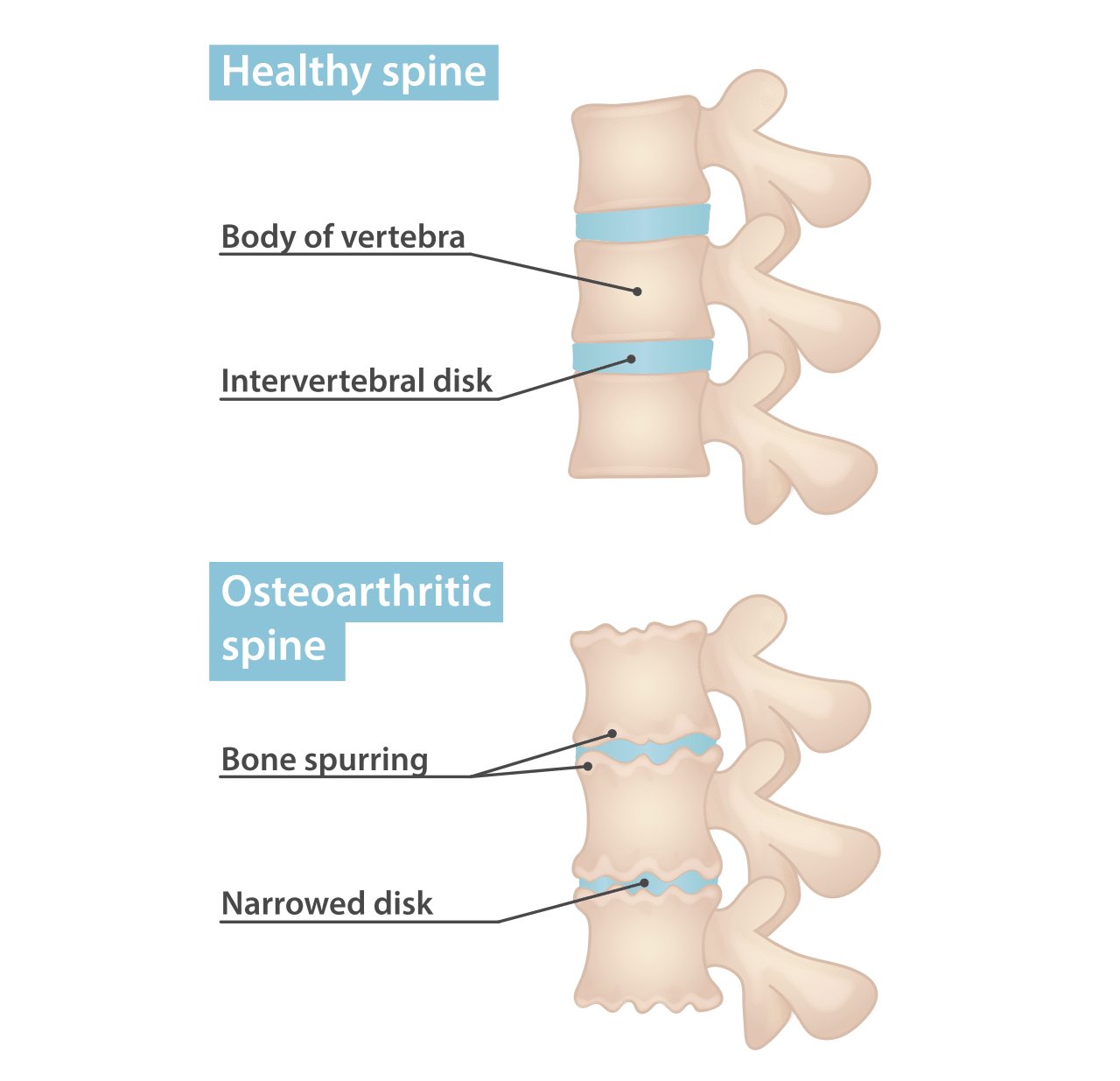
Almost everyone develops some arthritis in the spine with age, and many people have it on X-rays without symptoms. When it does cause problems, most people do well with non-surgical care. Surgery is helpful when arthritis pinches nerves or the spinal cord.
What’s Happening in Your Spine
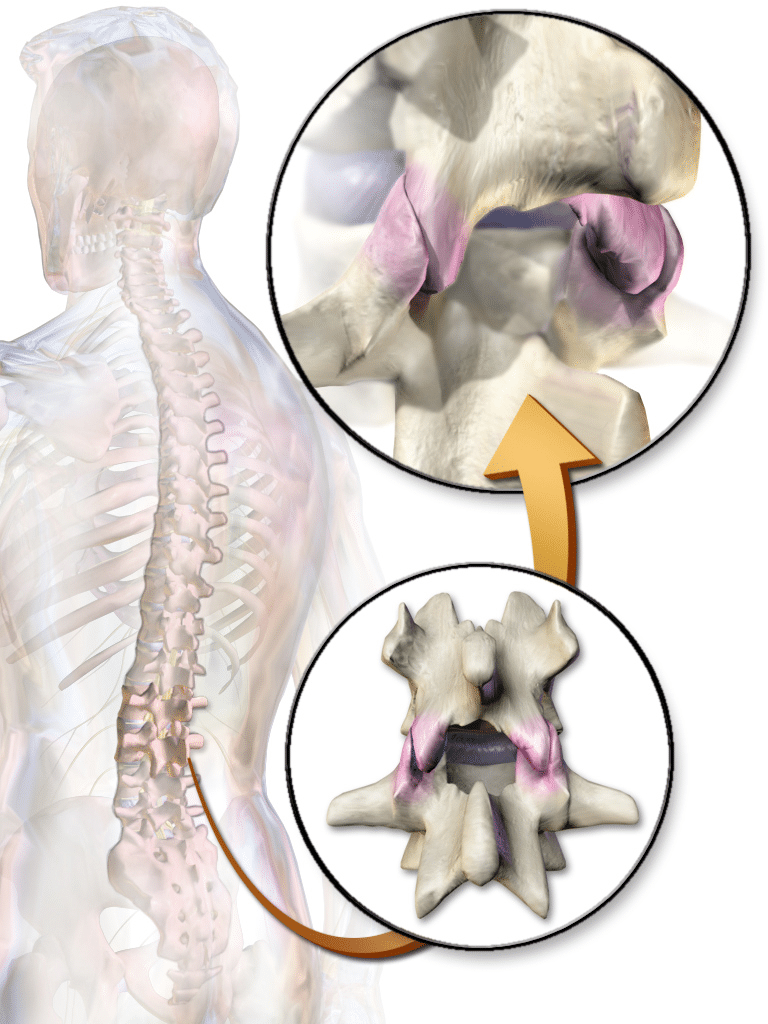
- Facet joint arthritis: the small joints connecting the vertebrae wear down and become inflamed (facet joint disease)
- Disc degeneration: discs dry out and flatten (degenerative disc disease)
- Bone spurs: extra bone forms around joints and discs
- Narrowing: these changes can narrow the spinal canal (spinal stenosis) or nerve openings (foraminal stenosis)
Symptoms
Common symptoms
- Back or neck pain and stiffness, often worse in the morning or after inactivity
- Pain that worsens with standing, bending backward or twisting
- Reduced flexibility
- A grinding or crackling feeling with movement
Symptoms that suggest nerve involvement
- Pain, numbness or tingling traveling into the arms or legs
- Leg pain or heaviness with walking that eases with sitting
- Hand clumsiness or balance problems (with neck arthritis)
Causes and Risk Factors
- Age
- Genetics
- Prior spine injuries
- Excess body weight
- Repetitive heavy lifting or physically demanding work
- Smoking
How We Diagnose Spinal Osteoarthritis
- History and exam: where it hurts, what makes it worse, and a neurological exam
- X-rays: show bone spurs, disc narrowing and alignment
- MRI: shows pressure on nerves or the spinal cord
- Diagnostic injections: such as facet blocks to confirm the source of pain
Treatment Options
Non-surgical treatment comes first
- Physical therapy and exercise: core strengthening, flexibility and low-impact activity like walking, swimming or cycling
- Medications: anti-inflammatories and acetaminophen
- Weight management
- Injections: facet joint injections or epidural steroid injections
- Radiofrequency ablation: for facet joint pain that responds to diagnostic blocks
When surgery makes sense
Surgery is considered when arthritis compresses nerves or the spinal cord, causing leg or arm pain, numbness, weakness or walking problems, or when the spine becomes unstable. In these cases, surgery can often correct the problem:
- Minimally invasive decompression: removes bone spurs and thickened tissue pressing on nerves
- Foraminotomy: widens the nerve openings
- Minimally invasive fusion: when the spine is unstable
- Cervical options: disc replacement or ACDF for nerve or cord compression in the neck
Why Choose Dr. Betsy Grunch for Spinal Osteoarthritis
- Duke-trained: neurosurgical residency and spine research fellowship at Duke University School of Medicine, where she received the Spine Young Investigator Award
- Experience you can count on: in practice since 2013, performing 400 to 600 surgeries a year and more than 5,000 procedures over her career
- Minimally invasive focus: when surgery is needed, smaller incisions and less muscle disruption mean faster recovery
- The right treatment for you: board-certified (FAANS, FACS, FCNS), she starts with the least invasive option that will work, and recommends surgery when it can correct the problem
- Clear answers: known online as Ladyspinedoc, she makes sure you understand your imaging and every option in front of you
What to Expect If You Need Surgery
Before surgery
You’ll meet with Dr. Grunch or one of her physician assistants to review your imaging and choose the right procedure. Our team coordinates pre-operative testing.
Procedure day
Minimally invasive decompression is often outpatient or a one-night stay. Fusion usually involves a short hospital stay.
Recovery timeline
- Day 1: up and walking
- Weeks 1-6: gradual return to activity; avoid heavy lifting and twisting
- Weeks 6-12: physical therapy and return to most activities
- Months 3-12: continued improvement; fusion recovery takes longer
Frequently Asked Questions
Is arthritis in my spine normal?
Some arthritis is a normal part of aging. It only needs treatment when it causes symptoms.
Will exercise make it worse?
No. The right exercise usually helps by strengthening the muscles that support the spine and keeping joints flexible.
Can spinal arthritis be cured?
Arthritis can’t be reversed, but symptoms can usually be well controlled.
When should I see a spine surgeon?
If pain travels into your arms or legs, you have numbness or weakness, or you can’t walk as far as you used to.
Does weather affect arthritis pain?
Many people notice more stiffness in cold or damp weather, though the reason isn’t fully understood.
Take the First Step Toward Relief
Whether you need a diagnosis, a treatment plan or a second opinion, Dr. Grunch and the Southern Neurosurgery team are here to help.
Call 470-293-9800 to schedule an appointment or contact us online.
Have a question first? Ask our virtual assistant anything, 24/7.
We see patients across metro Atlanta and North Georgia at our offices in Gainesville, Sandy Springs and South Atlanta (Riverdale). Find the office nearest you.
This page is for educational purposes only and is not a substitute for medical advice. If you have sudden weakness, numbness in the groin, or bladder or bowel changes, call 911 or go to the nearest emergency room.