
Foraminal Stenosis: Freeing a Pinched Nerve
When the small opening a nerve passes through starts to close in, it can cause sharp pain down an arm or leg. The cause is usually easy to see on imaging, and very treatable.
What Is Foraminal Stenosis?
Each nerve leaves your spine through a small doorway on the side called a foramen. Foraminal stenosis means that doorway has narrowed and is pinching the nerve passing through it.
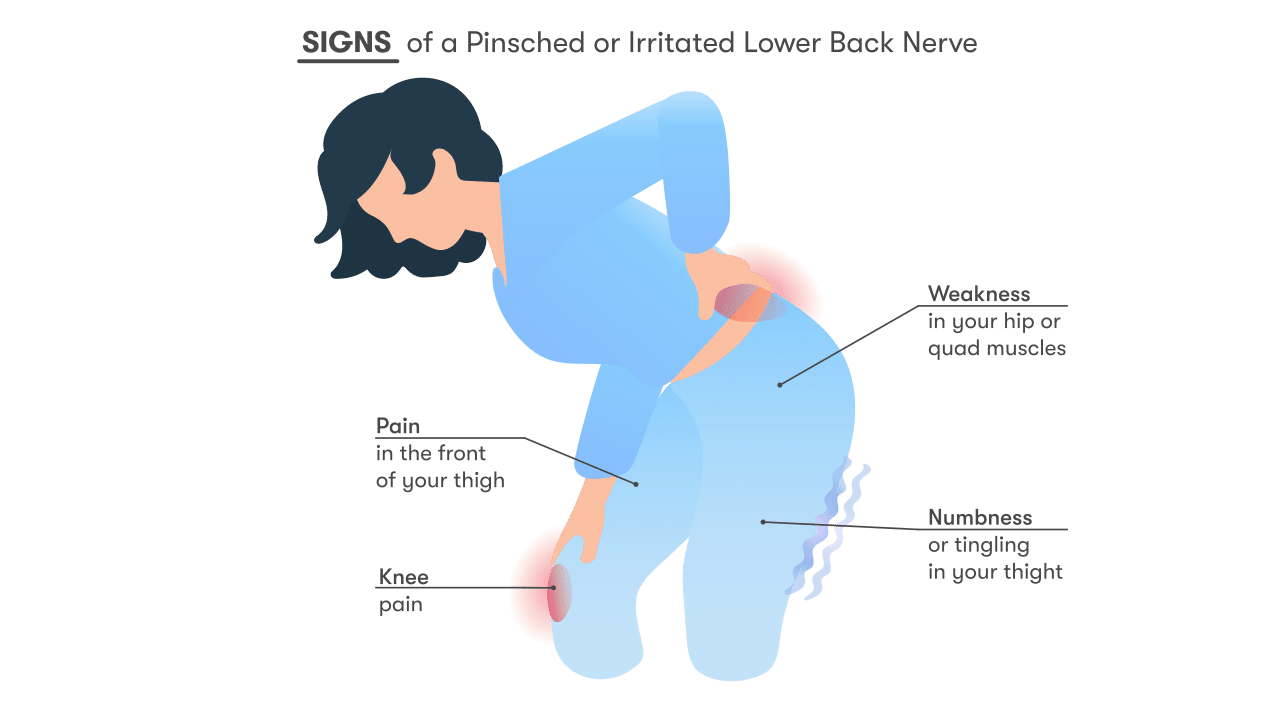
In the neck, it causes pain, numbness or weakness in the shoulder, arm or hand (cervical radiculopathy). In the lower back, it causes pain that runs down the leg (sciatica). Symptoms are often on one side.
Many people improve with physical therapy, medications and injections. When the nerve stays pinched, minimally invasive surgery can open the doorway and relieve the pressure, often through a small incision.
What’s Happening in Your Spine
The foramen is bordered by the disc in front, the facet joint behind, and the bones above and below. It narrows when:
- Discs lose height, lowering the “ceiling” of the opening (degenerative disc disease)
- Bone spurs grow from arthritic facet joints or vertebrae
- A disc bulges or herniates into the opening
- A vertebra slips out of alignment (spondylolisthesis)

Symptoms of Foraminal Stenosis
In the neck
- Pain from the neck into the shoulder, arm or hand
- Numbness or tingling in specific fingers
- Weakness in the arm or grip
- Pain that worsens when you tilt your head back or toward the painful side
In the lower back
- Pain down the buttock and leg, sometimes into the foot
- Numbness, tingling or weakness in the leg or foot
- Leg pain when standing or walking that eases when sitting
Symptoms patients often ignore
- Pain on one side only that keeps coming back
- Arm pain relieved by resting your hand on top of your head
- A weak ankle or a foot that catches on stairs
When it’s an emergency: Call 911 or go to the nearest emergency room if you develop bladder or bowel changes, groin numbness, or rapidly worsening weakness.
Causes and Risk Factors
- Age-related arthritis and disc wear, most common after 50
- Herniated discs
- Spondylolisthesis or scoliosis
- Previous injury or spine surgery
- Smoking, excess weight and heavy physical work
How We Diagnose Foraminal Stenosis
- History and exam: where symptoms travel, and testing strength, reflexes and sensation to pinpoint the nerve
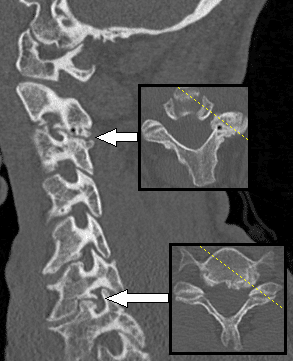
- MRI: shows which foramen is narrowed and how much the nerve is compressed
- CT scan: shows bone spurs in detail and helps plan surgery
- X-rays with bending views: check alignment and stability
- EMG/nerve studies: confirm the nerve involved and rule out other nerve problems
Treatment Options
Non-surgical treatment comes first
- Physical therapy: posture, strengthening and nerve-gliding exercises
- Medications: anti-inflammatories, a short course of oral steroids or nerve-pain medications
- Selective nerve root or epidural injections: deliver anti-inflammatory medicine right to the irritated nerve
When surgery makes sense
Surgery is considered when arm or leg pain persists after about six to twelve weeks of good conservative care, or sooner if there is significant or worsening weakness. Dr. Grunch specializes in minimally invasive ways to open the foramen:
- Minimally invasive foraminotomy: carefully removes the bone spurs and tissue narrowing the opening, through a small incision
- Transforaminal (Kambin’s triangle) approaches: Dr. Grunch uses advanced approaches through Kambin’s triangle, a natural corridor right next to the exiting nerve, to reach the problem with minimal disruption
- In the neck: cervical disc replacement or ACDF, which restore disc height and open the foramen from the front
- Stabilization when needed: a minimally invasive fusion if a slipped or unstable vertebra is the cause
Why Choose Dr. Betsy Grunch for Foraminal Stenosis
- Duke-trained: neurosurgical residency and spine research fellowship at Duke University School of Medicine, where she received the Spine Young Investigator Award
- Experience you can count on: in practice since 2013, performing 400 to 600 surgeries a year and more than 5,000 procedures over her career
- Minimally invasive focus: including transforaminal approaches through Kambin’s triangle, designed for exactly this problem
- Surgery only when it helps: board-certified (FAANS, FACS, FCNS), she starts with the least invasive treatment that will work
- Clear answers: known online as Ladyspinedoc, she makes sure you understand your imaging and every option in front of you
What to Expect If You Need Surgery
Before surgery
You’ll meet with Dr. Grunch or one of her physician assistants to review your imaging and plan the right procedure. Our team coordinates pre-operative testing and reviews your medications.
Procedure day
Minimally invasive foraminotomy usually takes one to two hours, and most patients go home the same day. Cervical disc replacement and ACDF are often same-day or overnight.
Recovery timeline
- Day 1: up and walking
- Weeks 1-2: light activity; many desk workers return to work
- Weeks 2-6: avoid heavy lifting, bending and twisting
- Weeks 6-12: return to exercise and physical work as cleared
- Months 3-12: numbness and strength continue to improve
Frequently Asked Questions
Is foraminal stenosis the same as spinal stenosis?
They are related. Spinal stenosis usually refers to narrowing of the central canal, while foraminal stenosis is narrowing of the side openings where individual nerves exit. Many people have some of both.
Will it get better on its own?
Symptoms often improve with conservative care, even though the narrowing itself doesn’t go away. If pain keeps returning or weakness develops, surgery can help.
Why is my pain only on one side?
Each foramen serves one nerve on one side, so narrowing on the left typically causes symptoms on the left.
Do I need a fusion?
Usually not. Most foraminal stenosis is treated by opening the foramen without fusion. Fusion is added only if the spine is unstable.
How small is the incision?
Minimally invasive foraminotomy is typically done through an incision about an inch long.
Take the First Step Toward Relief
Whether you need a diagnosis, a treatment plan or a second opinion, Dr. Grunch and the Southern Neurosurgery team are here to help.
Call 470-293-9800 to schedule an appointment or contact us online.
Have a question first? Ask our virtual assistant anything, 24/7.
We see patients across metro Atlanta and North Georgia at our offices in Gainesville, Sandy Springs and South Atlanta (Riverdale). Find the office nearest you.
This page is for educational purposes only and is not a substitute for medical advice. If you have bladder or bowel changes, groin numbness or rapidly worsening weakness, call 911 or go to the nearest emergency room.