
Skull Fractures: What to Know After a Serious Head Injury
Call 911 or go to the nearest emergency room after a head injury with loss of consciousness, a dent or open wound in the skull, clear fluid or blood from the nose or ears, bruising behind the ears or around the eyes, confusion, vomiting, a seizure or weakness.
What Is a Skull Fracture?
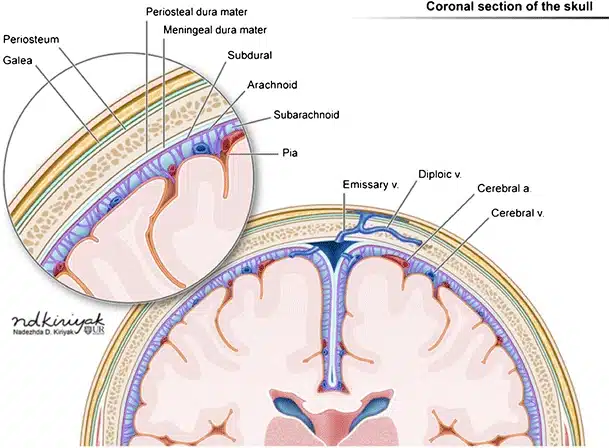
A skull fracture is a break in one of the bones of the skull. It happens when a strong force strikes the head. Many skull fractures heal on their own, but the force that causes them can also injure the brain, the coverings of the brain or nearby blood vessels, so every skull fracture needs medical evaluation.

Types of Skull Fractures
- Linear: a simple crack in the bone without displacement; the most common type
- Depressed: part of the skull is pushed inward toward the brain
- Basilar (skull base): a break in the bones at the base of the skull, which can cause spinal fluid leaks
- Open (compound): the skin over the fracture is broken, raising the risk of infection
Symptoms
- Pain, swelling or a dent at the site of injury
- Bleeding from the wound, nose or ears
- Clear, watery fluid draining from the nose or ears (a sign of a CSF leak)
- Bruising behind the ears (Battle’s sign) or around the eyes (raccoon eyes)
- Headache, confusion or drowsiness
- Nausea and vomiting
- Hearing loss, facial weakness or loss of smell, with skull base fractures
- Seizures
Causes
- Falls
- Car, motorcycle and bicycle accidents
- Sports injuries
- Assaults
How It’s Diagnosed
- CT scan of the head: the best test for showing skull fractures and any bleeding or brain injury underneath
- Neurological exam
- Testing of nasal or ear fluid: when a CSF leak is suspected
Treatment
Non-surgical care
Most linear fractures and many skull base fractures heal on their own over weeks to months with observation, pain control and follow-up. Many CSF leaks from skull base fractures stop on their own.
Surgery
Surgery is recommended for depressed fractures pressing on the brain, open fractures that need cleaning, fractures with a blood clot underneath, or CSF leaks that don’t heal. In these cases, surgery can often correct the problem:
- Skull fracture repair: lifting depressed bone back into place, cleaning the wound and repairing the dura
- Hematoma removal: when there’s bleeding under the fracture (epidural hematoma)
- CSF leak repair for persistent leaks
Recovery
A simple skull fracture usually heals within a few months. Recovery depends mostly on whether the brain was also injured. Avoid contact sports and activities with a risk of another head injury until cleared.
Frequently Asked Questions
Do all skull fractures need surgery?
No. Most heal on their own. Surgery is for depressed or open fractures, bleeding underneath, or persistent fluid leaks.
How long does a skull fracture take to heal?
Usually a few months, though the bone keeps remodeling for longer.
What does clear fluid from my nose mean after a head injury?
It may be cerebrospinal fluid leaking through a skull base fracture. Seek medical care right away, as it raises the risk of infection.
Is a skull fracture the same as a brain injury?
Not necessarily. Some people have a fracture without brain injury, and others have a brain injury without a fracture. A CT scan checks for both.
When can I return to sports?
Only when cleared by your doctor, usually after the fracture has healed and any symptoms have resolved.
Follow-Up Care After Hospital Treatment
For a new head injury or sudden symptoms, call 911 or go to the nearest emergency room.
A skull fracture is usually diagnosed and treated in the emergency room and hospital. After you go home, follow-up with a neurosurgeon is an important part of recovery, including repeat imaging and guidance on returning to work, driving and normal activities. If Dr. Grunch cared for you in the hospital, or you’ve been referred for follow-up, call 470-293-9800 to schedule your visit or contact us online.
We see patients across metro Atlanta and North Georgia at our offices in Gainesville, Sandy Springs and South Atlanta (Riverdale). Find the office nearest you.
This page is for educational purposes only and is not a substitute for medical advice. If you or someone else has a head injury with confusion, worsening headache, repeated vomiting, a seizure, unequal pupils, weakness or trouble waking up, call 911 or go to the nearest emergency room.