
Restoring the Skull and Protecting the Brain
If someone has a head injury with confusion, a worsening headache, repeated vomiting, a seizure, clear fluid draining from the nose or ears, weakness or trouble waking up, call 911 or go to the nearest emergency room.
A skull fracture can sound alarming, and many heal on their own. When a fracture presses on the brain, is open to the outside or is leaking spinal fluid, skull fracture repair can often correct the problem by lifting the bone back into place and protecting the brain.
What Is Skull Fracture Repair?
Skull fracture repair is surgery to restore a broken skull. Most skull fractures are simple cracks that heal without surgery. Surgery is needed when bone fragments are pushed inward toward the brain (a depressed skull fracture), when the fracture is open through a cut in the scalp, or when it causes a leak of spinal fluid.

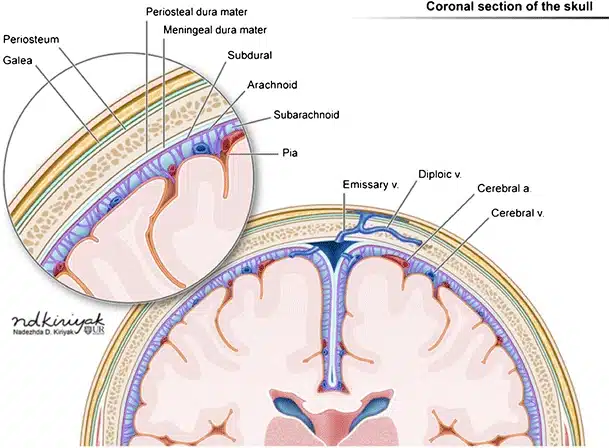
During surgery, the depressed bone is lifted back into position or replaced, the brain’s covering is repaired if it was torn, and the bone is secured with small plates and screws. Any blood clot under the fracture, such as an epidural hematoma, is removed at the same time.
Who Needs Skull Fracture Repair?
- A depressed skull fracture that is pushed in more than the thickness of the skull or is pressing on the brain
- An open fracture with a cut in the scalp, especially if it is contaminated
- A fracture with a tear in the dura or a leak of spinal fluid from the nose or ears
- A fracture with a blood clot under it
- A fracture of the frontal sinus, behind the forehead, that is displaced or leaking fluid
- A significant deformity of the forehead or skull
Treatment Without Surgery
- Observation: most simple, linear fractures heal on their own over several months
- Wound care and antibiotics: for small open fractures
- Monitoring for complications: such as bleeding, infection or a spinal fluid leak
How Skull Fracture Repair Is Done
- Anesthesia: You’ll be fully asleep.
- Exposure: An incision is made in the scalp, often using the existing cut if there is one.
- Elevating the bone: The depressed pieces are lifted back into position, or removed and reassembled.
- Repairing the brain’s covering: Any tear in the dura is closed, and any blood clot is removed.
- Securing the bone: The skull is put back together with small plates and screws. Badly contaminated or shattered bone may be replaced later with an implant.
- Closing: The wound is cleaned thoroughly and the scalp is closed.
Watch Dr. Grunch explain a frontal sinus fracture case:
Video: Case Study 217, Frontal Sinus Fracture, presented by Dr. Grunch on her Ladyspinedoc channel (YouTube)
Benefits and Risks
Benefits
- Relieves pressure on the brain
- Lowers the risk of infection, especially with open fractures
- Stops a spinal fluid leak
- Restores the shape of the skull and forehead
Risks
- Infection, including meningitis
- Bleeding
- Seizures
- A continued spinal fluid leak
- Brain injury from the original trauma, which may not fully recover
- Risks related to anesthesia
What to Expect
In the hospital
Skull fracture repair is usually done in the hospital soon after an injury. Your care team will review your CT scan, check for other injuries and explain the plan to you and your family. Most patients stay in the hospital for two to five days, longer if there are other injuries. Antibiotics are often given for open fractures.
Recovery timeline
- First days: Close monitoring and a repeat CT scan.
- Two weeks: Stitches or staples are removed.
- Four to six weeks: A follow-up visit to check healing and symptoms.
- Several months: The skull continues to heal. Contact sports should wait until you are cleared.
Caring for yourself at home
- Your incision: You can usually shower after two to three days. Let water run gently over the incision and pat it dry. Don’t scrub, soak in a bath or pool, or use hair dye or harsh hair products until it has fully healed. Staples or stitches are usually removed in 10 to 14 days.
- Activity: Walk every day and rest when you’re tired. Avoid heavy lifting, bending over and straining for about four to six weeks, and avoid contact sports until you are cleared.
- Nose blowing: If your fracture involved the sinuses or a spinal fluid leak, avoid blowing your nose, using a straw and heavy straining until you are cleared.
- Medications: Take any seizure medication exactly as prescribed and don’t stop it on your own. Don’t take blood thinners, aspirin or anti-inflammatory medications such as ibuprofen until your surgical team tells you it’s safe. Take pain medication with food, avoid alcohol and use a stool softener so you don’t strain.
- Driving: Don’t drive until you are cleared. If you have had a seizure, Georgia law limits driving for a period of time.
- Recovery at home: Fatigue, headaches and trouble concentrating are common for several weeks. Have someone stay with you for the first few days.
Call Dr. Grunch’s office at 470-293-9800, or the surgeon who treated you in the hospital, if you have a fever over 101°F, redness, swelling or drainage from the incision, clear fluid leaking from the incision or nose, or calf pain or swelling. Call 911 for a seizure, a sudden severe headache, new confusion or drowsiness, new weakness or numbness, trouble speaking, chest pain or shortness of breath.
Frequently Asked Questions
Do all skull fractures need surgery?
No. Most simple skull fractures heal on their own. Surgery is for fractures that press on the brain, are open, leak spinal fluid or cause a deformity.
Will I have a visible scar?
The incision is often placed within the hairline when possible, and many scars become hard to see as hair grows back.
Why is clear fluid draining from my nose a concern?
It may be spinal fluid leaking through the fracture, which raises the risk of meningitis. Tell your care team right away.
Will the bone heal?
Yes. With plates and screws holding it in place, the skull usually heals over several months.
When can I return to sports?
Not until you are cleared after surgery. Contact sports usually need to wait several months.
Follow-Up Care After Hospital Treatment
For a new head injury or sudden symptoms, call 911 or go to the nearest emergency room.
Skull fractures that need surgery are usually treated in the emergency room and hospital. After you go home, follow-up with Dr. Grunch or the surgeon who treated you in the hospital is an important part of recovery, including repeat imaging, checking your incision and guidance on returning to work, driving and normal activities. If Dr. Grunch cared for you in the hospital, or you’ve been referred for follow-up, call 470-293-9800 to schedule your visit or contact us online.
We see patients across metro Atlanta and North Georgia at our offices in Gainesville, Sandy Springs and South Atlanta (Riverdale). Find the office nearest you.
Related pages: Skull fractures · Epidural hematoma · Epidural hematoma evacuation · Concussion · CSF leaks
This page is for educational purposes only and is not medical advice. It does not replace individualized care from a licensed physician. If you or someone else has a head injury with confusion, worsening headache, repeated vomiting, a seizure, unequal pupils, weakness or trouble waking up, call 911 or go to the nearest emergency room.