
Restoring the Skull After a Craniectomy
After a decompressive craniectomy, living without part of the skull can feel unsettling, both for the patient and for the family. A cranioplasty is the surgery that puts the skull back together. It restores protection for the brain and the natural shape of the head, and for many people it is an important step forward in recovery.
What Is a Cranioplasty?
A cranioplasty is surgery to repair an opening in the skull. Most often it follows a decompressive craniectomy, an emergency operation in which a large piece of skull is removed so a swollen brain has room to expand. Once the swelling has gone down, the opening is closed again with either:
- Your own bone: the bone flap removed during the first surgery, which is usually stored frozen at the hospital or kept under the skin of the abdomen.
- A custom implant: when the bone can’t be used, an implant made from titanium, PEEK (a strong medical plastic) or bone cement is designed from your CT scan to fit the opening exactly.
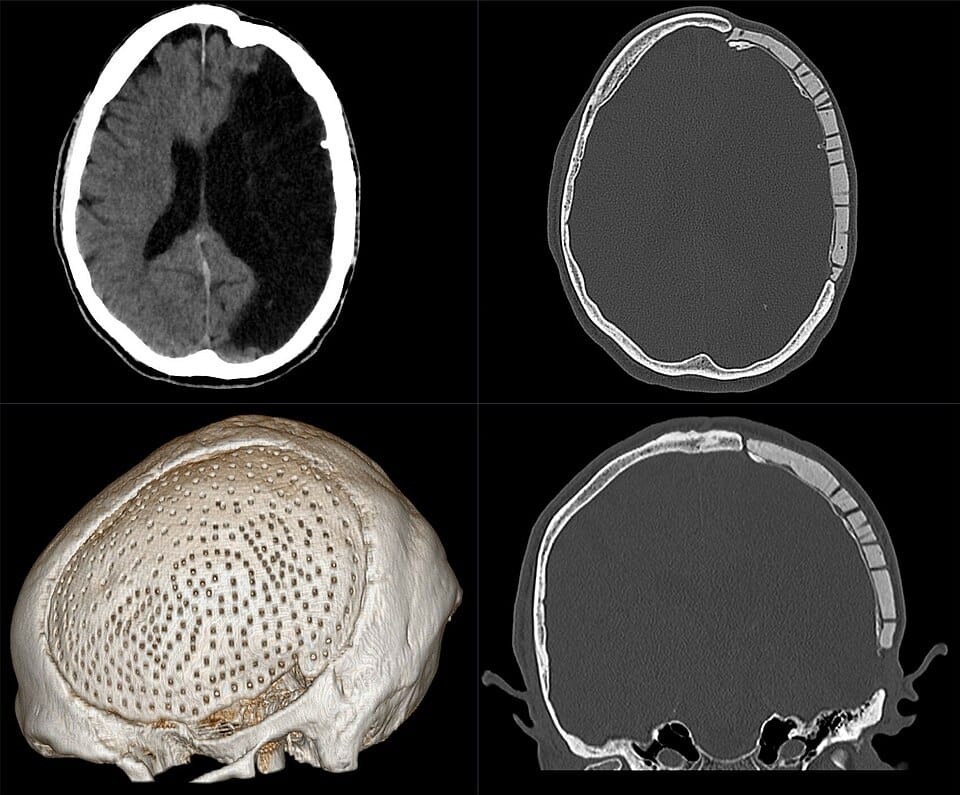
A cranioplasty is typically performed about 6 to 12 weeks after the craniectomy, once the brain swelling is gone and the patient is healthy enough for surgery.
Who Needs a Cranioplasty?
- Anyone who has had a decompressive craniectomy for a traumatic brain injury, stroke or bleeding in the brain
- People whose bone flap was removed because of an infection after a craniotomy
- Skull defects from a skull fracture or from a tumor that involved the bone
- People with a skull defect causing a sunken scalp, headaches, dizziness or changes in thinking or strength (sometimes called “syndrome of the trephined”)
Treatments to Try First
There is no non-surgical way to replace missing skull bone. Until a cranioplasty is done:
- A protective helmet: worn whenever you are out of bed to protect the brain from falls and bumps
- Rehabilitation: physical, occupational and speech therapy continue while you wait
- Treating infection first: if the bone was removed because of an infection, antibiotics are completed and the area is allowed to heal, which can mean waiting longer before cranioplasty
How a Cranioplasty Is Done
- Planning: A CT scan of the head is used to check the opening and, if needed, to design a custom implant.
- Anesthesia: You’ll be fully asleep.
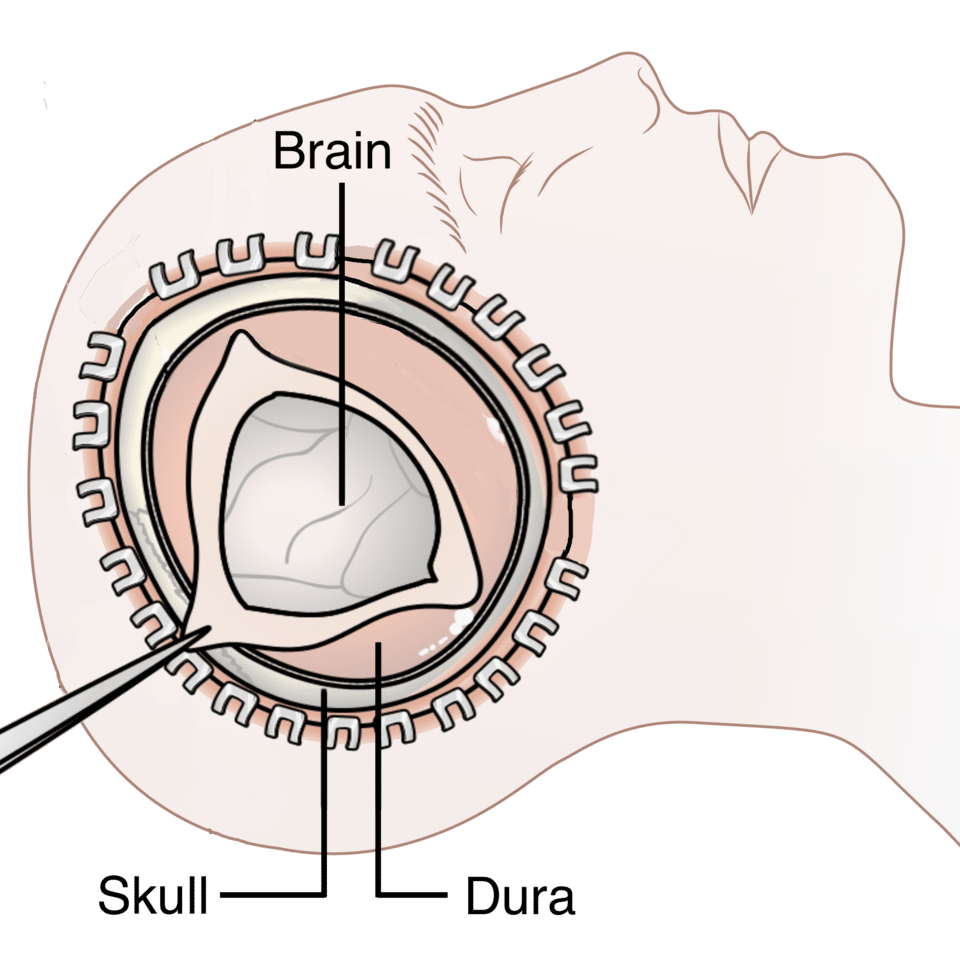
- Opening: The scalp is opened, usually along the original incision, and gently separated from the brain’s covering underneath.
- Placing the bone or implant: Your own bone or the custom implant is fitted into the opening and secured to the surrounding skull with small plates and screws.
- Closing: The scalp is closed with stitches or staples. A small drain is sometimes left in place for a day or two.
Learn how a cranioplasty is performed:
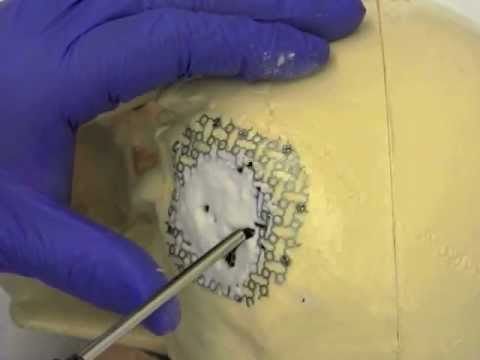
Video: Performing a Cranioplasty, courtesy of the American Association of Neurological Surgeons (YouTube)
Benefits and Risks
Benefits
- Protects the brain, so the helmet is no longer needed
- Restores the natural shape of the head
- Can improve headaches, dizziness and, in some people, thinking, strength and progress in rehabilitation
- Helps normalize the flow of spinal fluid around the brain
Risks
- Infection, which may require removing the bone or implant
- Bleeding or a collection of fluid under the bone
- Seizures
- Your own bone gradually thinning or dissolving (bone resorption), which may later require an implant
- Problems with spinal fluid flow (hydrocephalus), which may need a shunt
- Risks related to anesthesia
Why Choose Dr. Betsy Grunch for Your Cranioplasty
- Duke-trained: Dr. Grunch completed her neurosurgical residency at Duke University School of Medicine, one of the top neurosurgery programs in the country.
- Continuity of care: Many of her cranioplasty patients are people she cared for at the time of their injury or stroke, so she knows their history and their goals.
- Experience you can count on: She has been in practice since 2013 and performs 400 to 600 surgeries a year, more than 5,000 procedures over her career.
- Clear communication with families: She explains the timing, the choice between your own bone and an implant, and what to expect, so you and your family can plan ahead.
- A teacher at heart: As “Ladyspinedoc,” she is known for explaining brain and spine conditions clearly. You’ll leave your visit understanding your imaging and every option in front of you.
What to Expect
Before surgery
You’ll meet with Dr. Grunch or one of her physician assistants to review your CT scan, check that the incision has healed and that there are no signs of infection, and decide together on the timing and whether your own bone or a custom implant will be used. Our team will coordinate pre-operative testing, review your medications (including blood thinners you may need to pause) and walk you and your family through the day of surgery.
Procedure day
Cranioplasty usually takes about two to three hours. Afterward you’ll be monitored closely, often in an intensive care or step-down unit for the first night, and you’ll have a CT scan to check the result. Most patients stay in the hospital for two to four days.
Recovery timeline
- First days: Close monitoring, a repeat CT scan and getting up to walk.
- Two weeks: Stitches or staples are removed.
- Four to six weeks: A follow-up visit to check healing. Most daily activities resume, and the helmet is no longer needed.
- Beyond: Rehabilitation continues as needed, and many people notice steady progress in the months after the skull is restored.
Caring for yourself at home
- Your incision: You can usually shower after two to three days. Let water run gently over the incision and pat it dry. Don’t scrub, soak in a bath or pool, or use hair dye or harsh hair products until it has fully healed. Staples or stitches are usually removed in 10 to 14 days.
- Activity: Walk every day and rest when you’re tired. Avoid heavy lifting, bending over and straining for about four to six weeks, and avoid contact sports until you are cleared.
- Medications: Take any seizure medication exactly as prescribed and don’t stop it on your own. Don’t take blood thinners, aspirin or anti-inflammatory medications such as ibuprofen until Dr. Grunch’s team tells you it’s safe. Take pain medication with food, avoid alcohol and use a stool softener so you don’t strain.
- Driving: Don’t drive until you are cleared. If you have had a seizure, Georgia law limits driving for a period of time.
- Recovery at home: Fatigue, headaches and trouble concentrating are common for several weeks. Have someone stay with you for the first few days.
Call the office at 470-293-9800 if you have a fever over 101°F, redness, swelling or drainage from the incision, clear fluid leaking from the incision or nose, or calf pain or swelling. Call 911 for a seizure, a sudden severe headache, new confusion or drowsiness, new weakness or numbness, trouble speaking, chest pain or shortness of breath.
Download your patient instructions
Your instructions depend on the type of surgery you have. Our team will give you written instructions before you go home, and you’ll find other patient sheets on our Patient Resources page.
Frequently Asked Questions
When is a cranioplasty done after a craniectomy?
Typically about 6 to 12 weeks after the craniectomy, once the brain swelling has gone down and the patient is healthy enough for surgery. It may be delayed if there has been an infection.
Will my own bone be used?
Whenever possible. If the bone was damaged, infected or has started to dissolve, a custom implant made from your CT scan is used instead.
Will I still need to wear a helmet?
No. Once the bone or implant is in place and healed, the helmet is no longer needed.
Will my head look normal?
For most people, the head’s shape is restored and the incision is hidden in the hair as it grows back.
Can a cranioplasty help my recovery?
For some people, yes. Restoring the skull can improve headaches and dizziness, and some patients see gains in thinking, strength and progress in therapy.
Take the Next Step
If you or a loved one has had a craniectomy and is ready for the next step, you don’t have to navigate it alone. Whether you need a diagnosis, a treatment plan or a second opinion, Dr. Grunch and the Southern Neurosurgery team are here to help you understand your options.
Call 470-293-9800 to schedule an appointment or contact us online.
Have a question first? Ask our virtual assistant anything, 24/7.
We see patients across metro Atlanta and North Georgia at our offices in Gainesville, Sandy Springs and South Atlanta (Riverdale). Find the office nearest you.
Related pages: Decompressive craniectomy · Craniotomy · Skull fracture repair · Subdural hematoma evacuation · Intracranial hemorrhage
This page is for educational purposes only and is not medical advice. It does not replace individualized care from a licensed physician. If you have a sudden severe headache, a seizure, new weakness or numbness, confusion, or trouble speaking or seeing, call 911 or go to the nearest emergency room.