
Pinched Nerve in the Neck: Relief for Neck and Arm Pain
Pain that shoots from your neck into your arm, or fingers that tingle and won’t wake up, usually means a nerve in the neck is pinched. Most people get better, and those who don’t have excellent options.
What Is Cervical Radiculopathy?
Cervical radiculopathy is the medical name for a pinched nerve in the neck. Nerves leave your cervical spine through small openings on each side and travel to your shoulders, arms and hands. When one of those nerve roots is squeezed or inflamed, you can feel pain, numbness, tingling or weakness anywhere along its path.
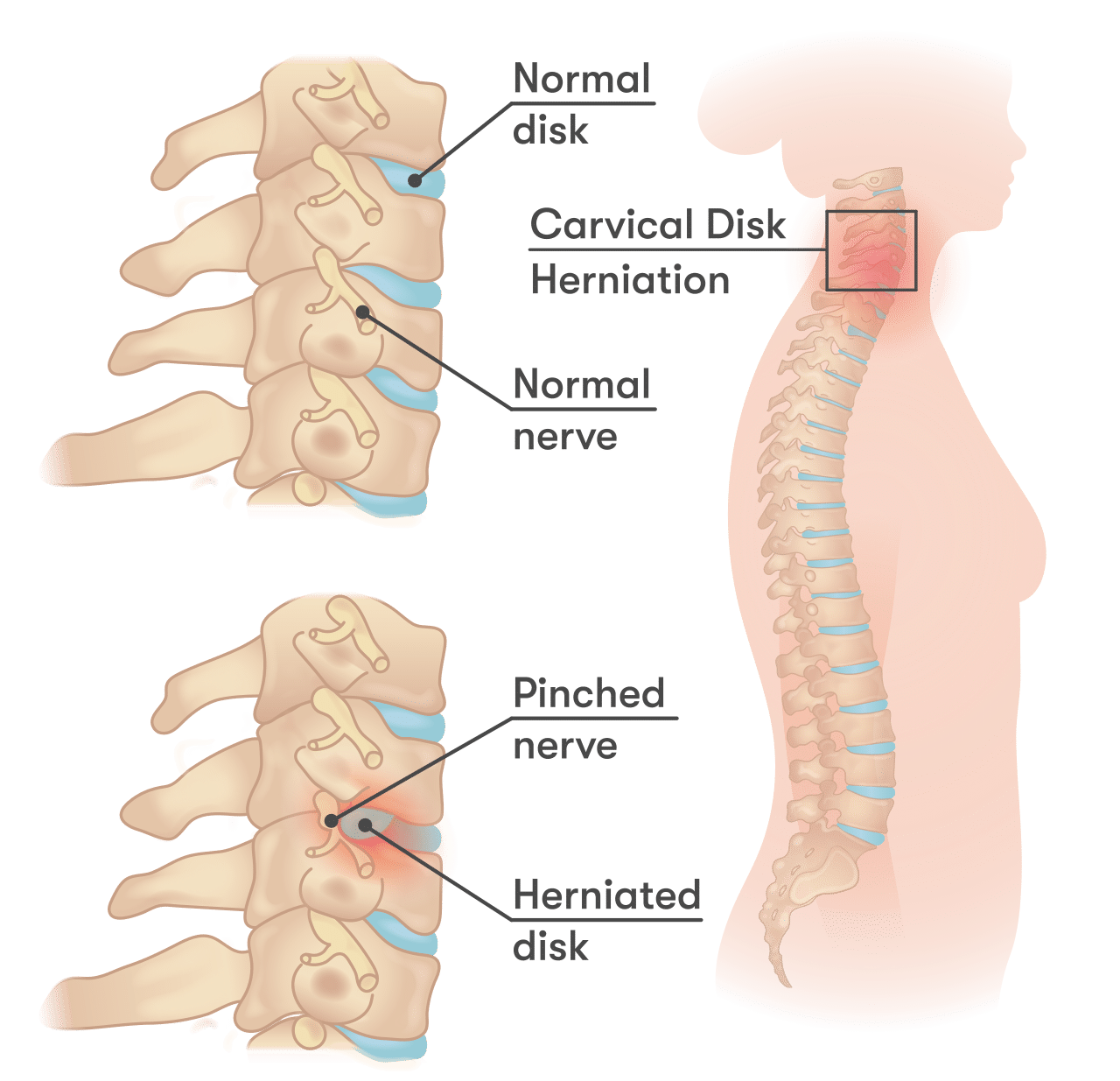
The most common causes are a herniated disc, which is more typical in younger adults, and bone spurs from arthritis narrowing the nerve’s exit, which is more common after 50. The majority of people improve with time and conservative care. When symptoms persist or strength is slipping, surgery to free the nerve is very effective at relieving arm pain.
What’s Happening in Your Neck
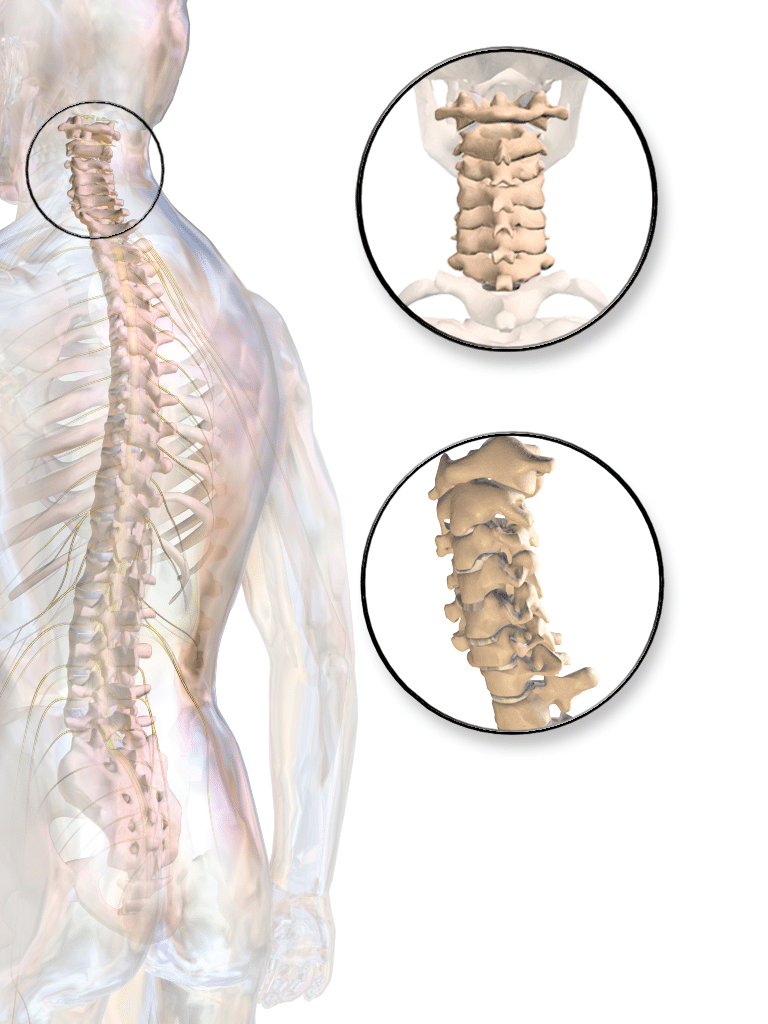
Your neck has seven vertebrae (C1 to C7), and eight pairs of nerve roots. Each nerve supplies a specific area, so your symptoms point to the level involved:
- C5: shoulder and upper arm, weakness lifting the arm out to the side
- C6: down the arm to the thumb and index finger, weakness bending the elbow
- C7: down the back of the arm to the middle finger, weakness straightening the elbow
- C8: along the inner forearm to the ring and pinky fingers, weak grip
Symptoms of a Pinched Nerve in the Neck
Common symptoms
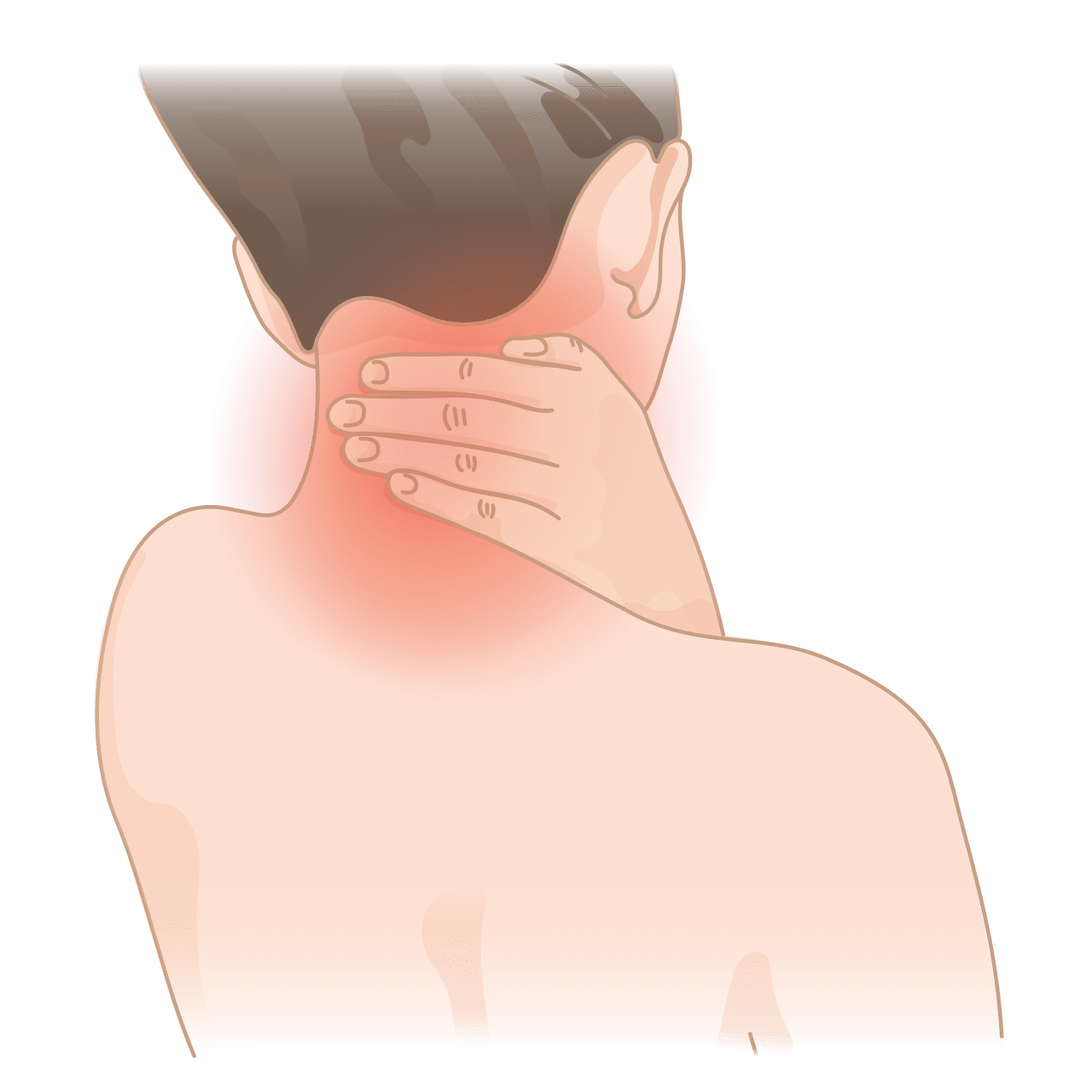
- Sharp or burning pain that travels from the neck into the shoulder, arm or hand
- Numbness or tingling in specific fingers
- Weakness in the arm, hand or grip
- Neck pain that worsens when you look up or turn your head toward the painful side
Symptoms patients often ignore
- Pain along or between the shoulder blades
- Relief when you rest your hand on top of your head
- Dropping objects or a weaker handshake
- Hand tingling that gets blamed on carpal tunnel syndrome
- Arm pain that wakes you at night
When to seek care right away: Numbness or clumsiness in both hands, trouble with balance or walking, or bladder changes can mean the spinal cord itself is compressed (cervical myelopathy). These symptoms need prompt evaluation.
Causes and Risk Factors
- Herniated cervical disc: the soft center of a disc pushes out against the nerve
- Cervical spondylosis: age-related arthritis and bone spurs
- Foraminal stenosis: narrowing of the nerve’s exit opening
- Injury: car accidents, falls or sports injuries
Risk factors include age, jobs with heavy lifting or prolonged overhead or desk work, smoking, and previous neck injury.
How We Diagnose Cervical Radiculopathy
- History and neurological exam: testing strength, reflexes and sensation in each arm, and maneuvers such as the Spurling’s test that reproduce nerve pain
- MRI of the neck: the best test for seeing discs, nerve roots and the spinal cord
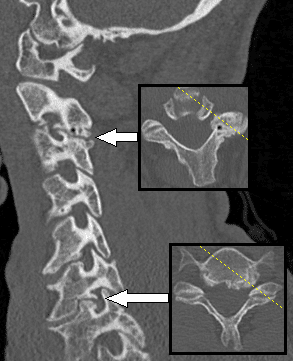
- X-rays and CT: to look at bone spurs, alignment and the nerve openings
- EMG/nerve conduction studies: to confirm which nerve is affected and rule out carpal tunnel syndrome or ulnar nerve compression at the elbow
Treatment Options
Non-surgical treatment comes first
- Time and activity changes: avoiding positions that trigger arm pain
- Medications: anti-inflammatories, a short course of oral steroids or nerve-pain medications
- Physical therapy: posture work, neck and shoulder strengthening and nerve-gliding exercises
- Cervical epidural steroid injections: image-guided injections that calm the inflamed nerve
When surgery makes sense
Surgery is considered when arm pain persists after about six to twelve weeks of conservative care, when it keeps you from working or sleeping, or sooner if you have significant or worsening weakness or signs of spinal cord compression.
Dr. Grunch is known for cervical artificial disc replacement and minimally invasive spine surgery. Options include:
- Cervical artificial disc replacement: removes the damaged disc and bone spurs through a small incision in the front of the neck, then replaces the disc with a motion-preserving implant. For the right patient, it relieves the nerve while keeping the neck moving naturally.
- Anterior cervical discectomy and fusion (ACDF): a time-tested option when arthritis, instability or multiple levels make disc replacement the wrong fit
- Posterior foraminotomy: widens the nerve’s exit from the back of the neck without a fusion, for selected patients
Why Choose Dr. Betsy Grunch for a Pinched Nerve in the Neck
- Duke-trained: neurosurgical residency and spine research fellowship at Duke University School of Medicine, where she received the Spine Young Investigator Award
- Experience you can count on: in practice since 2013, performing 400 to 600 surgeries a year and more than 5,000 procedures over her career
- Motion-preservation expertise: cervical disc replacement is one of her signature procedures, so fusion isn’t your only option
- Surgery only when it helps: board-certified (FAANS, FACS, FCNS), she starts with the least invasive treatment that will work
- Clear answers: known online as Ladyspinedoc, she makes sure you understand which nerve is involved and why each option fits or doesn’t
What to Expect If You Need Surgery
Before surgery
You’ll meet with Dr. Grunch or one of her physician assistants to review your imaging and decide between disc replacement, fusion or another approach. Our team coordinates pre-operative testing and reviews your medications.
Procedure day
Cervical disc replacement and ACDF typically take one to two hours for a single level. Most patients go home the same day or after one night. Arm pain often improves right away.
Recovery timeline
- Days 1-7: walking right away; a sore throat or mild trouble swallowing is common and temporary after surgery through the front of the neck
- Weeks 1-2: many desk workers return to work; no driving while on pain medication
- Weeks 2-6: avoid heavy lifting and overhead work
- Weeks 6-12: return to exercise and physical jobs as cleared
- Months 3-6: numbness and strength continue to improve; fusions continue to heal
Frequently Asked Questions
How do I know if it’s a pinched nerve or carpal tunnel?
Both can cause hand numbness. Pain that starts in the neck or shoulder and travels down the arm points to the neck, while symptoms limited to the hand, especially at night, point to carpal tunnel. Some people have both. An exam and nerve studies sort it out.
Will it heal without surgery?
Most of the time, yes. The majority of people improve over weeks to months with conservative care. Surgery is for pain that doesn’t improve or for weakness or spinal cord compression.
What’s the difference between disc replacement and fusion?
Both remove the problem disc and free the nerve. A fusion joins the two vertebrae permanently, while a disc replacement keeps that level moving. For appropriate patients, disc replacement preserves motion and may reduce stress on neighboring discs. Not everyone is a candidate, and Dr. Grunch will tell you honestly which fits your spine.
Will I have a big scar on my neck?
The incision is usually small and placed in a natural skin crease on the front of the neck, so it tends to fade well.
Will I lose motion in my neck?
After a single-level fusion, most people notice little change in day-to-day motion. Disc replacement is designed to keep the treated level moving.
Take the First Step Toward Relief
Arm pain and numbness wear on everything from sleep to work. Whether you need a diagnosis, a treatment plan or a second opinion on whether you’re a disc replacement candidate, Dr. Grunch and the Southern Neurosurgery team are here to help.
Call 470-293-9800 to schedule an appointment or contact us online.
Have a question first? Ask our virtual assistant anything, 24/7.
We see patients across metro Atlanta and North Georgia at our offices in Gainesville, Sandy Springs and South Atlanta (Riverdale). Find the office nearest you.
This page is for educational purposes only and is not a substitute for medical advice. If you have numbness in both hands, trouble walking or bladder changes, seek medical care promptly.