
Removing Blood That Is Pressing on the Brain
If someone has a head injury followed by worsening headache, confusion, drowsiness, vomiting, weakness on one side, slurred speech or a seizure, call 911 or go to the nearest emergency room. A subdural hematoma can become life-threatening.
A blood clot pressing on the brain can cause confusion, weakness or drowsiness that comes on over hours or even weeks. Subdural hematoma evacuation can often correct the problem by removing the blood and relieving the pressure on the brain.
What Is Subdural Hematoma Evacuation?
A subdural hematoma is a collection of blood between the brain and its tough outer covering, the dura. Evacuation is surgery to remove that blood. The type of surgery depends on whether the blood is new or old:
- Burr hole evacuation: for a chronic subdural hematoma, where the blood has turned to liquid over weeks. One or two small holes are made in the skull, the fluid is washed out, and a small drain is often left in place for a day or two.
- Craniotomy: for an acute subdural hematoma, where the blood is a thick, fresh clot. A larger section of skull is lifted to remove the clot and stop the bleeding, and the bone is replaced.
- Craniectomy: when the brain is badly swollen, the bone may be left off to give the brain room. Learn more about decompressive craniectomy.
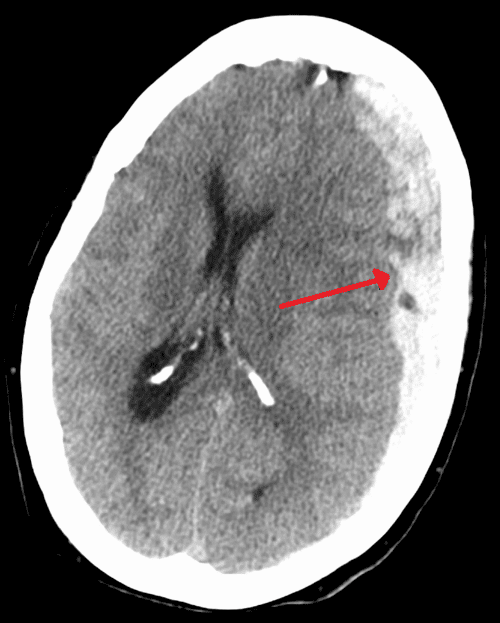
Some chronic subdural hematomas are also treated with middle meningeal artery embolization, a minimally invasive procedure that blocks the artery feeding the membrane around the blood, either alone or along with surgery.
Who Needs Subdural Hematoma Evacuation?
- A large subdural hematoma, or one that shifts the brain
- Symptoms such as confusion, drowsiness, weakness, trouble walking, speech changes or seizures
- A chronic hematoma that is growing or not going away
- Older adults and people on blood thinners, who are at higher risk, sometimes after only a minor fall
Small hematomas without symptoms can sometimes be watched with repeat CT scans while the body absorbs the blood.
Treatment Without Surgery
- Observation: close monitoring and repeat CT scans for small hematomas
- Reversing blood thinners: medications to help the blood clot normally
- Seizure prevention: medication when needed
- Middle meningeal artery embolization: for selected chronic hematomas
How Subdural Hematoma Evacuation Is Done
- Anesthesia: General anesthesia, or sometimes sedation for burr holes.
- Opening: One or two burr holes, or a craniotomy, are made over the hematoma.
- Removing the blood: The dura is opened and the blood is washed out or removed, and any bleeding vessel is controlled.
- Drain: A small drain is often placed to let any remaining fluid drain out over a day or two.
- Closing: The bone is replaced if a craniotomy was done, and the scalp is closed.
Watch Dr. Grunch explain a chronic subdural hematoma treated with burr holes:

Video: Case Study 18, Chronic Subdural Hematoma Treated by Burr Hole Evacuation, presented by Dr. Grunch on her Ladyspinedoc channel (YouTube)
And an acute subdural hematoma treated with an emergency craniotomy:

Video: Case Study 105, Acute Subdural Hematoma Managed by Emergent Craniotomy, presented by Dr. Grunch on her Ladyspinedoc channel (YouTube)
Benefits and Risks
Benefits
- Relieves pressure on the brain
- Often improves confusion, weakness and other symptoms, sometimes quickly
- Can be lifesaving for large or rapidly growing hematomas
Risks
- The hematoma coming back, especially with chronic hematomas
- New bleeding
- Seizures
- Infection
- Brain injury or stroke, which is uncommon
- Risks related to anesthesia, which are higher in older adults and people with other medical problems
Recovery depends a great deal on how the brain was affected before surgery. Your surgeon will talk with you and your family about what to expect.
What to Expect
In the hospital
Subdural hematoma evacuation is usually done in the hospital soon after the hematoma is found. Your care team will review your CT scan, reverse any blood thinners and explain the plan to you and your family. After burr hole surgery, most patients stay two to four days. After a craniotomy for an acute hematoma, the stay is usually longer and often starts in the intensive care unit. Some patients go to a rehabilitation facility before going home.
Recovery timeline
- First days: Close monitoring, a repeat CT scan and getting up to walk with therapy.
- Two weeks: Stitches or staples are removed.
- Four to six weeks: A follow-up visit, often with another CT scan, because chronic hematomas can come back.
- Beyond: Recovery from a severe acute hematoma can take months and may include rehabilitation.
Caring for yourself at home
- Your incision: You can usually shower after two to three days. Let water run gently over the incision and pat it dry. Don’t scrub, soak in a bath or pool, or use hair dye or harsh hair products until it has fully healed. Staples or stitches are usually removed in 10 to 14 days.
- Activity: Walk every day and rest when you’re tired. Avoid heavy lifting, bending over and straining for about four to six weeks, and avoid contact sports until you are cleared.
- Blood thinners: Don’t restart them until your surgeon and the doctor who prescribed them agree it’s safe, usually after imaging shows the bleeding is stable.
- Fall prevention: Use a walker or cane if recommended, remove trip hazards and avoid alcohol, since another fall can cause new bleeding.
- Medications: Take any seizure medication exactly as prescribed and don’t stop it on your own. Don’t take blood thinners, aspirin or anti-inflammatory medications such as ibuprofen until your surgical team tells you it’s safe. Take pain medication with food, avoid alcohol and use a stool softener so you don’t strain.
- Driving: Don’t drive until you are cleared. If you have had a seizure, Georgia law limits driving for a period of time.
- Recovery at home: Fatigue, headaches and trouble concentrating are common for several weeks. Have someone stay with you for the first few days.
Call Dr. Grunch’s office at 470-293-9800, or the surgeon who treated you in the hospital, if you have a fever over 101°F, redness, swelling or drainage from the incision, clear fluid leaking from the incision or nose, or calf pain or swelling. Call 911 for a seizure, a sudden severe headache, new confusion or drowsiness, new weakness or numbness, trouble speaking, chest pain or shortness of breath.
Frequently Asked Questions
Will the hematoma come back?
Chronic subdural hematomas return in a portion of patients, which is why follow-up imaging is important. Some patients are offered middle meningeal artery embolization to lower that risk.
How long will I be in the hospital?
Often two to four days after burr hole surgery. Stays after a craniotomy for an acute hematoma are usually longer.
When can I restart my blood thinner?
Only when your neurosurgeon and the doctor who prescribed it agree it’s safe.
Will my memory and thinking go back to normal?
Many people, especially with chronic hematomas, improve significantly after surgery. Recovery after a severe injury varies and may take months.
Why did this happen after such a small fall?
As we age, the brain shrinks slightly and the veins on its surface stretch, so even a minor bump can tear them, especially in people taking blood thinners.
Follow-Up Care After Hospital Treatment
For a new head injury or sudden symptoms, call 911 or go to the nearest emergency room.
A subdural hematoma is usually diagnosed and treated in the emergency room and hospital. After you go home, follow-up with Dr. Grunch or the surgeon who treated you in the hospital is an important part of recovery, including repeat imaging, checking your incision and guidance on returning to work, driving and normal activities. If Dr. Grunch cared for you in the hospital, or you’ve been referred for follow-up, call 470-293-9800 to schedule your visit or contact us online.
We see patients across metro Atlanta and North Georgia at our offices in Gainesville, Sandy Springs and South Atlanta (Riverdale). Find the office nearest you.
Related pages: Subdural hematoma · Epidural hematoma evacuation · Decompressive craniectomy · Intracranial hemorrhage · Concussion
This page is for educational purposes only and is not medical advice. It does not replace individualized care from a licensed physician. If you or someone else has a head injury with confusion, worsening headache, repeated vomiting, a seizure, unequal pupils, weakness or trouble waking up, call 911 or go to the nearest emergency room.