
Draining Extra Fluid From the Brain
Learning that fluid is building up in the brain can be frightening, especially when it is changing how you walk, think or feel. A VP shunt is one of the most common and well-established operations in neurosurgery, and for many people with hydrocephalus it can often correct the problem by giving the extra fluid a new way to drain.
What Is a VP Shunt?
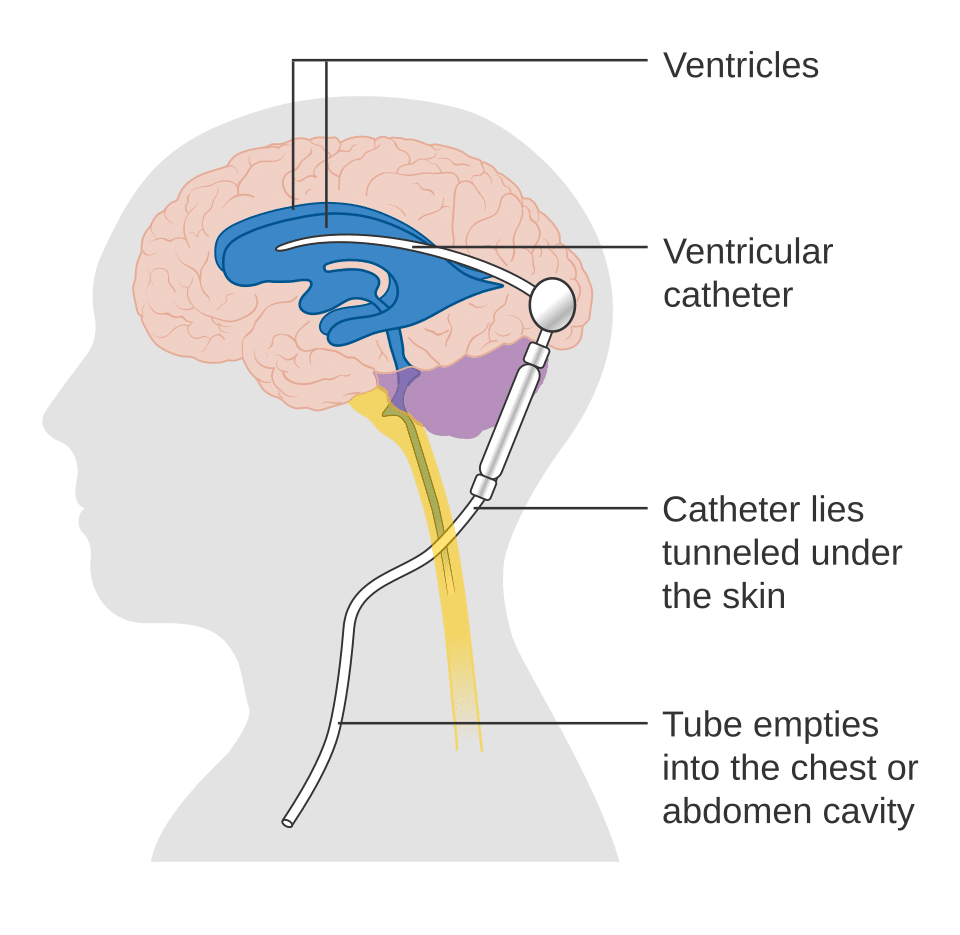
A ventriculoperitoneal (VP) shunt is a thin, flexible tube system that drains extra cerebrospinal fluid (CSF) from the brain to the abdomen, where the body absorbs it naturally. It is the most common treatment for hydrocephalus, a buildup of fluid in the ventricles, the fluid-filled spaces inside the brain.
A shunt has three parts, all placed under the skin:
- Ventricular catheter: a small tube placed into a ventricle in the brain
- Valve: sits under the scalp behind the ear and controls how much fluid drains. Many valves are programmable, so the setting can be adjusted in the office with a magnet, without more surgery.
- Distal catheter: tubing tunneled under the skin of the neck and chest into the abdomen (the peritoneal cavity)
Who Needs a VP Shunt?
- Normal pressure hydrocephalus (NPH), which causes trouble walking, memory problems and loss of bladder control in older adults
- Hydrocephalus after bleeding in the brain, a head injury, meningitis or a brain tumor
- Hydrocephalus that has been present since childhood and is now causing symptoms
- Pseudotumor cerebri (idiopathic intracranial hypertension) that threatens vision despite medication
Treatments to Try First
- Testing before a shunt: for NPH, a lumbar puncture that removes some fluid, or a temporary lumbar drain over a few days, shows whether walking and thinking improve. Improvement suggests a shunt is likely to help.
- Medications: for pseudotumor cerebri, medications such as acetazolamide and weight loss can lower fluid pressure
- Treating the cause: removing a tumor or cyst that blocks fluid flow can sometimes relieve hydrocephalus without a shunt
- Endoscopic third ventriculostomy: for some blockages, an ETV can bypass the blockage without a shunt
When fluid continues to build up and cause symptoms, a shunt can often correct the problem.
How a VP Shunt Is Placed
- Anesthesia: You’ll be fully asleep. A small area of hair is clipped.
- Brain catheter: Through a small incision and a hole in the skull, the catheter is guided into a ventricle, often using image-guided navigation.
- Valve: The valve is connected and placed under the scalp, usually behind the ear.
- Tunneling: The tubing is passed under the skin of the neck and chest to the abdomen.
- Abdomen: Through a small incision, often with a general surgeon using a laparoscope, the end of the tubing is placed in the abdominal cavity.
- Closing: The incisions are closed and the valve is set.
Watch Dr. Grunch explain normal pressure hydrocephalus treated with a VP shunt:

Video: Case Study 143, Normal Pressure Hydrocephalus Treated by VP Shunt, explained by Dr. Grunch on her Ladyspinedoc channel (YouTube)
And a case of hydrocephalus treated with a VP shunt:
Video: Case Study 8, Hydrocephalus and Treatment with a VP Shunt, presented by Dr. Grunch on her Ladyspinedoc channel (YouTube)
Benefits and Risks
Benefits
- Relieves pressure on the brain
- In NPH, often improves walking first, and sometimes memory and bladder control
- Relieves headaches and protects vision in high-pressure conditions
- Programmable valves allow adjustments without more surgery
Risks
- Shunt blockage or malfunction, which may need a revision surgery. Many shunts need a revision at some point over the years.
- Infection, usually within the first few months
- Draining too much fluid, which can cause headaches when upright or, rarely, bleeding around the brain
- Bleeding in the brain or seizures
- Problems in the abdomen, such as a fluid pocket or, rarely, injury to the bowel
- Risks related to anesthesia
Why Choose Dr. Betsy Grunch for Your VP Shunt
- Duke-trained: Dr. Grunch completed her neurosurgical residency at Duke University School of Medicine, one of the top neurosurgery programs in the country.
- Careful patient selection: For normal pressure hydrocephalus, she uses lumbar drain or tap testing to make sure a shunt is likely to help before recommending surgery.
- Experience you can count on: She has been in practice since 2013 and performs 400 to 600 surgeries a year, more than 5,000 procedures over her career.
- Long-term follow-up: Hydrocephalus is a lifelong condition. Her team follows you after surgery, adjusts programmable valves in the office and evaluates any new symptoms quickly.
- A teacher at heart: As “Ladyspinedoc,” she is known for explaining brain and spine conditions clearly, including many hydrocephalus case studies. You’ll leave your visit understanding your imaging and every option in front of you.
What to Expect
Before surgery
You’ll meet with Dr. Grunch or one of her physician assistants to review your CT or MRI, your symptoms and your goals, and to decide together whether a VP shunt is right for you. Our team will coordinate pre-operative testing, review your medications (including blood thinners you may need to pause) and walk you through the day of surgery. For normal pressure hydrocephalus, you may have a lumbar puncture or lumbar drain trial first to see if your symptoms improve.
Procedure day
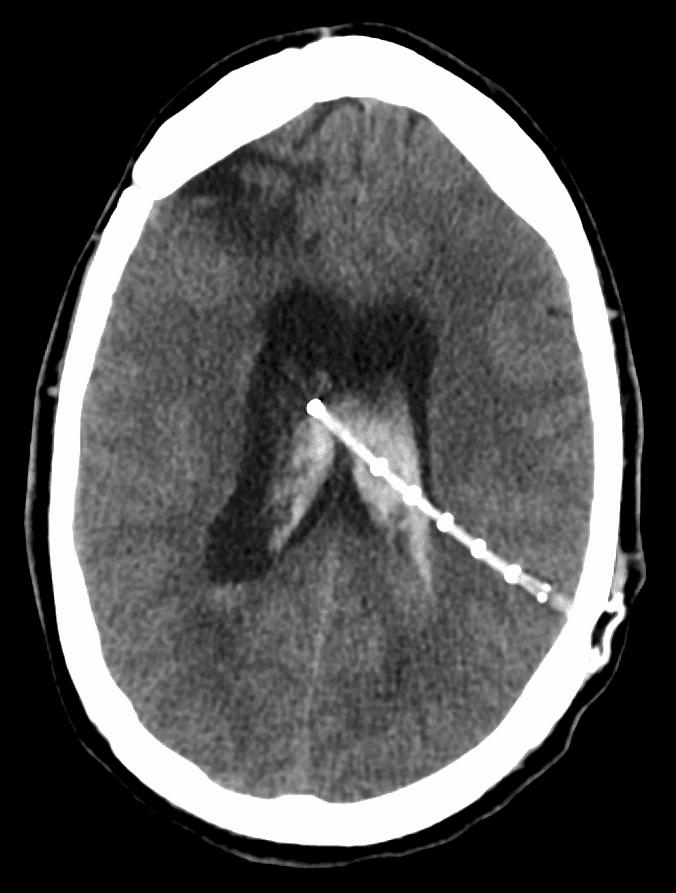
Shunt surgery usually takes about one hour. Afterward you’ll have a CT scan to check the catheter position. Most patients stay in the hospital for one to two days.
Recovery timeline
- First days: Soreness at the incisions and in the belly, and getting up to walk.
- Two weeks: Stitches or staples are removed.
- Four to six weeks: A follow-up visit to check your symptoms and, if needed, adjust the valve setting.
- Months: In NPH, walking often improves first, while memory and bladder control may improve more gradually. Physical therapy can help.
- Long term: Regular follow-up visits, and an evaluation right away if symptoms return.
Caring for yourself at home
- Your incisions: You’ll have a small incision on your head and another on your belly. You can usually shower after two to three days. Let water run gently over the incisions and pat them dry. Don’t scrub, soak in a bath or pool, or use hair dye or harsh hair products until they have fully healed. Staples or stitches are usually removed in 10 to 14 days.
- Activity: Walk every day. Avoid heavy lifting and straining for about four to six weeks and contact sports until you are cleared. It’s normal to feel the tubing under the skin of your neck or chest, but don’t press on or pump the valve unless you’re told to.
- Programmable valves and magnets: If you have a programmable valve, carry your shunt card. An MRI can change the setting, so the valve is checked, and reset if needed, after any MRI. Keep strong magnets, including magnetic toys and some headphones, away from the valve.
- Medications: Take pain medication with food, avoid alcohol while taking it and use a stool softener so you don’t strain. Don’t restart blood thinners until your surgical team tells you it’s safe.
- Driving: You may drive once you are off narcotic pain medication and cleared by your surgical team.
Call the office at 470-293-9800 if you have a fever over 101°F, redness, swelling or drainage along the incisions or the shunt tubing, belly pain or swelling, or a return of the symptoms that led to surgery, such as worsening walking, memory or bladder control. Call 911 or go to the emergency room for a severe headache, repeated vomiting, unusual sleepiness or confusion, a seizure, or vision changes, which can be signs that the shunt is not working.
Download your patient instructions
Your instructions depend on the type of surgery you have. Our team will give you written instructions before you go home, and you’ll find other patient sheets on our Patient Resources page.
Frequently Asked Questions
Is a shunt permanent?
Yes. A shunt is designed to stay in place for life, although parts may need to be replaced if they become blocked or stop working.
Can I have an MRI with a shunt?
Yes. If you have a programmable valve, it will be checked, and reset if needed, after the MRI.
How will I know if my shunt stops working?
Signs include headaches, nausea or vomiting, sleepiness, confusion, vision changes, or a return of the symptoms you had before surgery. Call right away or go to the emergency room if you notice these.
Will a shunt fix my walking and memory?
In normal pressure hydrocephalus, walking often improves the most. Memory and bladder control can also improve, though usually more slowly and less completely.
Can I feel the shunt?
You may feel the valve behind your ear and the tubing under the skin of your neck, but most people get used to it quickly.
Take the Next Step
If you or a loved one is living with hydrocephalus, you don’t have to navigate it alone. Whether you need a diagnosis, a treatment plan or a second opinion, Dr. Grunch and the Southern Neurosurgery team are here to help you understand your options.
Call 470-293-9800 to schedule an appointment or contact us online.
Have a question first? Ask our virtual assistant anything, 24/7.
We see patients across metro Atlanta and North Georgia at our offices in Gainesville, Sandy Springs and South Atlanta (Riverdale). Find the office nearest you.
Related pages: Hydrocephalus · Normal pressure hydrocephalus · Pseudotumor cerebri · VA shunt · Endoscopic third ventriculostomy
This page is for educational purposes only and is not medical advice. It does not replace individualized care from a licensed physician. If you have a sudden severe headache, a seizure, new weakness or numbness, confusion, or trouble speaking or seeing, call 911 or go to the nearest emergency room.