
A Shunt Option When the Abdomen Can’t Be Used
When the abdomen isn’t a good place for a shunt to drain, there is still a reliable option. A VA shunt drains extra fluid from the brain into the bloodstream, and for many people with hydrocephalus it can often correct the problem when a VP shunt isn’t possible.
What Is a VA Shunt?
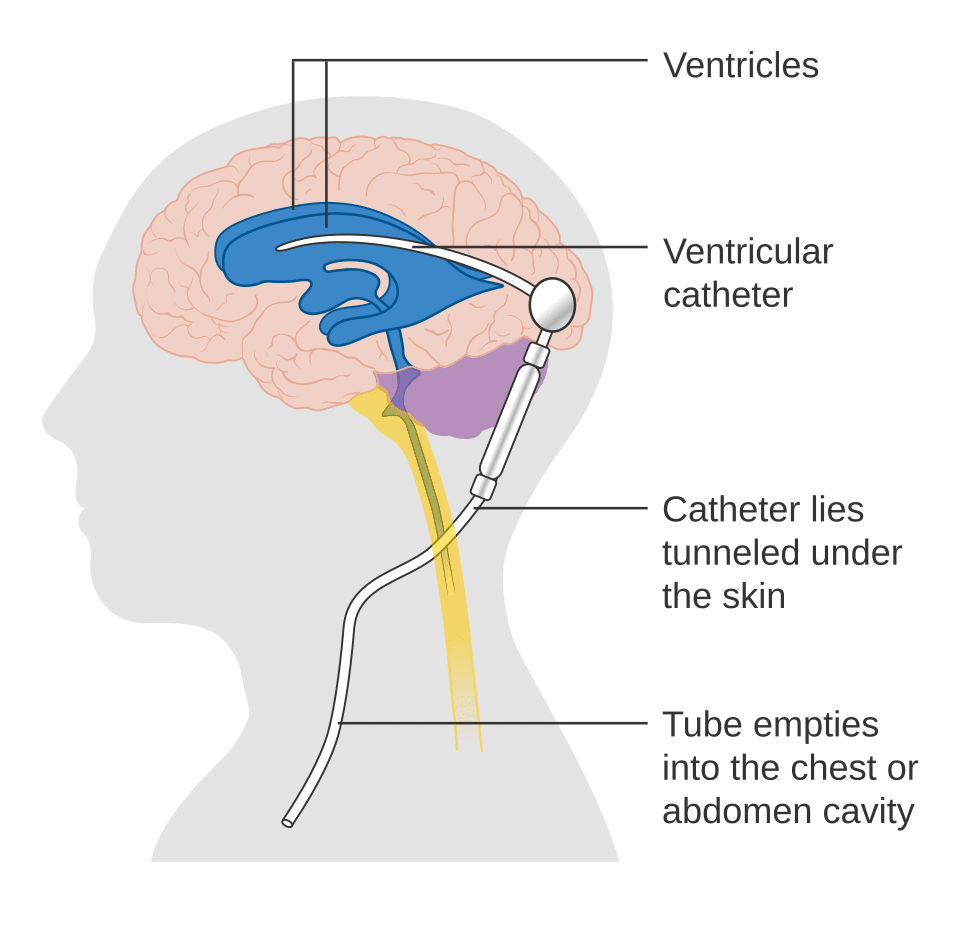
A ventriculoatrial (VA) shunt drains extra cerebrospinal fluid from the ventricles of the brain into the heart, where it mixes with the blood and is absorbed. It works like a VP shunt, with a catheter in the brain and a valve under the scalp, but the tubing runs to a large vein in the neck and ends near the right atrium of the heart instead of in the abdomen.
Who Needs a VA Shunt?
- People with hydrocephalus who can’t have a VP shunt
- Prior abdominal surgeries, scar tissue or adhesions in the abdomen
- A history of abdominal infection, peritonitis or a VP shunt that failed in the abdomen
- Significant obesity or other conditions where the abdomen doesn’t absorb fluid well
Treatments to Try First
- A VP shunt: most surgeons choose the abdomen first, because a VA shunt has some different long-term risks
- Endoscopic third ventriculostomy: for some types of blockage, an ETV can avoid a shunt altogether
- Medications and treating the cause: for pseudotumor cerebri or fluid blocked by a tumor or cyst
How a VA Shunt Is Placed
- Anesthesia: You’ll be fully asleep.
- Brain catheter and valve: A catheter is placed into a ventricle through a small hole in the skull and connected to a valve under the scalp.
- Tunneling: The tubing is passed under the skin to the neck.
- Vein access: Using ultrasound and X-ray guidance, the tubing is placed into the jugular vein and advanced so its tip sits near the right atrium of the heart.
- Closing: The incisions are closed and an X-ray confirms the position.
Learn how a VA shunt is placed:

Video: VA Shunt (Adult), courtesy of Consent a Patient (YouTube)
Benefits and Risks
Benefits
- Relieves pressure on the brain when the abdomen can’t be used
- Uses the same programmable valves as a VP shunt
- Avoids abdominal surgery
Risks
- Shunt blockage or malfunction, which may need a revision
- Infection, including a bloodstream infection, which may require removing the shunt
- Blood clots in the vein or, rarely, in the lungs
- Rare long-term kidney inflammation (shunt nephritis) or heart and lung strain
- Draining too much fluid, bleeding or seizures
- Risks related to anesthesia
Why Choose Dr. Betsy Grunch for Your VA Shunt
- Duke-trained: Dr. Grunch completed her neurosurgical residency at Duke University School of Medicine, one of the top neurosurgery programs in the country.
- Options when a VP shunt won’t work: She evaluates every alternative, including the VA shunt and endoscopic third ventriculostomy, and chooses the approach that fits your anatomy and history.
- Experience you can count on: She has been in practice since 2013 and performs 400 to 600 surgeries a year, more than 5,000 procedures over her career.
- Long-term follow-up: Hydrocephalus is a lifelong condition. Her team follows you after surgery, adjusts programmable valves in the office and evaluates any new symptoms quickly.
- A teacher at heart: As “Ladyspinedoc,” she is known for explaining brain and spine conditions clearly, including many hydrocephalus case studies. You’ll leave your visit understanding your imaging and every option in front of you.
What to Expect
Before surgery
You’ll meet with Dr. Grunch or one of her physician assistants to review your CT or MRI, your symptoms and your goals, and to decide together whether a VA shunt is right for you. Our team will coordinate pre-operative testing, review your medications (including blood thinners you may need to pause) and walk you through the day of surgery. You may have an ultrasound of the neck veins and, in some cases, a heart evaluation before surgery.
Procedure day
Surgery usually takes about one to two hours. Afterward you’ll have a CT scan and a chest X-ray to check the shunt position. Most patients stay in the hospital for one to two days.
Recovery timeline
- First days: Soreness at the head and neck incisions.
- Two weeks: Stitches or staples are removed.
- Four to six weeks: A follow-up visit to check your symptoms and adjust the valve if needed.
- Long term: Regular follow-up, sometimes with periodic blood and urine tests, and an evaluation right away if symptoms return.
Caring for yourself at home
- Your incisions: You’ll have a small incision on your head and another on your neck. You can usually shower after two to three days. Let water run gently over the incisions and pat them dry. Don’t scrub, soak in a bath or pool, or use hair dye or harsh hair products until they have fully healed. Staples or stitches are usually removed in 10 to 14 days.
- Activity: Walk every day. Avoid heavy lifting and straining for about four to six weeks and contact sports until you are cleared. It’s normal to feel the tubing under the skin of your neck or chest, but don’t press on or pump the valve unless you’re told to.
- Programmable valves and magnets: If you have a programmable valve, carry your shunt card. An MRI can change the setting, so the valve is checked, and reset if needed, after any MRI. Keep strong magnets, including magnetic toys and some headphones, away from the valve.
- Medications: Take pain medication with food, avoid alcohol while taking it and use a stool softener so you don’t strain. Don’t restart blood thinners until your surgical team tells you it’s safe.
- Driving: You may drive once you are off narcotic pain medication and cleared by your surgical team.
Call the office at 470-293-9800 if you have a fever over 101°F, redness, swelling or drainage along the incisions or the shunt tubing, chills, or a return of the symptoms that led to surgery, such as worsening walking, memory or bladder control. Call 911 or go to the emergency room for a severe headache, repeated vomiting, unusual sleepiness or confusion, a seizure, or vision changes, which can be signs that the shunt is not working.
Download your patient instructions
Your instructions depend on the type of surgery you have. Our team will give you written instructions before you go home, and you’ll find other patient sheets on our Patient Resources page.
Frequently Asked Questions
Why would I need a VA shunt instead of a VP shunt?
Usually because the abdomen isn’t a good place for the fluid to drain, such as after multiple abdominal surgeries, an abdominal infection or a VP shunt that failed in the abdomen.
Is it safe to drain fluid into the heart?
Yes. Spinal fluid is naturally absorbed into the bloodstream, and the valve controls how much drains. VA shunts have been used safely for decades.
Do I need antibiotics before dental work?
Some surgeons recommend antibiotics before dental procedures for people with a VA shunt. Ask your surgical team what they recommend for you.
Can I have an MRI?
Yes. If you have a programmable valve, it will be checked, and reset if needed, after the MRI.
How will I know if my shunt stops working?
Signs include headaches, vomiting, sleepiness, confusion, vision changes, or a return of your original symptoms. A fever or chills can be a sign of infection. Call right away or go to the emergency room if you notice these.
Take the Next Step
If you or a loved one is living with hydrocephalus, you don’t have to navigate it alone. Whether you need a diagnosis, a treatment plan or a second opinion, Dr. Grunch and the Southern Neurosurgery team are here to help you understand your options.
Call 470-293-9800 to schedule an appointment or contact us online.
Have a question first? Ask our virtual assistant anything, 24/7.
We see patients across metro Atlanta and North Georgia at our offices in Gainesville, Sandy Springs and South Atlanta (Riverdale). Find the office nearest you.
Related pages: Hydrocephalus · VP shunt · Endoscopic third ventriculostomy · Normal pressure hydrocephalus
This page is for educational purposes only and is not medical advice. It does not replace individualized care from a licensed physician. If you have a sudden severe headache, a seizure, new weakness or numbness, confusion, or trouble speaking or seeing, call 911 or go to the nearest emergency room.