
Disc Degeneration: Are You a Candidate for Disc Replacement?
When a worn-out disc is causing neck or back pain, or pressing on a nerve, you may wonder whether you need a fusion. For the right patients, artificial disc replacement is an alternative that relieves pressure and keeps the spine moving. Here’s how to know if it might be right for you.
What Is Disc Degeneration?
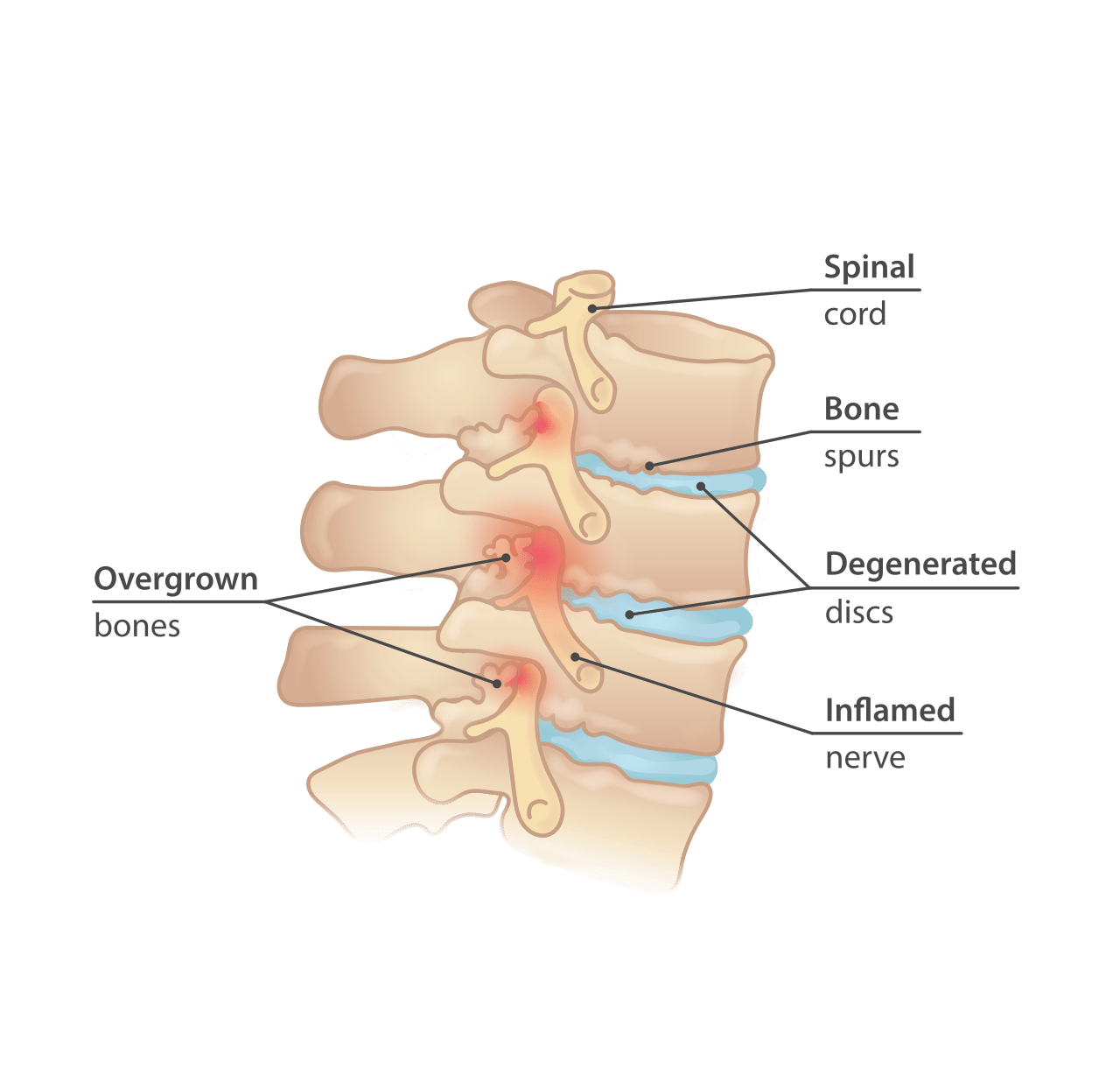
The discs between your vertebrae act as cushions and allow the spine to bend and twist. Over time, discs lose water and height, and can crack, bulge or herniate. This is called degenerative disc disease. Many people have some degeneration without symptoms. For others, a damaged disc causes pain or presses on a nerve or the spinal cord.
What Is Artificial Disc Replacement?
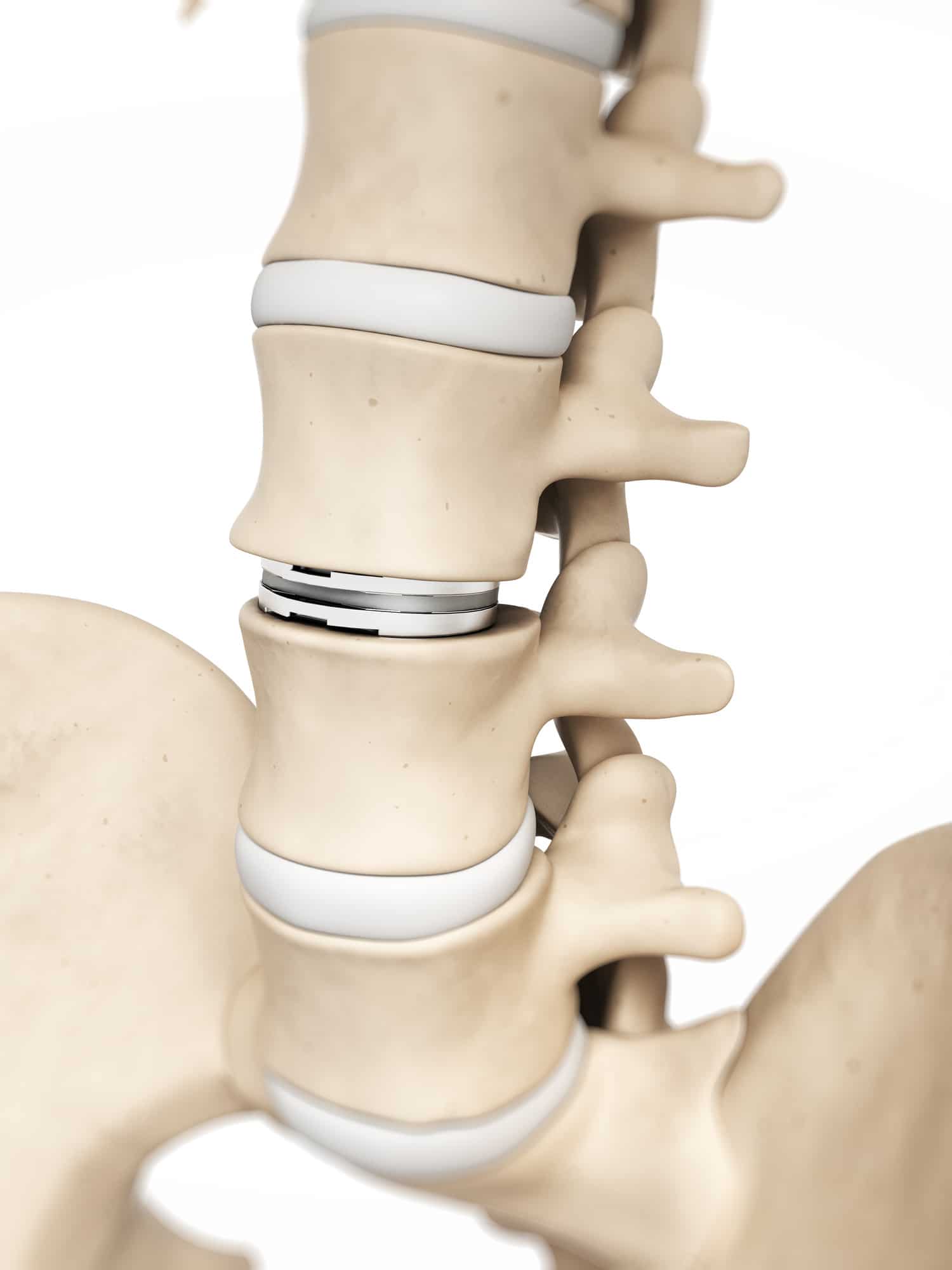
In disc replacement, the damaged disc is removed and replaced with an artificial disc made of metal and medical-grade plastic. Unlike a fusion, which joins two vertebrae permanently, an artificial disc is designed to preserve motion at that level. Dr. Grunch performs both cervical (neck) disc replacement and lumbar (low back) disc replacement.
Symptoms That May Lead to Evaluation
- Neck pain with pain, numbness or tingling into the shoulder, arm or hand
- Low back pain from a damaged disc (discogenic back pain)
- Pain that worsens with sitting, bending or lifting
- Arm or hand weakness
- Symptoms of spinal cord pressure in the neck, such as clumsy hands or balance problems
Often ignored signs
- Headaches starting at the base of the skull
- Dropping things or trouble with buttons
- Pain that keeps returning despite therapy
Who May Be a Good Candidate
- Pain or nerve symptoms coming from one or two discs
- Symptoms that haven’t improved with several weeks to months of non-surgical treatment (sooner if there is weakness or spinal cord pressure)
- Imaging that confirms the disc is the source of the problem
- Healthy facet joints at the affected level
- Good bone quality
- Normal spinal alignment and stability
Who May Not Be a Candidate
- Significant arthritis of the facet joints
- Osteoporosis or weak bone
- Spinal instability or a slipped vertebra (spondylolisthesis)
- Severe deformity such as significant scoliosis
- Active infection or certain prior surgeries at that level
- Degeneration at many levels
If disc replacement isn’t the best fit, a fusion or other procedure can often correct the problem. Dr. Grunch will explain which option suits your spine.
Cervical vs. Lumbar Disc Replacement
- Cervical: performed through a small incision in the front of the neck. Often used for disc herniations and bone spurs pressing on nerves or the spinal cord. Many patients go home the same day.
- Lumbar: performed through the abdomen, often with an access surgeon. Used mainly for disc-related low back pain at one or two levels. Usually a one-night hospital stay.
Disc Replacement vs. Fusion
- Motion: disc replacement preserves movement; fusion stops movement at that level
- Neighboring discs: preserving motion may reduce stress on adjacent levels
- Recovery: often a faster return to activity, with no need to wait for bone to fuse
- Proven option: fusion remains an excellent choice for many conditions that disc replacement can’t treat
How We Evaluate You
- History and exam
- MRI: shows the discs, nerves and spinal cord
- Nociscan: an advanced, noninvasive MRI-based test that measures chemical markers of pain in the lumbar discs to help pinpoint which discs are painful and which are healthy
- X-rays, including flexion and extension views: check alignment and stability
- CT scan: evaluates bone and facet joints
- Bone density testing when needed
- EMG/nerve studies in some cases
Treatment Options
Non-surgical treatment first
- Physical therapy and core strengthening
- Anti-inflammatory medications
- Activity changes and weight management
- Epidural steroid injections
Surgical treatment
When symptoms persist or nerves are under pressure, surgery can often correct the problem. Options include artificial disc replacement, ACDF, and lumbar fusion, depending on your anatomy.
Why Choose Dr. Betsy Grunch for Disc Degeneration and Disc Replacement
- Duke-trained: neurosurgical residency and spine research fellowship at Duke University School of Medicine, where she received the Spine Young Investigator Award
- Experience you can count on: in practice since 2013, performing 400 to 600 surgeries a year and more than 5,000 procedures over her career
- Motion-preserving expertise: disc replacement is a major focus of her practice, and she offers both cervical and lumbar disc replacement
- The right treatment for you: board-certified (FAANS, FACS, FCNS), she starts with the least invasive option that will work, and recommends surgery when it can correct the problem
- Clear answers: known online as Ladyspinedoc, she makes sure you understand your imaging and every option in front of you
What to Expect If You Need Surgery
Before surgery
You’ll meet with Dr. Grunch or one of her physician assistants to review your imaging and decide whether disc replacement or another procedure is the best fit.
Procedure day
Cervical disc replacement typically takes one to two hours, and many patients go home the same day. Lumbar disc replacement usually involves a one-night hospital stay.
Recovery timeline
- Days 1-7: walking right away; mild soreness
- Weeks 1-6: gradual return to light activity and desk work; avoid heavy lifting
- Weeks 6-12: physical therapy and increasing activity
- Months 3-6: return to most normal activities
Frequently Asked Questions
How long does an artificial disc last?
Artificial discs are designed to last many years, and long-term studies show good durability.
Can I have disc replacement at more than one level?
Some patients are candidates for two-level disc replacement. Dr. Grunch will review whether that applies to you.
Is disc replacement better than fusion?
Neither is better for everyone. Disc replacement preserves motion for the right candidates; fusion is the better choice for others.
Will insurance cover disc replacement?
Many plans cover FDA-approved disc replacement when criteria are met. Our team will help check your coverage.
Can I get an MRI after disc replacement?
Yes, though the implant can affect image quality near that level. Tell your care team you have an artificial disc.
Take the First Step Toward Relief
Whether you need a diagnosis, a treatment plan or a second opinion, Dr. Grunch and the Southern Neurosurgery team are here to help.
Call 470-293-9800 to schedule an appointment or contact us online.
Have a question first? Ask our virtual assistant anything, 24/7.
We see patients across metro Atlanta and North Georgia at our offices in Gainesville, Sandy Springs and South Atlanta (Riverdale). Find the office nearest you.
This page is for educational purposes only and is not a substitute for medical advice. If you have sudden weakness, numbness in the groin, or bladder or bowel changes, call 911 or go to the nearest emergency room.