
Getting a Clear Diagnosis for a Brain Lesion
Waiting to find out what a spot on your brain MRI is can be one of the hardest parts of the process. A brain biopsy can often answer that question safely and quickly, so you and your care team can start the right treatment.
What Is a Brain Biopsy?
A brain biopsy is a procedure to remove a small sample of tissue from an abnormal area of the brain so it can be examined under a microscope. The results tell your doctors exactly what the abnormal area is, such as a type of tumor, an infection or inflammation, which guides treatment.
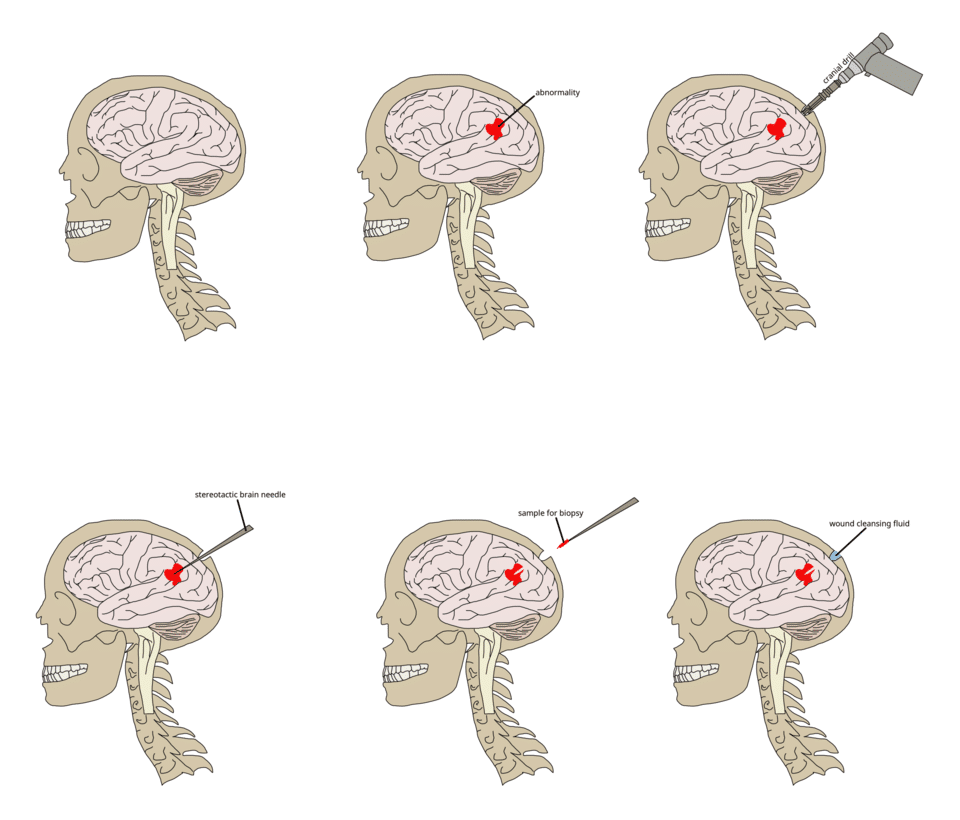
Most biopsies are done as a stereotactic needle biopsy: using a navigation system built from your MRI, a thin needle is guided through a small hole in the skull to the exact target. When an abnormal area is near the surface, or when removing it would also help, the sample may instead be taken during a craniotomy.
Who Needs a Brain Biopsy?
- A brain mass that can’t be safely removed, such as one deep in the brain or in a critical area
- A suspected tumor that is often treated without surgery, such as primary CNS lymphoma, where the diagnosis guides chemotherapy or radiation
- Several spots in the brain when the cause isn’t clear, such as possible metastatic tumors
- A possible infection or inflammation that needs an exact diagnosis
- A suspected glioma when surgery to remove it isn’t the best first step
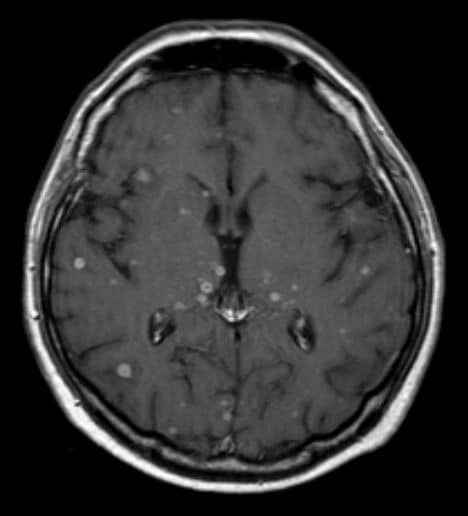
Some brain tumors are best treated by brain tumor specialists at an academic medical center. Dr. Grunch reviews your imaging and makes that decision with you: she will either perform your surgery herself or refer you to a trusted brain tumor specialist, so you get the right operation from the right surgeon.
Treatments to Try First
- Additional imaging: special MRI sequences, spectroscopy or a PET scan can sometimes narrow down the cause
- Blood tests and spinal fluid tests: can help diagnose infections and some cancers
- Searching for a primary cancer: if cancer elsewhere in the body is suspected, a biopsy of an easier-to-reach site may be done first
- Follow-up MRI: for some small, stable spots, watching for change is reasonable
When these don’t give a clear answer, a brain biopsy can often provide the diagnosis you need to move forward.
How a Brain Biopsy Is Done
- Planning: Your MRI is loaded into a navigation system, and the safest path to the target is planned to avoid blood vessels and important brain areas.
- Anesthesia: You’ll usually be fully asleep.
- Small opening: A small incision is made in the scalp, and a small hole (a burr hole) is made in the skull.
- Taking the sample: A thin biopsy needle is guided to the target, and several tiny samples are taken. A pathologist often looks at a sample during surgery to confirm that it is diagnostic.
- Closing: The incision is closed with a few stitches or staples.
Watch Dr. Grunch explain a case diagnosed by biopsy:
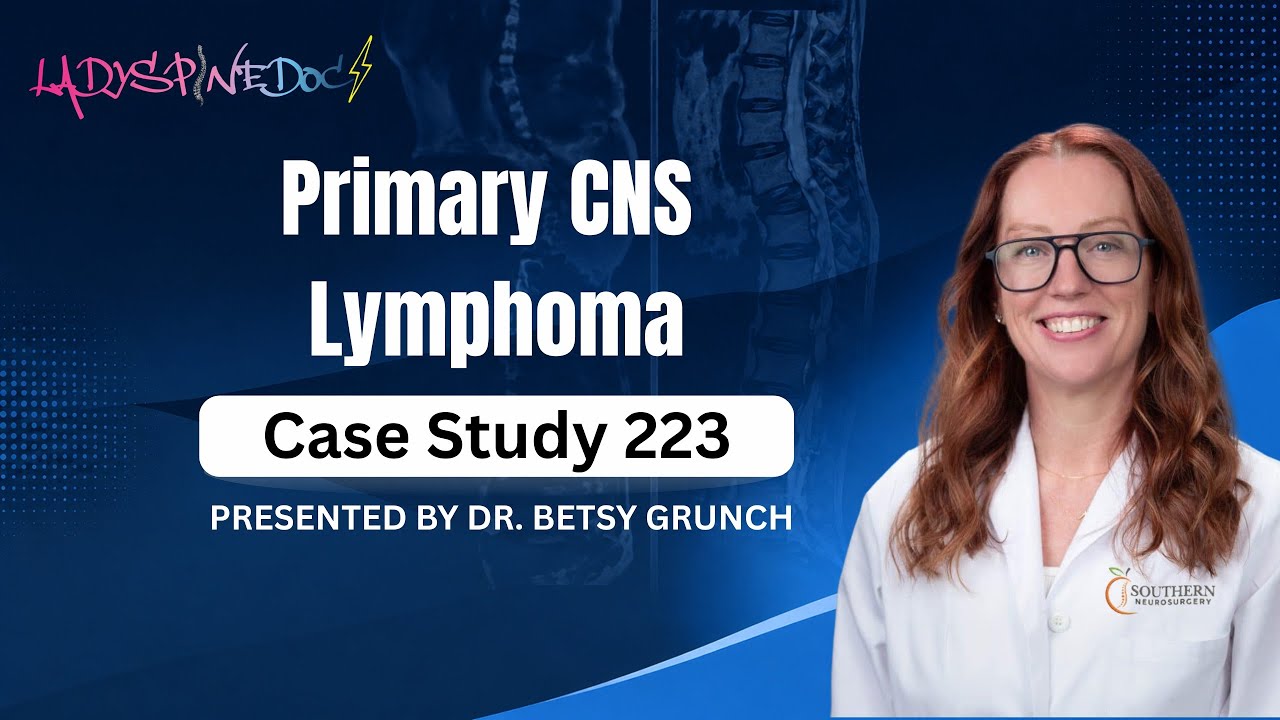
Video: Case Study 223, Primary CNS Lymphoma, explained by Dr. Grunch on her Ladyspinedoc channel (YouTube)
Learn how a stereotactic brain biopsy is performed:
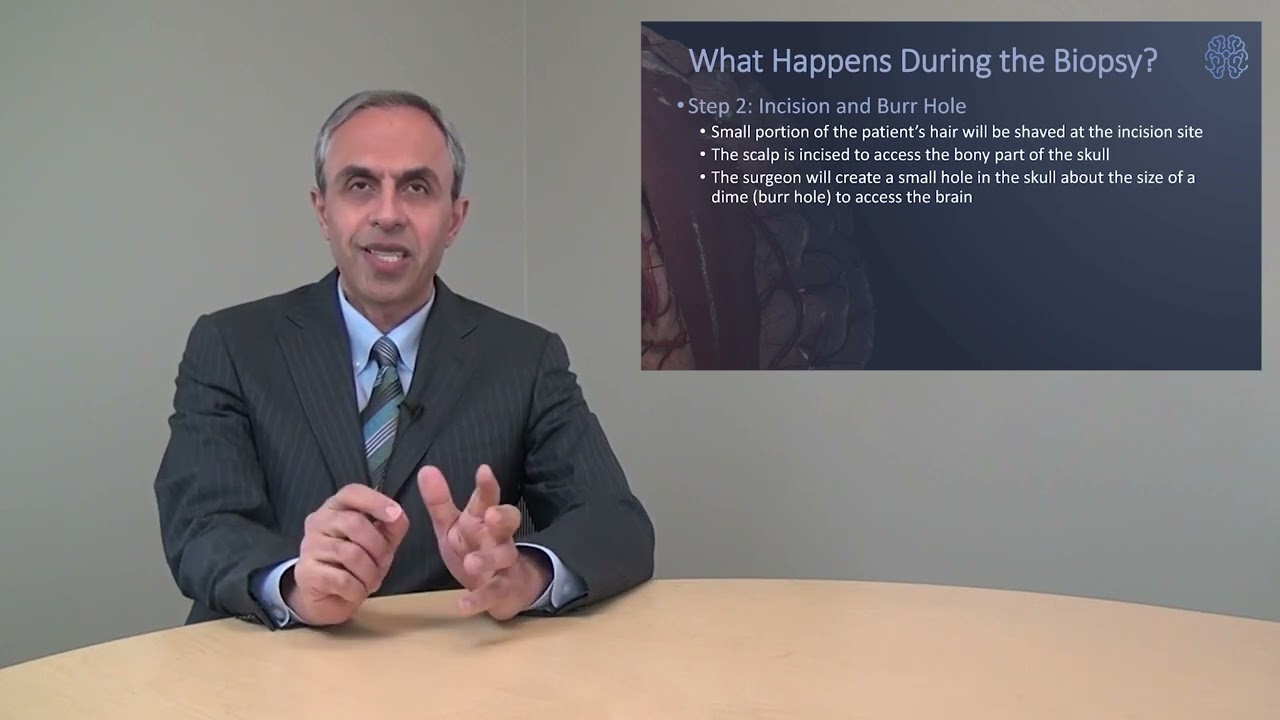
Video: What Is the Stereotactic Brain Biopsy Procedure?, courtesy of Aaron Cohen-Gadol, MD (YouTube)
Benefits and Risks
Benefits
- An exact diagnosis, which guides the right treatment
- A small incision and a short hospital stay
- Can safely reach deep areas of the brain that can’t be removed
Risks
- Bleeding in the brain, which is uncommon but can cause new symptoms
- Infection
- Seizures
- New weakness, numbness or trouble with speech, depending on the location
- A sample that doesn’t give a clear answer, which may require another biopsy
- Risks related to anesthesia
Why Choose Dr. Betsy Grunch for Your Brain Biopsy
- Duke-trained: Dr. Grunch completed her neurosurgical residency at Duke University School of Medicine, one of the top neurosurgery programs in the country.
- Image-guided precision: She uses navigation to plan the safest path to the target and protect healthy brain.
- The full picture: She coordinates with pathologists, oncologists and radiation specialists so the diagnosis leads straight to a treatment plan.
- Experience you can count on: She has been in practice since 2013 and performs 400 to 600 surgeries a year, more than 5,000 procedures over her career.
- Honest guidance: She will tell you when your surgery is best done by a brain tumor specialist and will help you get to the right surgeon.
- A teacher at heart: As “Ladyspinedoc,” she is known for explaining brain and spine conditions clearly. You’ll leave your visit understanding your imaging and every option in front of you.
What to Expect
Before surgery
You’ll meet with Dr. Grunch or one of her physician assistants to review your MRI and symptoms and decide together whether a biopsy is the right next step. Our team will review your medications, especially blood thinners, which usually need to be paused, and may order blood tests. If lymphoma is suspected, steroids may be held until after the biopsy because they can affect the results.
Procedure day
A needle biopsy usually takes one to two hours. You’ll have a CT or MRI afterward to check for bleeding, and most patients stay in the hospital one night. A biopsy done during a craniotomy follows the craniotomy recovery plan.
Recovery timeline
- First few days: Mild headache and soreness at the incision are common. Rest and take short walks.
- About one week: Your pathology results are usually ready, sometimes sooner. Some special tests take longer.
- One to two weeks: Stitches or staples are removed, and most people return to their usual activities.
- Next steps: Treatment, such as surgery, radiation or chemotherapy, is planned based on your diagnosis.
Caring for yourself at home
- Your incision: You can usually shower after two to three days. Let water run gently over the incision and pat it dry. Don’t scrub, soak in a bath or pool, or use hair dye or harsh hair products until it has fully healed. Staples or stitches are usually removed in 10 to 14 days.
- Activity: Walk every day and rest when you’re tired. Avoid heavy lifting, bending over and straining for about four to six weeks, and avoid contact sports until you are cleared.
- Medications: Take any seizure medication exactly as prescribed and don’t stop it on your own. Don’t take blood thinners, aspirin or anti-inflammatory medications such as ibuprofen until Dr. Grunch’s team tells you it’s safe. Take pain medication with food, avoid alcohol and use a stool softener so you don’t strain.
- Driving: Don’t drive until you are cleared. If you have had a seizure, Georgia law limits driving for a period of time.
- Recovery at home: Fatigue, headaches and trouble concentrating are common for several weeks. Have someone stay with you for the first few days.
Call the office at 470-293-9800 if you have a fever over 101°F, redness, swelling or drainage from the incision, clear fluid leaking from the incision or nose, or calf pain or swelling. Call 911 for a seizure, a sudden severe headache, new confusion or drowsiness, new weakness or numbness, trouble speaking, chest pain or shortness of breath.
Frequently Asked Questions
How long does it take to get results?
Most results are ready within about a week. Some special molecular tests take two to three weeks.
Why not just remove the whole tumor?
Some tumors are too deep or in areas where removal would cause new problems, and some, like lymphoma, are best treated without surgery. A biopsy gives the diagnosis with less risk.
Is a biopsy painful?
You’re asleep for the procedure. Afterward, most people have only a mild headache and soreness at the small incision.
Will my head be shaved?
Only a small area of hair around the incision is clipped.
What if the results aren’t clear?
Occasionally the sample doesn’t give a definite answer. Dr. Grunch will discuss whether another biopsy, more imaging or a different approach is best.
Take the Next Step
If you’re facing an unexplained spot on a brain MRI, you don’t have to navigate it alone. Whether you need a diagnosis, a treatment plan or a second opinion, Dr. Grunch and the Southern Neurosurgery team are here to help you understand your options.
Call 470-293-9800 to schedule an appointment or contact us online.
Have a question first? Ask our virtual assistant anything, 24/7.
We see patients across metro Atlanta and North Georgia at our offices in Gainesville, Sandy Springs and South Atlanta (Riverdale). Find the office nearest you.
Related pages: Gliomas · Metastatic brain tumors · Meningiomas · Craniotomy · Brain abscess
This page is for educational purposes only and is not medical advice. It does not replace individualized care from a licensed physician. If you have a sudden severe headache, a seizure, new weakness or numbness, confusion, or trouble speaking or seeing, call 911 or go to the nearest emergency room.