
Intradural Spinal Tumors: Expert Care for Tumors Inside the Spinal Canal
Tumors inside the spinal canal are uncommon, and most grow slowly. Many are benign and can be removed with excellent results, especially when they are found before they cause major nerve damage.
What Are Intradural Tumors?
Intradural tumors grow inside the dura, the protective sac around the spinal cord and nerve roots. They are divided into two groups:
- Intradural-extramedullary tumors grow inside the dura but outside the spinal cord itself. They push on the cord or nerves from the side. These are the more common type, and most are benign.
- Intramedullary tumors grow within the spinal cord. They are less common.
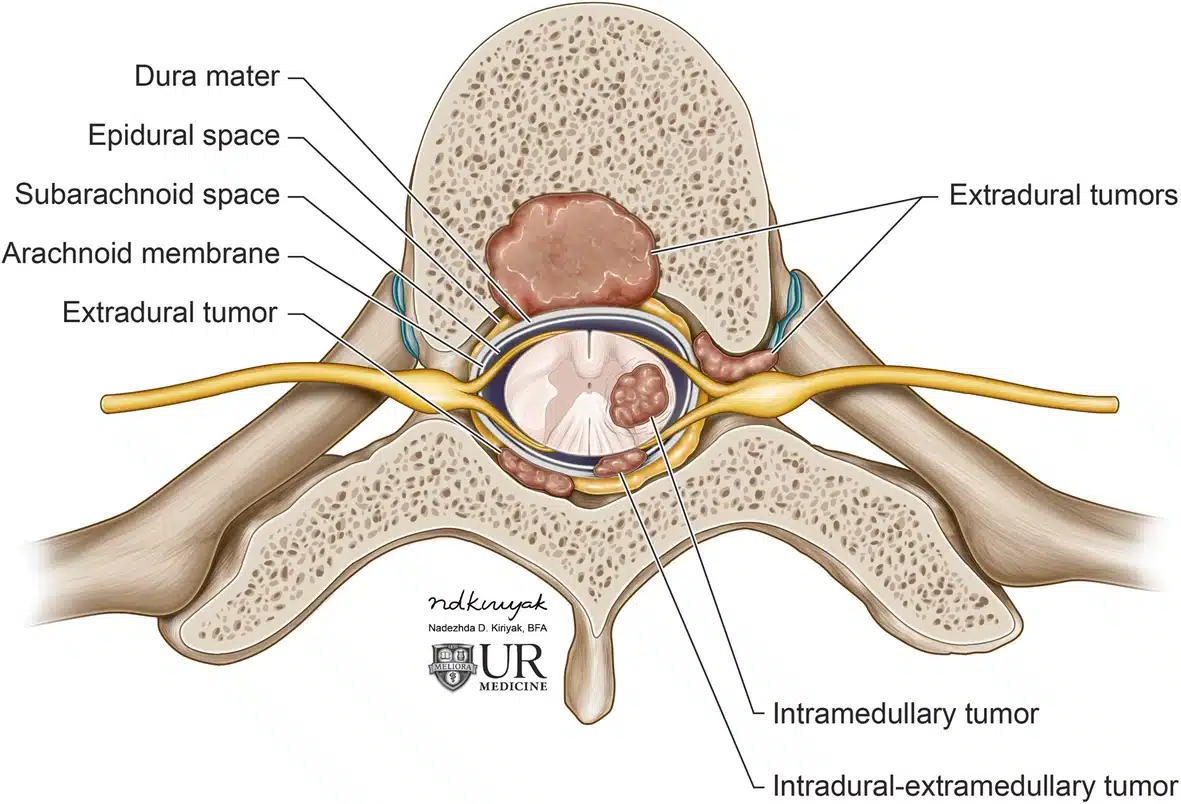
Types of Intradural Tumors
Intradural-extramedullary
- Meningiomas: grow from the lining of the spinal cord; most common in the thoracic spine and in women
- Schwannomas and neurofibromas: grow from the coverings of the nerve roots
- Myxopapillary ependymomas: slow-growing tumors at the bottom of the spinal cord
Intramedullary
- Ependymomas: the most common spinal cord tumor in adults
- Astrocytomas: more common in children and young adults
- Hemangioblastomas: sometimes associated with von Hippel-Lindau disease
Learn more on our spinal cord tumors page.
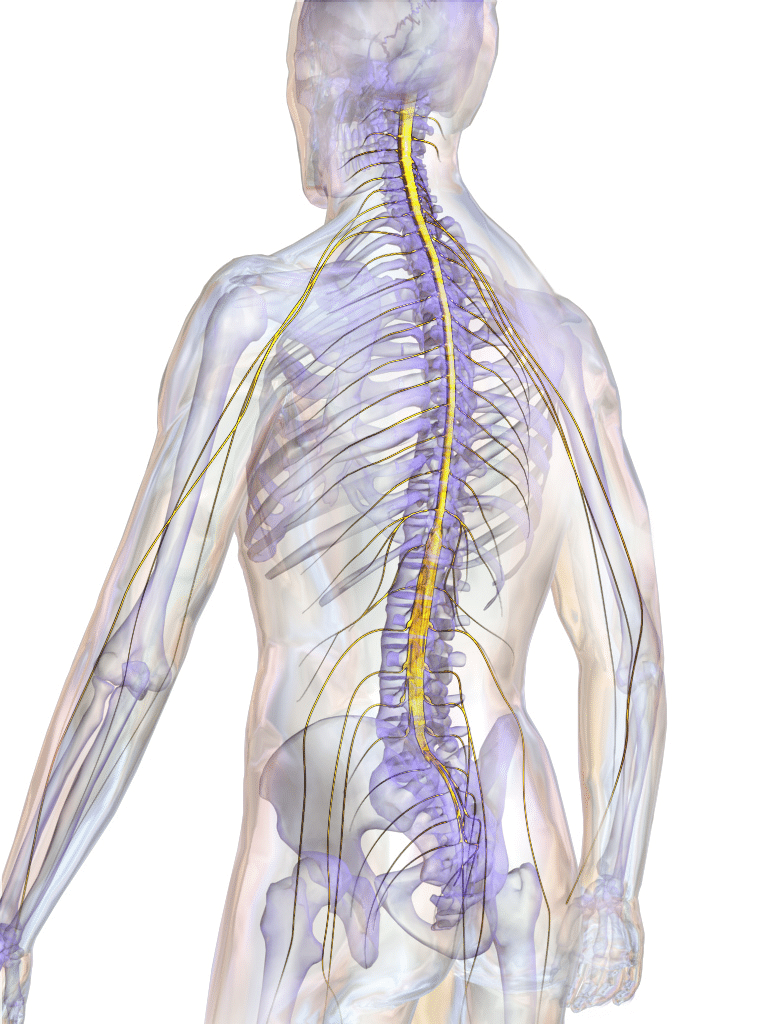
Symptoms
Common symptoms
- Back or neck pain, often worse at night or lying down
- Pain, numbness or tingling that travels into the arms, chest wall or legs
- Weakness or clumsiness in the hands or legs
- Trouble with balance or walking
Symptoms patients often ignore
- A band of numbness or tingling around the chest or abdomen
- Gradual changes in handwriting or dropping things
- Legs that feel stiff or heavy
- Subtle bladder urgency or constipation
- Symptoms that slowly get worse over months, which can be mistaken for a pinched nerve or aging
When it’s an emergency: Rapidly worsening weakness, numbness in the groin, or bladder or bowel changes need emergency care. Call 911 or go to the nearest emergency room.
Causes and Risk Factors
Most intradural tumors have no known cause. Some genetic conditions raise the risk, including neurofibromatosis type 1 and type 2, schwannomatosis and von Hippel-Lindau disease. Prior radiation to the spine is a rare risk factor.
How We Diagnose Intradural Tumors
- Neurological exam: strength, sensation, reflexes, balance and walking
- MRI with and without contrast: the key test; it shows the tumor’s size and location and its relationship to the spinal cord and nerves
- CT scan: helps with surgical planning when needed
- Genetic evaluation: considered when there are multiple tumors or a family history
Treatment Options
Observation
Small tumors that are found by chance and aren’t causing symptoms can often be watched with MRI scans over time.
When surgery makes sense
Surgery is the main treatment for intradural tumors that cause symptoms or are growing. For many benign tumors, such as meningiomas and schwannomas, surgery can often remove the entire tumor and cure the problem. Surgery is performed with a microscope and continuous nerve monitoring to protect the spinal cord and nerves.
- Spinal cord tumor resection: opening the dura and removing the tumor while protecting the cord and nerves
- Minimally invasive approaches: for selected tumors, through smaller incisions with less muscle disruption
- Stabilization: added when needed to keep the spine aligned
Radiation
Radiation, including focused stereotactic radiation, may be used for tumors that can’t be completely removed, return after surgery, or are malignant.
Why Choose Dr. Betsy Grunch for Intradural Spinal Tumors
- Duke-trained: neurosurgical residency and spine research fellowship at Duke University School of Medicine, where she received the Spine Young Investigator Award
- Experience you can count on: in practice since 2013, performing 400 to 600 surgeries a year and more than 5,000 procedures over her career
- Precise, protective surgery: microsurgical technique with nerve monitoring to protect spinal cord function
- The right treatment for you: board-certified (FAANS, FACS, FCNS), she starts with the least invasive option that will work, and recommends surgery when it can correct the problem
- Clear answers: known online as Ladyspinedoc, she makes sure you understand your imaging and every option in front of you
What to Expect If You Need Surgery
Before surgery
You’ll meet with Dr. Grunch or one of her physician assistants to review your MRI and talk through the goals and risks of surgery. Our team coordinates pre-operative testing and reviews your medications.
Procedure day
Surgery usually takes a few hours, with nerve monitoring throughout. Most patients stay in the hospital for a few days.
Recovery timeline
- Days 1-3: walking with help; you may be asked to lie flat for a short time to help the dura heal
- Weeks 1-6: gradual increase in walking; avoid heavy lifting and bending
- Weeks 6-12: physical therapy and return to most activities as cleared
- Months to a year: numbness and strength can keep improving; follow-up MRI scans monitor for any regrowth
Frequently Asked Questions
Are intradural tumors cancer?
Most intradural-extramedullary tumors, such as meningiomas and schwannomas, are benign. Some intramedullary tumors can be malignant. The final answer comes from examining the tumor after it is removed.
Can the tumor be completely removed?
Many benign tumors outside the spinal cord can be completely removed. Tumors within the cord can be more challenging, and the goal is to remove as much as safely possible.
Will my symptoms go away after surgery?
Pain often improves quickly. Numbness and weakness may improve over months. The earlier a tumor is treated, the better the chance of recovery.
Can the tumor come back?
Recurrence is uncommon after complete removal of a benign tumor, but follow-up MRI scans are recommended.
Do I need surgery if my tumor is small?
Not always. Small tumors without symptoms can often be watched with regular MRI scans.
Take the Next Step
Hearing that you have a spinal tumor is frightening. Whether you need a diagnosis, a treatment plan or a second opinion, Dr. Grunch and the Southern Neurosurgery team are here to help you understand your options.
Call 470-293-9800 to schedule an appointment or contact us online.
Have a question first? Ask our virtual assistant anything, 24/7.
We see patients across metro Atlanta and North Georgia at our offices in Gainesville, Sandy Springs and South Atlanta (Riverdale). Find the office nearest you.
This page is for educational purposes only and is not a substitute for medical advice. If you have sudden weakness, numbness in the groin, or bladder or bowel changes, call 911 or go to the nearest emergency room.