
Chiari Malformation: Relief for Headaches and Pressure at the Base of the Skull
If coughing, laughing or straining brings on a pounding headache at the back of your head, you’re not imagining it. Chiari malformation is a real, diagnosable condition, and when symptoms are significant, surgery can often bring lasting relief.
What Is a Chiari Malformation?
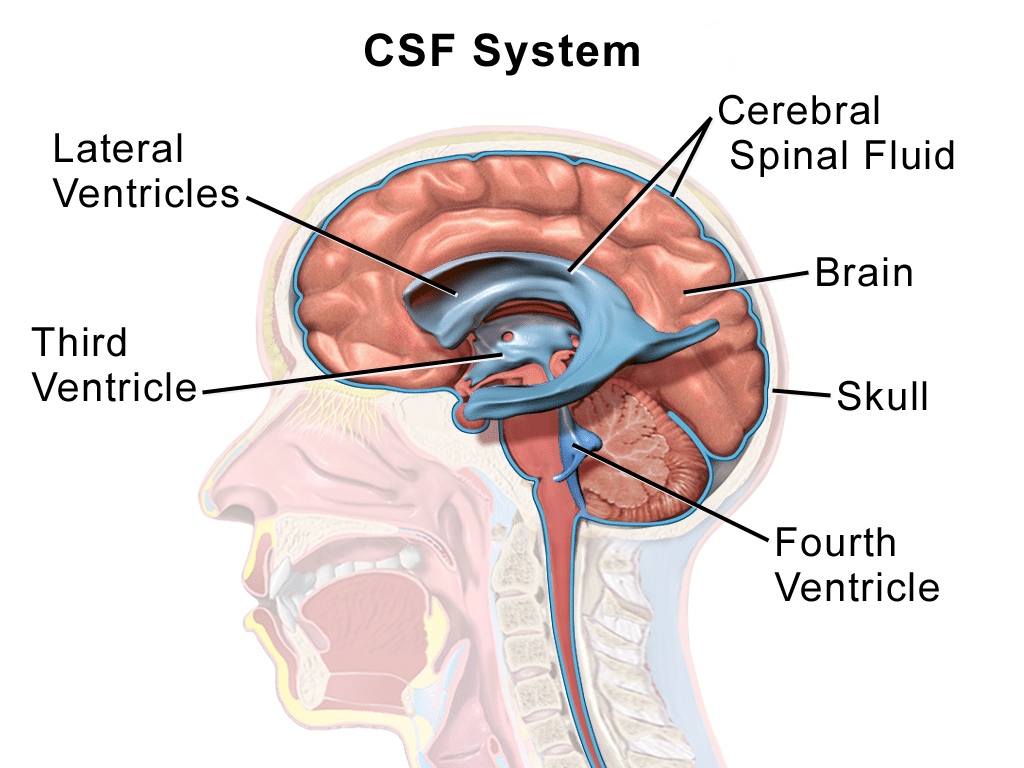
A Chiari malformation is a condition in which the lowest part of the cerebellum (the cerebellar tonsils) extends down through the opening at the base of the skull (the foramen magnum) into the upper spinal canal. This crowding can press on the brainstem and spinal cord and block the normal flow of cerebrospinal fluid (CSF) between the brain and spine.
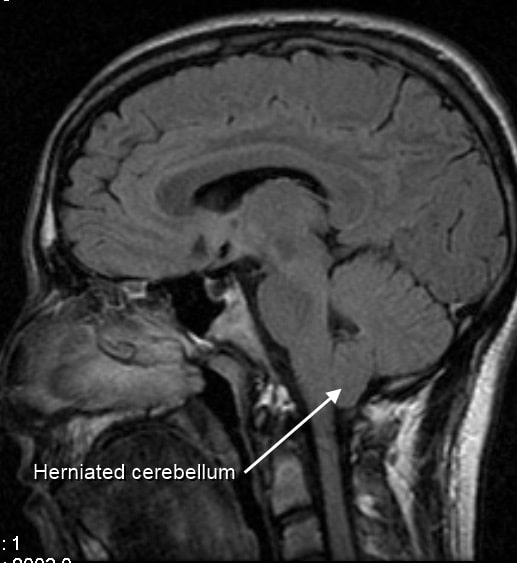
The most common form in adults is Chiari type 1, which is often present from birth but may not cause symptoms until adolescence or adulthood. Many people have a mild Chiari malformation found by chance on an MRI and never need treatment. Others develop headaches, neck pain or nerve symptoms, and some develop a fluid-filled cyst in the spinal cord called a syrinx.
What’s Happening in Your Head and Neck
Cerebrospinal fluid normally flows freely around the brain and down around the spinal cord with each heartbeat. When the cerebellar tonsils crowd the foramen magnum, they act like a cork, disrupting that flow. Pressure spikes with coughing or straining cause the classic headache.
Symptoms
Common symptoms
- Headache at the back of the head or neck, often triggered by coughing, sneezing, laughing, straining or bending
- Neck pain
- Dizziness or balance problems
- Numbness or tingling in the hands or arms
- Ringing in the ears or hearing changes
Symptoms patients often ignore
- Trouble swallowing, hoarseness or frequent choking
- Vision problems such as blurriness or sensitivity to light
- Sleep apnea
- Hand weakness or clumsiness
- Loss of temperature sensation in the hands, which can be a sign of a syrinx
When it’s an emergency: Sudden severe headache, trouble breathing or swallowing, or rapidly worsening weakness needs emergency care. Call 911 or go to the nearest emergency room.
Causes and Risk Factors
- Most Chiari type 1 malformations are present from birth, related to a small or crowded back part of the skull
- Less commonly, it can develop from conditions that lower pressure in the spine, such as repeated spinal fluid leaks
- Chiari type 2 occurs with spina bifida and is diagnosed in infancy
- Some families have more than one affected member
How We Diagnose Chiari Malformation
- History and neurological exam: especially the pattern of headaches and any nerve symptoms
- MRI of the brain and cervical spine: measures how far the tonsils extend and checks for a syrinx
- CSF flow MRI (cine MRI): shows how well fluid moves through the foramen magnum
- MRI of the whole spine: to look for a syrinx or tethered cord
- Sleep study or swallowing study: when those symptoms are present
Treatment Options
Non-surgical treatment
People with a Chiari malformation found by chance, or with mild symptoms, are usually monitored. Headaches may be managed with medication, avoiding triggers such as heavy straining, and physical therapy for neck pain.
When surgery makes sense
Surgery is recommended for significant or disabling Chiari headaches, nerve symptoms, trouble swallowing or breathing, or a syrinx. Chiari decompression (posterior fossa decompression) removes a small piece of bone at the base of the skull and often the back of the first vertebra, creating more room. In many cases, the dura (the covering of the brain) is opened and patched to enlarge the space further (duraplasty). Surgery can often correct the problem, relieving headaches and helping a syrinx shrink.
Why Choose Dr. Betsy Grunch for Chiari Malformation
- Duke-trained: neurosurgical residency and spine research fellowship at Duke University School of Medicine, where she received the Spine Young Investigator Award
- Experience you can count on: in practice since 2013, performing 400 to 600 surgeries a year and more than 5,000 procedures over her career
- Comprehensive neurosurgical care: she treats conditions of the brain, spine and peripheral nerves
- The right treatment for you: board-certified (FAANS, FACS, FCNS), she starts with the least invasive option that will work, and recommends surgery when it can correct the problem
- Clear answers: known online as Ladyspinedoc, she makes sure you understand your imaging and every option in front of you
What to Expect If You Need Surgery
Before surgery
You’ll meet with Dr. Grunch or one of her physician assistants to review your imaging and symptoms and talk through whether decompression is likely to help. Our team coordinates pre-operative testing.
Procedure day
Chiari decompression typically takes two to three hours. Most patients stay in the hospital for two to four days.
Recovery timeline
- Days 1-4: neck soreness is common; walking right away
- Weeks 1-4: rest at home; no lifting or straining
- Weeks 4-8: return to desk work and light activity for many patients
- Months 3-6: return to full activity; follow-up MRI if a syrinx was present
Frequently Asked Questions
Does everyone with Chiari need surgery?
No. Many people with Chiari malformation have no symptoms and never need surgery. Surgery is for significant symptoms or a syrinx.
Why does coughing cause my headache?
Coughing briefly raises pressure in the head. With Chiari, fluid can’t move freely between the head and spine, so the pressure spike causes pain at the back of the head.
Will surgery cure my headaches?
Many patients have significant improvement, especially those with classic cough-triggered headaches. Other types of headaches may not respond as well.
Is Chiari malformation hereditary?
Most cases aren’t inherited, but some families have more than one affected member.
Can I exercise with Chiari?
Most people can. Heavy straining, such as maximal weightlifting, may trigger symptoms. Ask your care team about activities that are safe for you.
Take the First Step Toward Relief
Whether you need a diagnosis, a treatment plan or a second opinion, Dr. Grunch and the Southern Neurosurgery team are here to help.
Call 470-293-9800 to schedule an appointment or contact us online.
Have a question first? Ask our virtual assistant anything, 24/7.
We see patients across metro Atlanta and North Georgia at our offices in Gainesville, Sandy Springs and South Atlanta (Riverdale). Find the office nearest you.
This page is for educational purposes only and is not a substitute for medical advice. If you have a sudden severe headache, a seizure, new weakness or numbness, confusion, or trouble speaking or seeing, call 911 or go to the nearest emergency room.