
Tethered Cord Syndrome: Relieving Tension on the Spinal Cord
Back and leg pain, numbness, weakness and bladder problems that slowly get worse can be signs of a tethered spinal cord. Though often linked to childhood, tethered cord can first cause symptoms in adulthood. Getting the right diagnosis is the first step, and surgery can often stop it from progressing.
What Is Tethered Cord Syndrome?
Normally, the lower end of the spinal cord floats freely within the spinal canal, allowing it to move as you bend and grow. In tethered cord syndrome, the spinal cord is abnormally attached to the tissues around it, usually at the bottom of the spine. This tethering stretches the cord, especially with movement, and can reduce its blood supply, damaging the nerves over time.
Tethered cord is often present from birth and may be diagnosed in childhood. In some people, symptoms don’t appear until adulthood, sometimes triggered by activities that stretch the spine, growth, pregnancy or an injury. It can also develop after spine surgery from scar tissue.
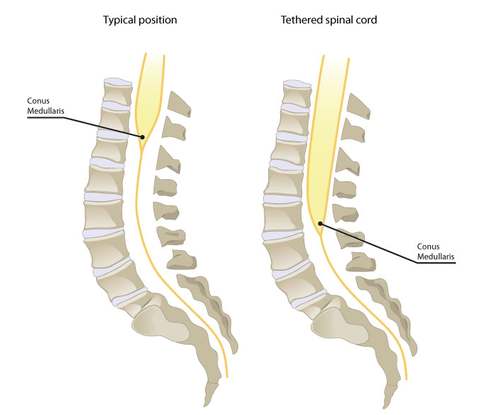
Causes
- Tight or fatty filum terminale: a thickened band of tissue at the end of the spinal cord
- Spina bifida and related conditions: such as myelomeningocele or lipomyelomeningocele
- Scar tissue after spine surgery (secondary tethering)
- Dermal sinus tracts, tumors or cysts at the base of the spine
- Split cord malformation
Symptoms
In adults
- Low back pain, often spreading into the legs, groin or buttocks
- Pain that worsens with bending forward or sitting cross-legged
- Numbness, tingling or weakness in the legs
- Bladder problems such as urgency, frequency or incontinence
- Bowel changes or sexual dysfunction
Signs that may be present from childhood
- A dimple, hair tuft, fatty lump or birthmark over the lower spine
- Foot deformities or one leg or foot smaller than the other
- Scoliosis
- Long-standing bladder problems
When it’s an emergency: Sudden leg weakness, numbness in the groin, or loss of bladder or bowel control needs emergency care. Call 911 or go to the nearest emergency room.
How We Diagnose Tethered Cord Syndrome
- Neurological exam: strength, sensation, reflexes and a look at the skin over the lower spine
- MRI of the spine: shows the position of the lower spinal cord, a thickened filum, or other causes
- Urodynamic testing: measures bladder function
- X-rays: for scoliosis or bony abnormalities
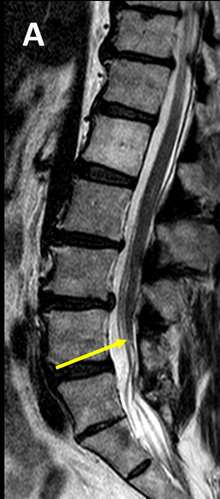
Treatment Options
Observation
People with imaging findings but no symptoms may be monitored with regular exams.
When surgery makes sense
Surgery is recommended when tethered cord causes pain, worsening neurological symptoms or bladder problems. Tethered cord release frees the spinal cord by cutting the tight filum or removing the tissue holding it in place, using a microscope and nerve monitoring to protect the nerves. Surgery can often correct the problem and stop symptoms from getting worse.
Dr. Grunch performs tethered cord release for selected patients. Complex cases and revision surgeries are typically referred to a tethered cord specialist (often a pediatric neurosurgeon) at an academic medical center, even for adults.
Why Choose Dr. Betsy Grunch for Tethered Cord Syndrome
- Duke-trained: neurosurgical residency and spine research fellowship at Duke University School of Medicine, where she received the Spine Young Investigator Award
- Experience you can count on: in practice since 2013, caring for thousands of patients with spine and nerve conditions
- Finding the real cause: back and leg pain, numbness and bladder changes have many possible causes, from disc problems and stenosis to tethered cord; she sorts out which one you have
- The right surgeon for your case: board-certified (FAANS, FACS, FCNS), she performs tethered cord release for selected patients and coordinates referral to an academic specialist for complex and revision cases
- Clear answers: known online as Ladyspinedoc, she makes sure you understand your imaging and your options
What to Expect If You Need Surgery
Before surgery
You’ll meet with Dr. Grunch or one of her physician assistants to review your MRI and symptoms and decide whether she will perform your surgery or whether a referral is best. Our team coordinates any testing, such as bladder studies.
Procedure day
Surgery usually takes a few hours. Most patients stay in the hospital for a few days and may be asked to lie flat for a short time afterward.
Recovery timeline
- Days 1-4: walking with help; pain control
- Weeks 1-6: avoid heavy lifting, bending and straining
- Months 3-12: pain often improves early; numbness, weakness and bladder function may improve more slowly
Frequently Asked Questions
Can adults have tethered cord syndrome?
Yes. Some people born with a tethered cord don’t develop symptoms until adulthood.
Will surgery help my symptoms?
Surgery is most effective at stopping progression and relieving pain. Long-standing weakness or bladder problems may improve partially.
Can the cord re-tether after surgery?
It can happen, especially after previous surgery, so ongoing follow-up is important.
Why does bending forward make my pain worse?
Bending stretches the spinal cord, which increases tension on a tethered cord.
Is tethered cord related to spina bifida?
Often, but not always. A tight filum terminale can cause tethering without spina bifida.
Take the First Step Toward Relief
Whether you need a diagnosis, a treatment plan or a second opinion, Dr. Grunch and the Southern Neurosurgery team are here to help.
Call 470-293-9800 to schedule an appointment or contact us online.
Have a question first? Ask our virtual assistant anything, 24/7.
We see patients across metro Atlanta and North Georgia at our offices in Gainesville, Sandy Springs and South Atlanta (Riverdale). Find the office nearest you.
This page is for educational purposes only and is not a substitute for medical advice. If you have sudden weakness, numbness in the groin, or bladder or bowel changes, call 911 or go to the nearest emergency room.