
Cubital Tunnel Syndrome: Relief for Numbness in the Ring and Pinky Fingers
If your ring and pinky fingers go numb when you bend your elbow, talk on the phone or sleep with your arm bent, the ulnar nerve at your elbow may be pinched. Cubital tunnel syndrome is the second most common nerve compression in the arm, and it’s treatable.
What Is Cubital Tunnel Syndrome?
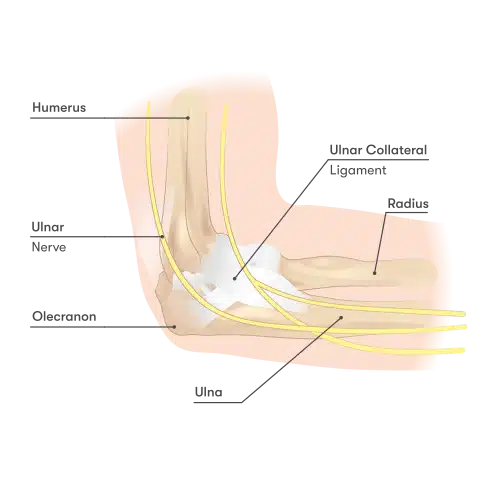
Cubital tunnel syndrome happens when the ulnar nerve is compressed or stretched as it passes behind the inside of the elbow, through a narrow space called the cubital tunnel. This is the spot people call the “funny bone.” The ulnar nerve gives feeling to the ring and pinky fingers and controls many of the small muscles of the hand that allow fine movements and grip.
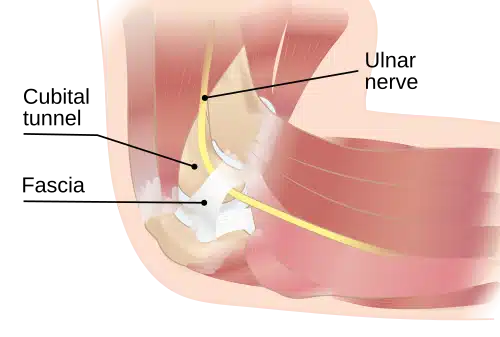
Bending the elbow stretches the nerve and narrows the tunnel, so symptoms are often worse with the elbow bent for long periods. Learn more about ulnar nerve problems at the elbow and wrist on our ulnar nerve compression page.
Symptoms
Common symptoms
- Numbness and tingling in the ring and pinky fingers
- Symptoms that worsen with the elbow bent, such as while holding a phone, driving or sleeping
- Aching on the inside of the elbow
- Hand clumsiness or a weaker grip
Symptoms patients often ignore
- Trouble with fine tasks like buttoning, typing or playing an instrument
- Pinky finger that drifts away from the other fingers
- Thinning of the muscles between the thumb and index finger or along the hand
- Waking at night with a numb hand
Causes and Risk Factors
- Keeping the elbow bent for long periods
- Leaning on the elbow
- A nerve that slips over the bony bump of the elbow (subluxation)
- Prior elbow fractures, arthritis or bone spurs
- Diabetes
- Repetitive elbow motion
How We Diagnose Cubital Tunnel Syndrome
- History and exam: tapping over the nerve, testing elbow flexion and checking hand strength and sensation
- EMG/nerve conduction studies: confirm where the nerve is compressed and how severe it is
- Ultrasound or X-rays: to look at the nerve and the elbow joint
- Neck evaluation: to rule out a pinched nerve in the neck, which can cause similar symptoms
Treatment Options
Non-surgical treatment comes first
- Avoid bending and leaning on the elbow
- Night splint or padded elbow brace: keeps the elbow straighter during sleep
- Ergonomic changes: such as a headset instead of holding the phone
- Nerve-gliding exercises and anti-inflammatory medication
When surgery makes sense
Surgery is recommended when symptoms don’t improve, when numbness is constant, or when there’s weakness or muscle loss. Cubital tunnel release frees the ulnar nerve by releasing the tissue that compresses it. Sometimes the nerve is moved to the front of the elbow (transposition) so it isn’t stretched when the elbow bends. Surgery can often correct the problem and stop the nerve from getting worse.
Why Choose Dr. Betsy Grunch for Cubital Tunnel Syndrome
- Duke-trained: neurosurgical residency and spine research fellowship at Duke University School of Medicine, where she received the Spine Young Investigator Award
- Experience you can count on: in practice since 2013, performing 400 to 600 surgeries a year and more than 5,000 procedures over her career
- Neck or nerve? She can tell: as a neurosurgeon who treats the spine and peripheral nerves, she can sort out whether symptoms come from a pinched nerve in the neck, the arm or both
- The right treatment for you: board-certified (FAANS, FACS, FCNS), she starts with the least invasive option that will work, and recommends surgery when it can correct the problem
- Clear answers: known online as Ladyspinedoc, she makes sure you understand your imaging and every option in front of you
What to Expect If You Need Surgery
Before surgery
You’ll meet with Dr. Grunch or one of her physician assistants to review your symptoms and nerve testing and plan the procedure.
Procedure day
Cubital tunnel release is an outpatient procedure, usually taking under an hour. You go home the same day.
Recovery timeline
- Weeks 1-2: light use of the arm; a soft dressing or splint may be used
- Weeks 2-6: gradual return to normal activities; avoid heavy lifting
- Months 3-12: numbness and strength continue to improve as the nerve recovers, which can take many months
Frequently Asked Questions
Is cubital tunnel the same as carpal tunnel?
No. Carpal tunnel affects the median nerve at the wrist and the thumb side of the hand. Cubital tunnel affects the ulnar nerve at the elbow and the ring and pinky fingers.
Why does my hand go numb at night?
Many people sleep with their elbows bent, which stretches and compresses the ulnar nerve.
Will my strength come back?
Often, especially when treated before significant muscle loss. Nerve recovery can take months.
Do I need to have the nerve moved?
Not always. Many patients do well with a simple release. Transposition is used when the nerve slips or is stretched with bending.
Can it come back?
It’s uncommon after surgery.
Take the First Step Toward Relief
Whether you need a diagnosis, a treatment plan or a second opinion, Dr. Grunch and the Southern Neurosurgery team are here to help.
Call 470-293-9800 to schedule an appointment or contact us online.
Have a question first? Ask our virtual assistant anything, 24/7.
We see patients across metro Atlanta and North Georgia at our offices in Gainesville, Sandy Springs and South Atlanta (Riverdale). Find the office nearest you.
This page is for educational purposes only and is not a substitute for medical advice. If you have sudden, severe weakness or numbness, especially on one side of the body or with trouble speaking, call 911 or go to the nearest emergency room.